
Driving in Italy for the first time
A field guide for travelers who are new to the Italian way of driving

I drive a 10th-generation Honda Civic, which I bought new, straight from a dealer. It’s black, it’s barely 180hp, petrol, it’s the VTEC 4-cylinder, and it’s automatic. I want to put this on the table at the start because the car you drive shapes how you drive a country, and the Civic is the most reliable driving appliance on the planet. It’s a microwave with 4 wheels. It runs basically on compressed air. It sees the mechanic maybe once a year for an oil change. It starts every day, every time. It is also, to be honest, boring to drive, and the kindest thing I can say about it is that it is at least not a Toyota. It sees an automatic washer every 2 months. Maybe. I never look back at it in the parking lot.
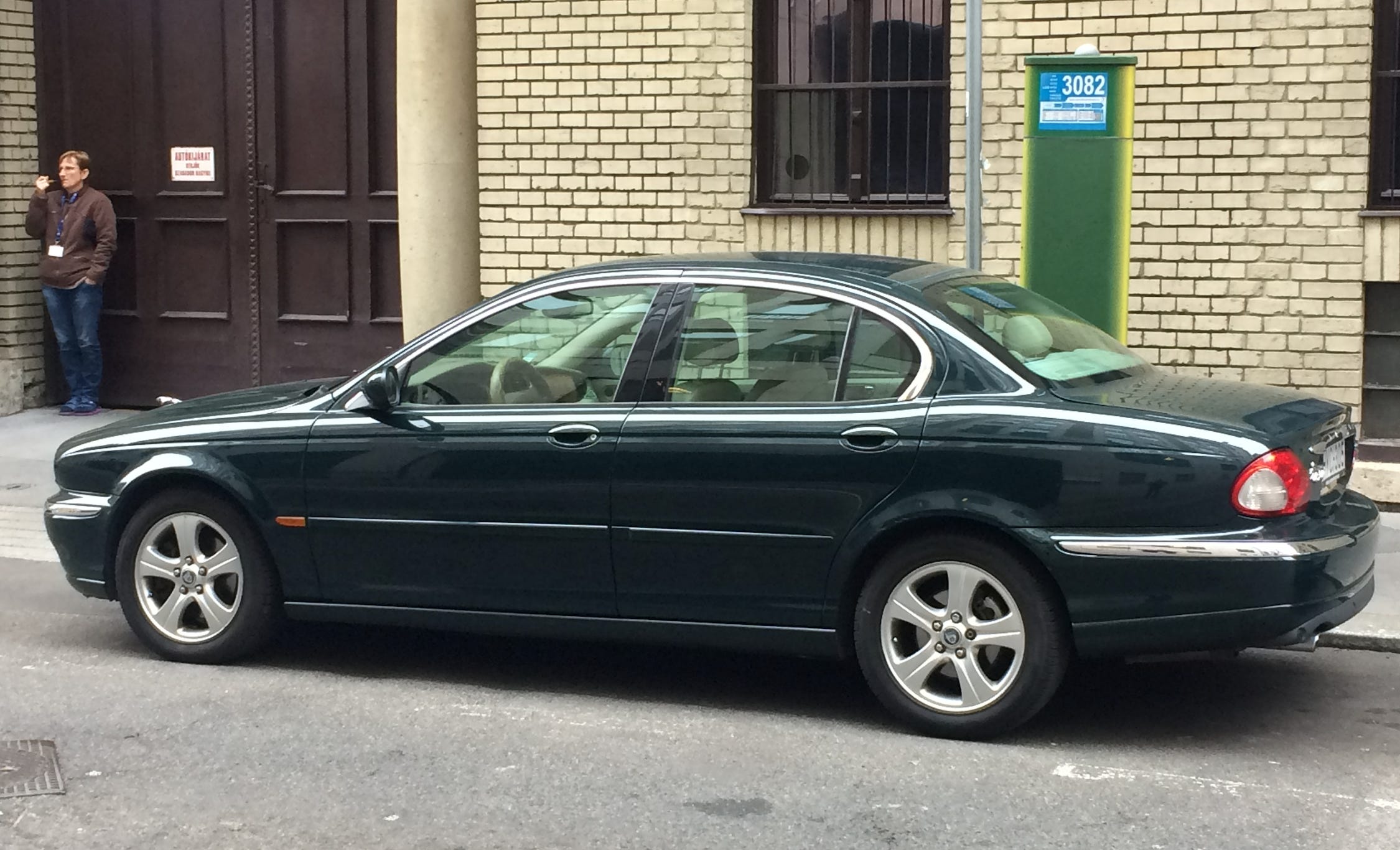
Before the Civic, I had an old Jag. It was a piece of art. It was a sculpture. It had the smaller V6 with 250hp, obviously petrol (a diesel Jag, jesus freakin’ christ), J-Gate auto, and, of course, British Racing Green. Leather seats. Real wood interior. The steel? It wasn’t plastic or aluminum. It was Birmingham-steel. Everything was heavy. I once broke down with it and had to call a special trailer for trucks because my little baby weighed 3 tons, which was the legal max limit for cars. She went for a detailed cleaning every other week. I didn’t just look back at it in the parking lot. I took pictures. But yes, the baby consumed the entire oil reserve of the British Empire on a weekly basis, every piece of change required a handwritten telegraph to Manchester or whatever, and I had to pay the price of a smaller car for a windshield wiper, and both the gas station guy and the mechanic oddly always greeted me with big smiles and by my name. So you get it, why the Civic.
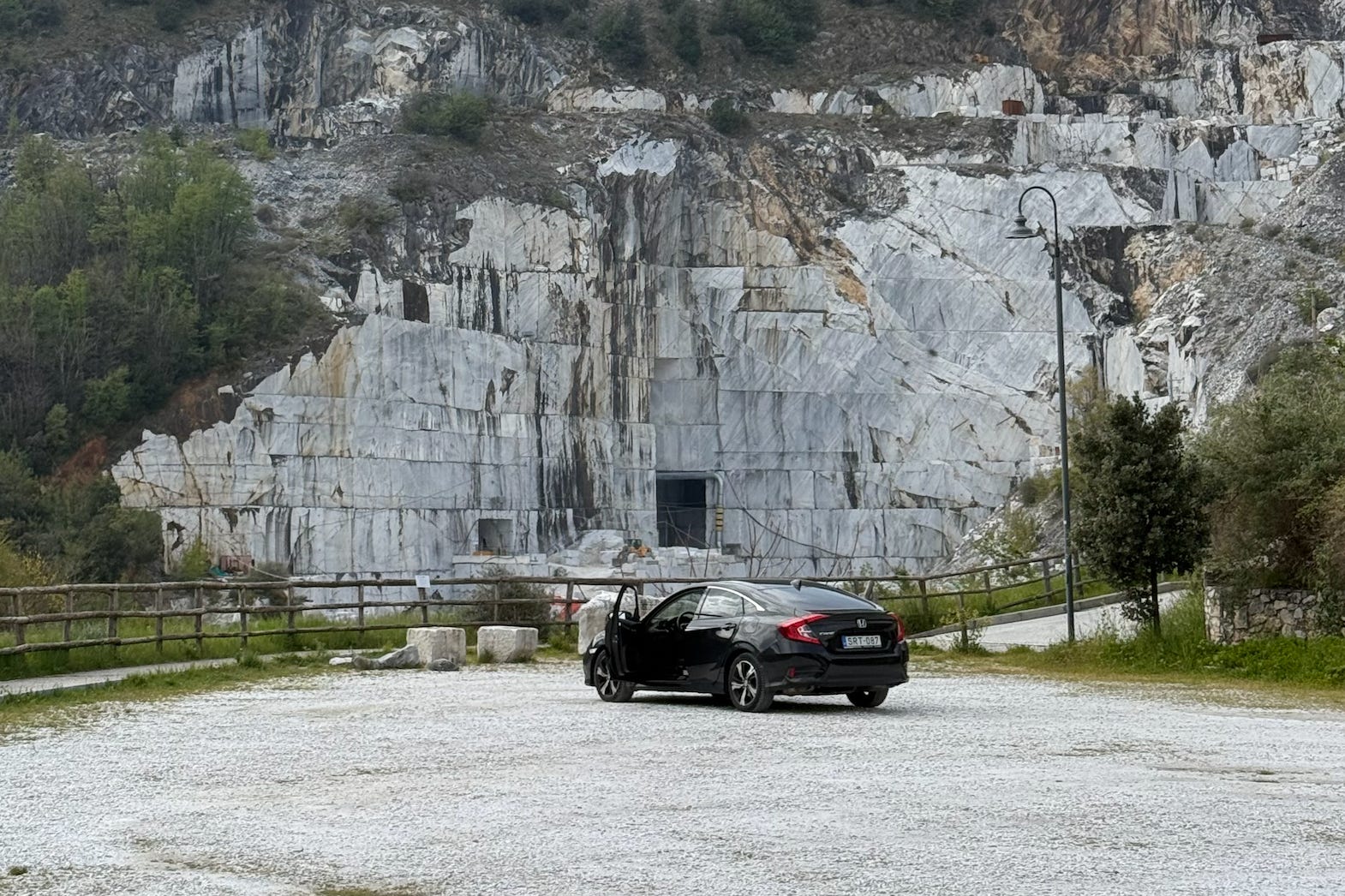
Back to driving. The car I drive in Italy is built for distance and reliability, not for performance. We do longer trips, day trips, the weekly grocery run, and the ten-hour drive to Hungary to see the family. The car sits parked on the street most days. I drive a lot the way someone without a daily commute does, which is to say I drive the country, not the calendar.
Here is what I have learned about driving in Italy. All of these are based on my personal experiences, not based on others.
The autostrada is the spine
Italian motorways are good. They are also expensive. These two facts are connected, and they are the first things to understand about driving here.
The autostrada network covers the country properly. The roads are well-engineered, well-signed, well-maintained, and reasonably patrolled. They get you from one major city to another at a steady 130km/h+ without drama.
They cost money. Italy does not use the vignette system used by Switzerland and Austria. Italy uses tickets. You pull a ticket from the machine when you enter the autostrada, and you pay when you exit, and the price is calculated by distance. The longer trips add up. There is a reason Italians complain about it.
The reason the autostrada is expensive is the same reason it is good. Italy has an alternative network of secondary roads: the strade statali (SS roads) and the strade provinciali (SP roads). These are free. They are also, depending on where you are, slow. The SS1 Aurelia runs along the Tyrrhenian coast and parallels the A12 motorway. It is a beautiful drive in places and a frustrating one in others. The further south you go, the more uneven the secondary roads get. Calabrian SS roads are not Tuscan SS roads. The autostrada toll is the price you pay for not being on the SS1 in a thunderstorm in Calabria with a truck in front of you doing forty.
For the slow traveler, this is good news, mostly. The secondary roads are where the country actually is. The autostrada is for moving between regions. The SS roads are for being inside a region. We do most of our day trips on SS and SP roads. We do the long inter-regional drives on the autostrada.
Get a Telepass
If you are in Italy for more than a month and you will use the autostrada, get a Telepass. It is the small radio device that mounts on your dashboard, connects to your license plate, and lets you use the dedicated yellow lanes at the toll booths. The barrier opens for you, the toll is deducted from your account through the app, and you do not stop. On a busy Friday afternoon, the Telepass lane is moving at twenty kilometers an hour, and the cash lane is at a complete standstill with a queue of forty cars. The device pays for itself in the hours it saves.
Telepass also works at most major airport parking garages and at some city parking garages with ramps. The same device, the same app. You drive in, you drive out, the charge appears on your account.
If you are renting a car, ask for one that includes Telepass. Most of the major rental companies offer it as an option. It is worth the extra few euros a day.
If you are not getting a Telepass, do not worry. The cash and card lanes work fine. Pull a ticket on entry, pay on exit, you are out. Italian autostrada toll booths reliably accept cards and have done so for years.
For the price of a glass of Chianti, unlock the full Anywhere Italy experience. All of our articles, private stories, and access to our chat travel community.
Start your free 7-day trial.
The autogrill is an institution
I want to spend a paragraph on the autogrill because it is one of the real pleasures of driving in Italy, and because most travel writing on Italy ignores it entirely.
The Autogrill is an Italian motorway service station. It is a petrol station with a restaurant, a shop, a bar, a café, and a public toilet attached. There are roughly 500 of them along the Italian motorway network, run mostly by the company Autogrill, which gave the institution its generic name. The food is good. Not extraordinary, but good. The coffee is real, served from an espresso machine by a person who has been pulling shots for years. There are tramezzini and panini made fresh that morning, Pavesini biscuits in colorful boxes, decent wine in single-serving bottles, fresh fruit, and sometimes a hot pasta of the day. You can sit at a small bar table and have an espresso and a cornetto in five minutes for three euros, then get back in the car.
This sounds unremarkable. It is not. Compare it to the motorway service stations in most of Europe. France has its aires, which are mostly fine but unevenly run. Germany has its Raststätten, which range from competent to industrial. The Slovenian and Hungarian motorway service stations on the route I drive to see family are, with all due respect, places where the most reliable food on offer is a melted Twix, and the toilet costs you a coin you have to dig for in the center console. The Italian autogrill is a step change. The toilet is free. The coffee is real. The food is recognizable. The first autogrill on the Italian side of the Slovenian border, just past Gorizia, is where Sophia and I always stop on the way home from Hungary and, for the first time in ten hours, feel that we are back in a country where the roadside basics work properly. Nothing fancy. Just the basics done right.
The larger autogrills are the ones that span the motorway, with a building that bridges the lanes so you can stop on either side. The Autogrill Brughiera on the A8 north of Milan. The Cantagallo on the A1 above Bologna. These are landmarks in their own right. The smaller ones on the side of the motorway are quieter and equally reliable. If you need a stop, do not get off the autostrada to find a town. Use the autogrill. It is faster, and the food is at least as good as whatever you would find in the small town off the exit.
On Italian driving
The line Italians drive like crazy is the opening sentence of every English-language piece on driving in Italy, and it is mostly wrong, or at least misleading.
I learned to drive in Budapest. The Hungarian driving culture is best described with one word: jungle. If you are not a wolf, you will be eaten by wolves. Politeness is read as weakness, and weakness is punished. I am a competent wolf. I do not enjoy being one.
When I started driving in Italy, I felt, almost immediately, that I had landed somewhere calmer. Italian drivers are gentle. They are slow. They almost never speed dramatically. They turn the way water moves, sliding from one lane to another in a long visible curve rather than darting across in a sudden cut. You can anticipate their movements because they have phases. They are also, almost always, patient. I have sat in catastrophic traffic queues caused by some of the worst driving I have ever seen, and the honking has been minimal. Almost no one flashes their headlights at you to make you move. Almost no one rides your bumper. The Eastern European driver’s repertoire of intimidation moves is largely absent.
But.
There are three Italian driving habits that are universally observed by anyone who drives here for more than a week. They are not character flaws. They are puzzles. I offer them affection as someone from a worse driving culture.
The turn signal seems to be optional or eternal. Italians either do not use the turn signal at all, or they use it forever. It is a common sight on the autostrada to follow a car in the right lane with its left turn signal blinking patiently for the entire ten kilometers between two exits, with no apparent intention of changing lanes. I have often wondered whether the noise of it does not bother the driver. Apparently, it does not.
The phone is held in front of the face. Italian cars now mostly have Bluetooth, but Italian drivers rarely use it. The standard configuration is the phone held vertically in front of the steering wheel, on speaker, with the driver shouting into it while turning the wheel with the other hand. The professional version of this also involves eating something. I have not yet worked out the mechanics of how the wheel actually turns in this configuration, but it does, the car gets where it is going, and no one seems to crash.
Trucks race each other in slow motion. The Italian motorway has two lanes in many stretches. It is a constant feature of those stretches that one truck will pass another at a speed differential of approximately 4 kilometers per hour. The pass takes eleven minutes. Behind the passing truck, a queue of cars forms, stretching to the horizon. No one honks. No one flashes. Everyone waits for the slower truck to be overtaken, and then the queue dissolves and life resumes.
These are the small comedies of Italian driving. They do not make it dangerous. The underlying culture is patient and gentle, and the small habits that look chaotic to a foreigner are noise on top of a calm signal.
Driving by region
It is misleading to talk about Italian driving as a single thing. The country is divided into roughly three driving cultures, and they differ in the way their dialects do. I personally know all of them, because I drove through the country multiple times.
The north. Driving in Turin is a lot like driving in Vienna. Practical, calm, lane discipline, signals used correctly, and the speed limit observed. Bolzano feels Austrian and is. Milan in traffic is aggressive but rule-following. The north is the part of Italy that shapes how northern Europeans drive. If you are a Dutch or German visitor, you will feel at home from Trieste to the French border.
Centre. Tuscany, Umbria, the Marche, and Lazio. The driving here is gentler and slower than in the north. The roads are also windier, the towns smaller, the autostrada less dense. Roman traffic different, obviously. But on the SS roads of central Italy, the driving is the slow and patient version of the national style.
The south. Naples and below is a different country, and the driving reflects this. There are places where the rules of engagement on a four-way intersection are negotiated in real time between four cars and a motorino, with nobody quite stopping and nobody quite going, and the negotiation is settled by a small wave of a hand or a flick of headlights. I have driven in Palermo, and I would describe it as a transcendental experience. They are not bad drivers. They are operating on a different protocol from the one written down in the Highway Code, and the protocol works for them, and the city moves, and the foreigner who tries to apply north-Italian rules in central Naples will simply sit at the intersection forever waiting for someone to give him priority. They will not. You move. They move. Everyone moves. Nobody hits anybody. It is a system. It is just not the system described in the manual.
If you are renting a car for a week and you are not used to Italian driving, do the trip in the north or the center. Tuscany, Umbria, the Veneto, Piedmont, the Dolomites, and the lakes. If you are doing Sicily, Calabria, or Naples, factor in that the driving will be culturally different and that you will need a few days to find the rhythm.
The ZTL
The ZTL, the Zona a Traffico Limitato, is the limited-traffic zone in the center of every Italian town of any size. It is a series of cameras at the entrance of the historical center that read your license plate, check it against a database of authorized vehicles, and issue you a fine of around 80 to 120 euros if you are not authorized. Multiple cameras mean multiple fines.
Foreigners hate the ZTL. They write articles about it. They warn each other in forums. They tell horror stories about returning home from a trip and finding three years' worth of accumulated fines from a single 15-minute drive through the center of Florence in 2019.
The ZTL is, in fact, the easiest Italian driving rule to understand. It just requires the right mental model.
Every Italian town is built in two parts. The modern residential town, where there is no ZTL, and you can drive normally, and the centro storico, the old town inside the medieval walls, where there is. The ZTL is in the centro storico. Always. The mistake foreigners make is thinking the ZTL is a complicated set of rules with exceptions and timing windows that they can learn. It is not, functionally. There are exceptions, but they apply to residents with permits, delivery vehicles within narrow time windows, and taxis and buses. They do not apply to you.
So the rule is: do not drive into the centro storico. Ever. Park outside the walls. Walk in.
This sounds restrictive. It is not. The centro storico of an Italian town is small. You will park five minutes from where you want to be. You will walk in. The walk is the point. The centro storico was built before cars, for people on foot, and it is best experienced on foot. The ZTL is the city telling you to do what you should be doing anyway: leave the car outside and walk into the old town. The fine is the city’s polite way of suggesting you have made a mistake.
If you see a ZTL sign that says attivo dalle 7:30 alle 19:30, do not read it. Do not try to work out whether you can sneak in at seven o’clock in the evening. The cameras work. They will catch you. The fine will arrive in the post six to nine months later, in Italian, with a payment slip. You will pay it. The €15 you saved on parking will become €120.
The ZTL camera is one of the most reliable surveillance systems in Italy. The speed cameras on the autostrada, the tutor system, are less reliable in my experience. I drive at the speed I drive at, which is sometimes faster than the limit, and I have not received a speeding fine in four years. I do not know whether this is luck or whether the system actually catches fewer than people say it does. I will note it as observation, not advice. The ZTL is the rule that always catches you. Speed cameras on the autostrada sometimes catch you. Drive accordingly.
The slow road
We have a long-standing rule with the car. If we have time, we take the SS road. If we do not, we take the autostrada. The autostrada is the spine that connects regions. The SS is the country.
The SS1 Aurelia between Pisa and Rome is one of the great Italian drives, even though it parallels the motorway. The SS12 from Lucca to the Brenner Pass takes you through the Apennines and the Dolomites. The SS113 along the Sicilian coast is a slow road that opens onto views the autostrada will never offer. None of these roads is fast. All of them are in the country.
The autostrada is for getting somewhere. The SS road is for being somewhere. The slow traveler knows the difference.
That, finally, is the whole driving piece. Get the Telepass. Stop at the autogrill. Take the SS road when you have time, the autostrada when you do not. Park outside the centro storico and walk in. Be patient with the slow trucks and the eternal turn signals. Drive the way the Italians drive, which is gentler than the reputation suggests.
The car is the way you reach the small towns. The small towns are why you came. Treat the car as the means, the towns as the end, and the country opens up.
