
How to Park a Car in Italy
A field guide for travelers who want to keep their car, their money, and their morning.

The first thing to understand about parking a car in Italy is that the rules are not, in any meaningful sense, about cars. The sign on the wall, the line painted on the asphalt, the camera tucked under the eaves of the church — these are not bureaucratic obstacles. They are the small daily compromises a town has made to keep its old shape alive while letting modern people come and go. Once you read them this way, parking in Italy becomes a problem with solutions. Read them any other way, and you will spend a week of your vacation in line at a tabaccheria, paying fines you didn’t know you had earned.
What follows is less a set of rules than a way of seeing. The fundamentals are simple. The traps are the parts nobody tells you about until you’ve already stepped into one.
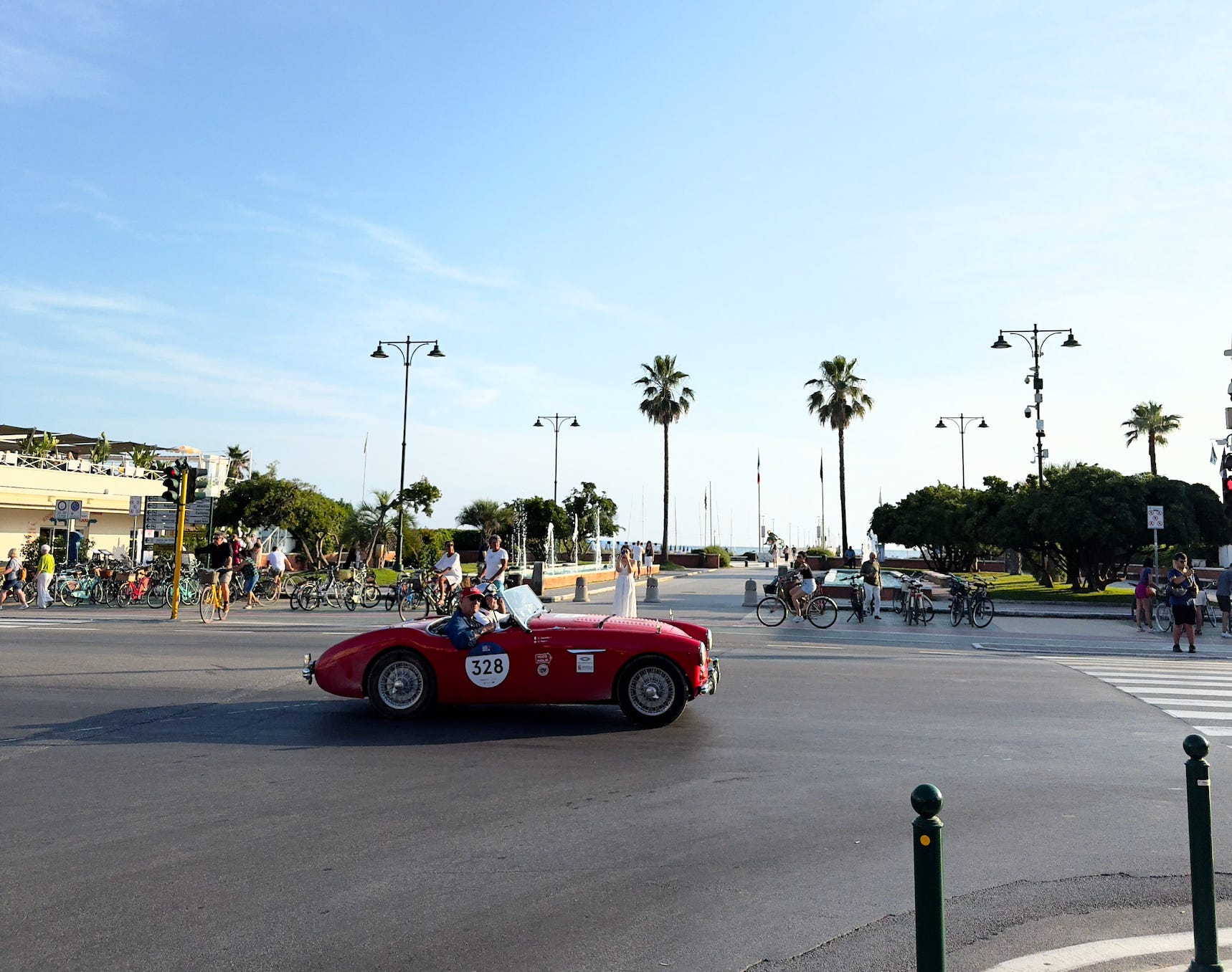
The colors on the asphalt. Italian street parking uses a three-color system, and the colors do all the work. White lines mean free parking. Blue lines mean paid parking. Yellow lines mean reserved — for residents, the disabled, delivery vehicles, or taxis, depending on the sign above. The system is consistent across the country (kinda), which is itself a small miracle. The complication is that the lines fade, and a faded blue line on a hot piazza in July looks identical to a faded white line on the same piazza, and the parking officer who arrives at three in the afternoon is not interested in your visual interpretation of the asphalt. The rule is simple: if you cannot tell whether the line is blue or white, the line is blue. Pay. The cost is two euros. The fine is much higher.
The parking meter and the apps. The blue zones still have those small gray meters from the 1990s on the corners, still take coins, and still print a paper receipt you put on the dashboard. They also work. But almost every Italian under fifty now uses an app — EasyPark is the one with the pink logo, the one most cities accept. Telepass handles parking and highway tolls together, which is convenient if you are driving any distance. You download it before you need it, enter the plate number once, select the zone code from the sign, and pay by phone. The receipt lives in the app. If a parking officer wants to check, he reads the plate, and the system tells him whether you have paid. There is no paper involved. Miracles everywhere.
The hours that matter. Read the sign above the blue zone before you put any money in it. Most blue zones are open only between eight in the morning and eight in the evening, free at night, free on Sundays, free on holidays. Some have a maximum stay of two or three hours, even if you are willing to pay for more. The sign tells you all of this in Italian, in small letters, and the wrench symbol next to a time range means payment is required; outside these hours, it is free. The mistake people make is to assume the rules are the same in every town. They are not. A blue zone in Pietrasanta runs different hours from a blue zone in Lucca, an hour up the road. Look at the sign. The information you need is on it.
The market. This one trips more locals than tourists, and it is worth knowing because the consequences are severe. Almost every Italian town has a market day, usually on Saturday, sometimes on Wednesday, sometimes both, and on market day, the streets where the market sets up are closed to parking from very early in the morning until the stalls have been packed away in the afternoon. The signs are clear. They are also small, often posted only at the street entrance, and if you parked there at ten o’clock the night before, you may not have noticed the sign in the dark. The next morning, at six, the police arrive. By seven, your car is on a flatbed truck on its way to a fenced lot on the edge of town, and you will spend the morning paying somewhere between a hundred and three hundred euros to get it back. The rule: if you are parking in a town center on a Friday evening, walk fifty meters in each direction first and read the signs. If any of them mention a mercato or a fiera, move the car.
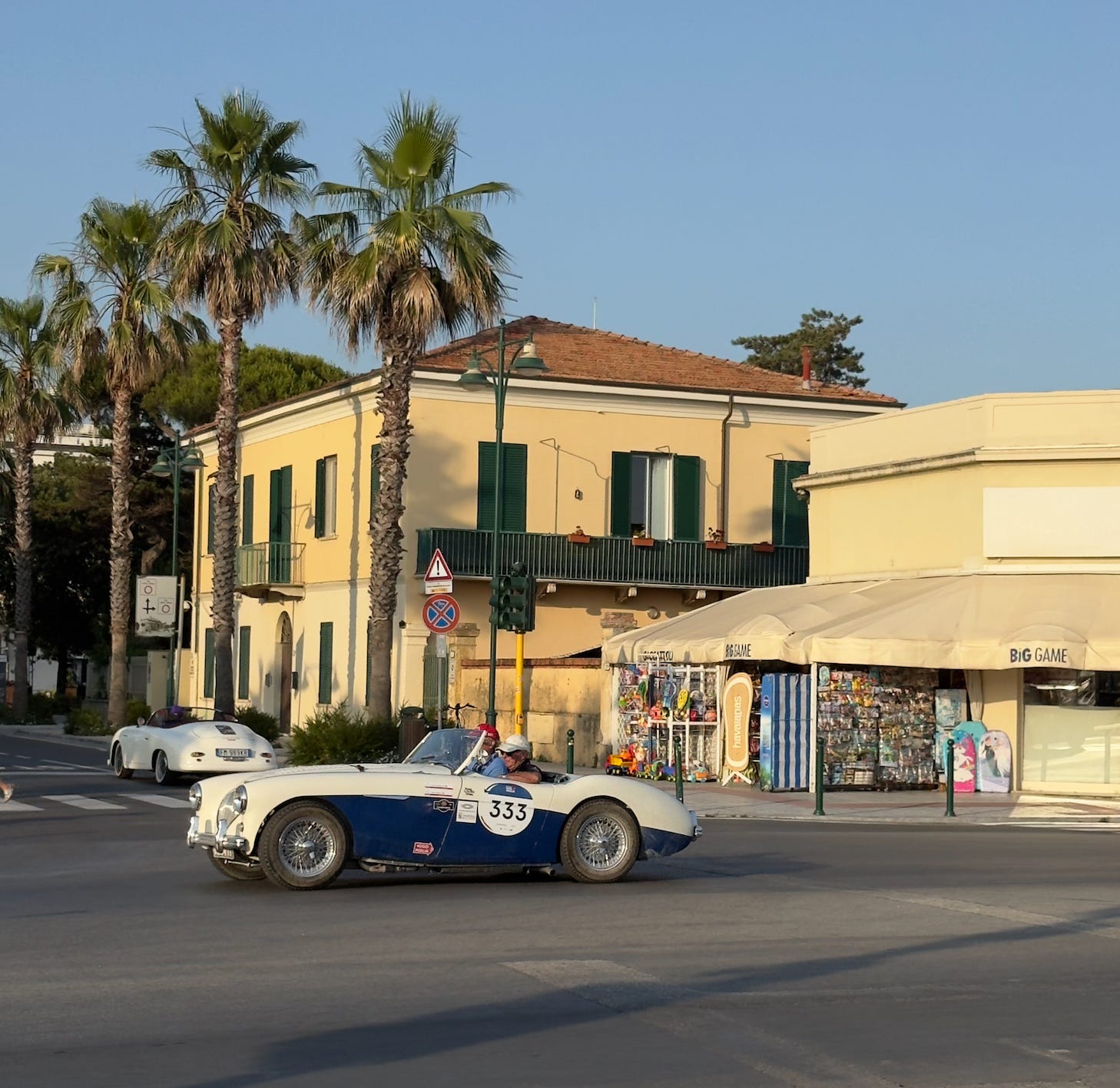
The ZTL. This is the one to take seriously. Zona a Traffico Limitato — limited traffic zone — means the historic center of almost every Italian town of any age, and in a ZTL you cannot drive, full stop, unless your plate has been pre-registered. The boundaries are marked by a round red sign, sometimes accompanied by a small camera mounted on a pole. The camera reads your plate. There is no police officer involved. There is no judgment. If you drive through, even by accident, even because your GPS told you to, even because you were lost looking for your hotel, you have been fined, and the fine arrives by mail at the address registered with your rental car company three months later, and it is roughly a hundred euros each time, and if you drove into the ZTL twice on the same day looking for somewhere to park, that is two fines. Hotels within ZTL zones can register your plate for the duration of your stay, which exempts you from the restrictions. Every other reason to be inside a ZTL with a car is a reason not to be there. The general rule when navigating any historic center is to park outside the walls and walk. The towns were designed for this.
For the price of a glass of Chianti, unlock the full Anywhere Italy experience. All of our articles, private stories, and access to our chat travel community.
Start your free 7-day trial.
The garages. In bigger cities and tourist-heavy towns, there are designated parking lots, parcheggi, with gates and ticket machines, and they work the same way as everywhere else in Europe — you take a ticket on entry, pay at a kiosk before returning to the car, and the gate lifts. Underground garages are the most secure option. Some of them are also small and tight, and the attendant will ask for your keys so he can park the car for you. This is normal. He will leave the keys in the ignition and move three other cars to fit yours into a corner. Hand over the keys. Don’t leave anything visible inside. This is the system, and it works.
The space around your car. When you park on the street, leave space. More space than you would leave anywhere else. Italians are not particular about small scratches on their cars, and many of the cars on the road belong to drivers in their seventies whose vehicles lack parking sensors, and they will get out of the spot you have boxed them into one way or another. If your bumper takes a small hit in the process, that is, in the local moral economy, a problem you created by parking too close. Leave a meter on each end. Or pay for full insurance on the rental and stop worrying about it.
The break-in. Burglaries on parked cars are not a widespread problem in Italy, but they are not unheard of, and the variable that matters more than location is whether your car looks like a tourist’s car. A foreign license plate is a tell. Tinted windows that hide the back seat are a tell. Suitcases visible through the rear window are a confession. I had the rear side window of my car smashed once, in the center of Turin, in a paid parking spot on a well-lit street, with nothing visible inside — but the windows were tinted, and the plate was foreign, and someone wanted to know what was behind the tint badly enough to spend forty seconds with a hammer to find out. Nothing was taken. The window cost three hundred euros to replace. The Italian police, to their enormous credit, were on the scene within ten minutes and could not have been kinder. The lesson: hide everything, every time, even on the back seat, even the empty backpack you were going to throw out anyway. A thief does not know it is empty until he has already broken the window.
The fine. If you do get a parking ticket, you will find a small paper notice tucked under the windshield wiper. Do not ignore it. Walk into any tabaccheria — the shops with the blue sign and the white T — and hand the notice to the woman behind the counter. She will scan the QR code, take your money, and hand you a receipt. The whole transaction takes ninety seconds. The fines escalate if unpaid, and trying to pay one from another country six months later is the kind of bureaucratic exercise that will turn your hair white. Pay it the same day. Move on.
The simplest way to get nearly all of this right, when you are standing on a strange street in a strange town with a strange line painted on the asphalt and you cannot tell what any of it means, is to walk into the nearest bar and ask. Parcheggio libero qui? — Is parking free here? The man behind the espresso machine will look up, look out the door at your car, look back at you, and answer in three words. Sì, libero. Yes, free. Or No, blu, devi pagare. No, blue, you have to pay. Or, more usefully, he will gesture across the street and say meglio là — better over there — and then you walk over there, and you park, and the day continues. Italians are extraordinarily helpful about this. They have all parked badly at some point in their lives, and they remember how it felt. Use them.
The deeper point is this. Parking, in Italy, is one of the small daily places where the country teaches you how it actually works — that the signs mean what they say, that the rules are local rather than national, that the consequences arrive automatically and the appeals process is designed to discourage you, but also that a stranger in a bar will help you figure out the entire thing in under a minute if you ask politely. Read the asphalt. Read the signs. Hide the bag. Pay the fine on the day. Walk into the bar. The car will be there in the morning, and the day will not be about the car.
Last note: these tips come from a dude who was brave (or outright stupid enough) to buy a new Civic from the dealer (in Hungary, with a Hungarian license plate), then, a week later, immediately drove down from Budapest to Palermo. Some people say Palermo is the single greatest driving challenge in Europe, probably in the world. I parked on a street without a camera, and haven’t checked the colors, and left the car there for 2 weeks. Maybe it’s faith, god, or whatever it was, maybe the fact that we parked in front of a church, but no break-ins, no one stole my car, no fine arrived, and no scratches either. Since then (years passed), obviously, I have improved my parking game, got my local plate, and I’m also registered at the local municipality so I can park wherever the f I want now. You can’t be more local than this.


Planning a slow trip? My planner builds it for you. Free, no paywall, no email gate. Answer five questions (hub town, interests, travel month, days you want for slow discovery, and fitness level, because some of these towns make you climb), and you get a personalized route from my handpicked list of the 1,000 towns most travelers skip, with festivals, drive times, and a line on what each place is. Don’t like it? Refine it, swap towns, or browse the whole database by region.