

How to Pick the Right Place to Eat in Italy
A field guide for travelers who want to sit where Italians sit.

The first thing to understand about an Italian restaurant is that it is not, in the American sense, a restaurant. It is something closer to a living room with a kitchen attached, and the people who eat in it three or four times a month are not customers in any meaningful sense, they are part of the furniture, and they expect the same chair every time, and the waiter who walks past their table without writing anything down already knows what they want.
Brits usually get this. A British family goes to the pub. The good local pub looks like a living room on purpose. An Italian family goes to the trattoria. The trattoria is where birthdays happen, where engagements are announced, where the funeral lunch is held three hours after the service, where a man who has not seen his cousin in two years sits down across from him and orders the wine before either of them has spoken.
People here will take out a small personal loan to keep eating out with their friends during a hard month. Nobody borrows money for a television. They borrowed money for the table. It’s that serious business.
This matters because the question of where to eat in an Italian town is not, fundamentally, a question of food. It is a question of whether you are sitting inside the social fabric or outside of it. A bad Italian restaurant just feeds you.
What follows is a list, and like most lists about Italy, it is not a set of rules but a set of warning signs. None of them is absolute. A restaurant on the main piazza can be excellent. A waiter who speaks English fluently can be the owner's son who studied in London for three years. A long menu can mean a big kitchen and not a freezer full of ravioli. The signals are weighted, and you read them together, and the more of them a place trips, the further you walk before you sit down.
I’ll start at the top.
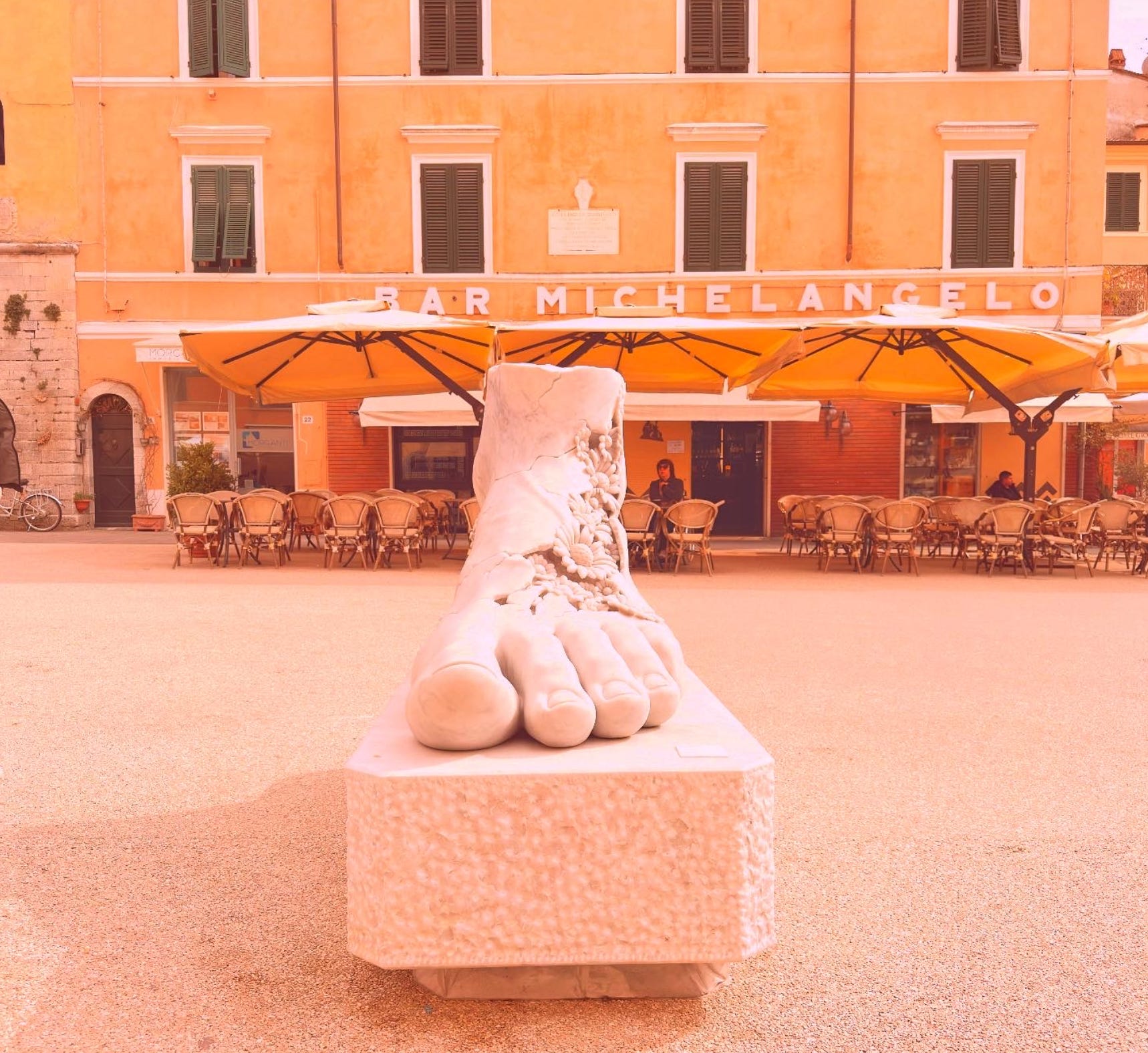
The location. A restaurant’s location, in Italy, is real estate, and real estate has a price, and that price has to come back out of the kitchen one way or another. There is a reason McDonald’s puts its franchises at the busiest intersections in town: foot traffic is a margin you don’t have to earn twice. When a restaurant sits on the main piazza of a famous commune, with three hundred people walking past it at any given hour, the rent is enormous, and the kitchen has to either charge you for the rent or save somewhere else, and saving somewhere else means the produce, the wine, the cook. Sometimes the location is worth it. Sometimes the view of a thousand-year-old church is, in fact, what you came for, and you should be allowed to pay for it. But a meal on the main square should be a conscious decision made with eyes open, not the default. Walk one block off the piazza. Walk two. The price drops, the locals appear, the food gets better. This is almost a mathematical law.
The clientele. I do not say this to be condescending, but you can tell. Italians, even on a Saturday afternoon in jeans, dress in a particular register: long cotton trousers, a shirt of some kind, leather shoes that have been worn before; the women in something elegant without being formal, a dress, a scarf, a pair of earrings worth noticing. They do not wear baseball caps to lunch. They do not wear sandals with white socks, which is the German tell. They do not wear the cargo shorts with the seven side-pockets and the zip-off legs, which is the American tell. They do not wear a t-shirt with the name of an American university on it. If you stand in the doorway of a restaurant at 1pm on a Tuesday, scan the room, and see more cargo shorts than long trousers, you have your answer. Walk on. The food may be perfectly fine. It will not be the food that gets cooked when the cook is making it for his neighbors.
The calendar. Look at the door. There should be a small printed sign with the orari di apertura and, somewhere, the giorni di chiusura. A restaurant that closes from October to April is not a restaurant. It is a tourist concession, and the difference between the two is enormous. A real Italian restaurant is open all year. It is open during the dead weeks of February, when the streets are empty, and the only customers are the four men at the back table who have been eating there every Wednesday since 1991. It is open because being open all year, with a kitchen that cooks the same things for the same people, is the only way the food stays alive. The seasonal places, by contrast, run on a fundamentally different model: closed half the year, reopened to a flood of strangers, the kitchen has no continuity, the menu has been printed in the spring and shipped out frozen, and you can taste it the moment the pasta arrives. The same dry penne, sauced three different ways, all of them finishing at the same temperature. A real kitchen does not work like that.
The menu. Here you have to read carefully, because the obvious tells are not the most reliable. A menu translated into English does not condemn a restaurant; almost every place in a town with any traffic has one, and the great places sometimes have one too out of basic courtesy. The same goes for the waiter who can take your order in three languages — young Italians often speak two or three foreign languages competently, especially on the coast, and this signals nothing in particular. What you are looking for is something quieter. You are looking for a small place with a long menu, which is almost always a signal that most of the food is moving from the freezer to the microwave, because no kitchen of four square meters can do justice to forty dishes from raw materials. You are looking for a menu that is suspiciously complete, has a little of everything, and tries to please everyone. The best places have ten things on the menu. Eight of them are local. The eleventh item is a fish that came in this morning, written by hand on a piece of paper clipped to the inside of the leather folder.
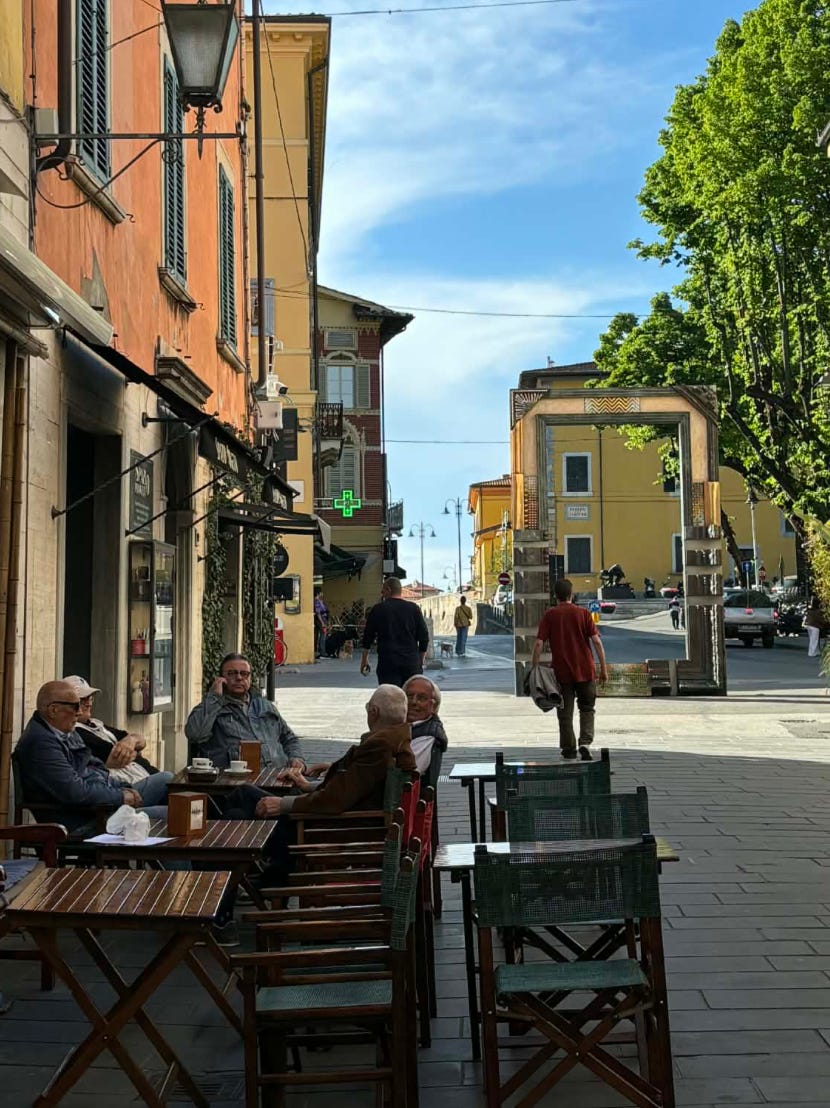
The provenance. This is connected to the menu, but it deserves its own line, because Italian identity, more than almost any other national identity, is constructed regionally rather than nationally. A Tuscan eats Tuscan. A Ligurian eats Ligurian. A Roman, a Neapolitan, a Sicilian, a Friulano: each of them eats what their grandmother cooked, and the grandmother cooked what her grandmother cooked, and the chain runs back to the medieval period. So when you walk into a trattoria in coastal Tuscany, and the menu offers you both amatriciana (Roman) and bolognese (Emilian) and trippa alla fiorentina (Florentine) and a Neapolitan-style pizza and a Ligurian pesto, you are not in a restaurant that has cleverly curated the best of Italy. You are in a restaurant that has correctly assessed that the foreigners walking past the door do not know the difference, and is selling them whatever they have heard of. Italians do, of course, eat across regions: a Tuscan at home will gladly eat sushi, will try a Neapolitan pizza, and will go to a Roman restaurant when he is in Rome. But the restaurant he goes to in his own town, on a Tuesday, will serve him what his town has always cooked. Anything else is a tell.
For the price of a glass of Chianti, unlock the full Anywhere Italy experience. All of our articles, private stories, and access to our chat travel community.
Start your free 7-day trial.
The kitchen’s tools. This one is harder to verify from the doorway, but the signal works because Italian cooks are, like all serious craftsmen, vain about their equipment. If a pizzeria has a wood-fired oven, it will be photographed on the website, mentioned on the front of the menu, and visible from the front door. If a steakhouse cooks its bistecca alla fiorentina over wood, the grill will be displayed, the wood will be stacked nearby like a small architectural feature, and the carne hanging in a glass case will be lit like jewelry. These are not investments a kitchen makes and then hides. They are signals to the local clientele that the cook understands how the food should be made, is making it that way, and is willing to spend money to do it. So: a pizzeria with no wood-fired oven and only an industrial steel oven is not a pizzeria, in the sense that matters. A steakhouse without big lumps of dry-aged steaks hanging publicly is not a steakhouse. The cook is not lying, exactly. He is simply not committing.
The reservation. If it is Friday or Saturday evening in any commune of any reputation, and you walk up to a restaurant at 8:00pm without a booking and they sit you down immediately, you have your answer. Italians eat out on weekends. The good places are full. They have been full since Wednesday afternoon, when the regulars phoned in. If you can sit, it is not because you are lucky. It is because the restaurant has empty tables on a Saturday in a town where no restaurant should have empty tables on a Saturday, and the reason it has empty tables is that nobody who lives nearby wants to eat there. The fix is simple. Book a day ahead. Most places now take WhatsApp messages. The Fork app works. Google works. Even calling, in halting Italian, works — the Posso prenotare per due, sabato sera, alle otto? is a sentence anyone can manage, and the reaction on the other end of the line tells you something about the place before you have even arrived.
There are obvious traps that this list will also catch, almost by accident.
The fixed menu turistico on a chalkboard outside, with a wilted picture of pasta on it.
The carbonara at €22 and the bottle of water at €5.
The plate of garlic bread offered as an antipasto, which is not an Italian dish and never has been. The same goes for Alfredo or spaghetti meatballs.
The menu printed in English first, German second, French third, Italian last, and in italics.
The young man on the corner of the piazza in the apron, calling out to passing couples in five languages, trying to wave them in.
These are not warnings, these are confessions. You walk past them without slowing down. They are not what we are talking about here.
What we are talking about, in this list, is something subtler and more important. We are not just talking about how to avoid being robbed. We are talking about how to find your way inside an Italian town’s table — the place where the regulars are eating, where the waiter knows the cook’s mother, where the same four men have sat at the same table on Wednesday for thirty years.
Because that is the reason, finally, to travel at all. Not to consume a culture, but to sit down inside it for an hour. To order what the man at the next table is ordering. To pay the same price he paid. To leave, eventually, the way he leaves, with a hand raised at the door and a grazie, ci vediamo, see you next time. A restaurant is not about eating food. A restaurant is a melting pot of local culture.


Planning a slow trip? My planner builds it for you. Free, no paywall, no email gate. Answer five questions (hub town, interests, travel month, days you want for slow discovery, and fitness level, because some of these towns make you climb), and you get a personalized route from my handpicked list of the 1,000 towns most travelers skip, with festivals, drive times, and a line on what each place is. Don’t like it? Refine it, swap towns, or browse the whole database by region.