Trattoria da Carlino | It's Just Fish
The worldview behind the best vongole on the Versilia coast

Our former landlord Veronica grew up by the sea. She lives in a palazzo in Pietrasanta. Money is not the issue. We were telling her, over coffee one afternoon, about a sushi place that had opened in town, run by a model from Milan who had become obsessed with Japan and was importing most of her ingredients direct. The fish was excellent. I had lived in Japan, and I will tell you flatly that this was the best sushi I had eaten outside of it. Veronica listened. She asked what it cost. I told her.
She made the small Italian face that means no.
“Why would you pay that much for fish. It’s just fish.”
Not a question. A statement of principle.
She wasn’t being cheap. She was telling me something about a worldview. Fish, in her grammar, is not the same kind of object as a chianina steak. A chianina is something you build. You raise the cow, you feed it for two years, you breed the line, you kill it carefully, you hang it for weeks, and by the time it reaches the table, it has accumulated value the way wine accumulates age. Fish is something you take. It is in the sea. The sea is right there. You go and get it. To pay sushi prices for fish, in Veronica’s view, is to pay for a story somebody else has invented around a thing that was already free.
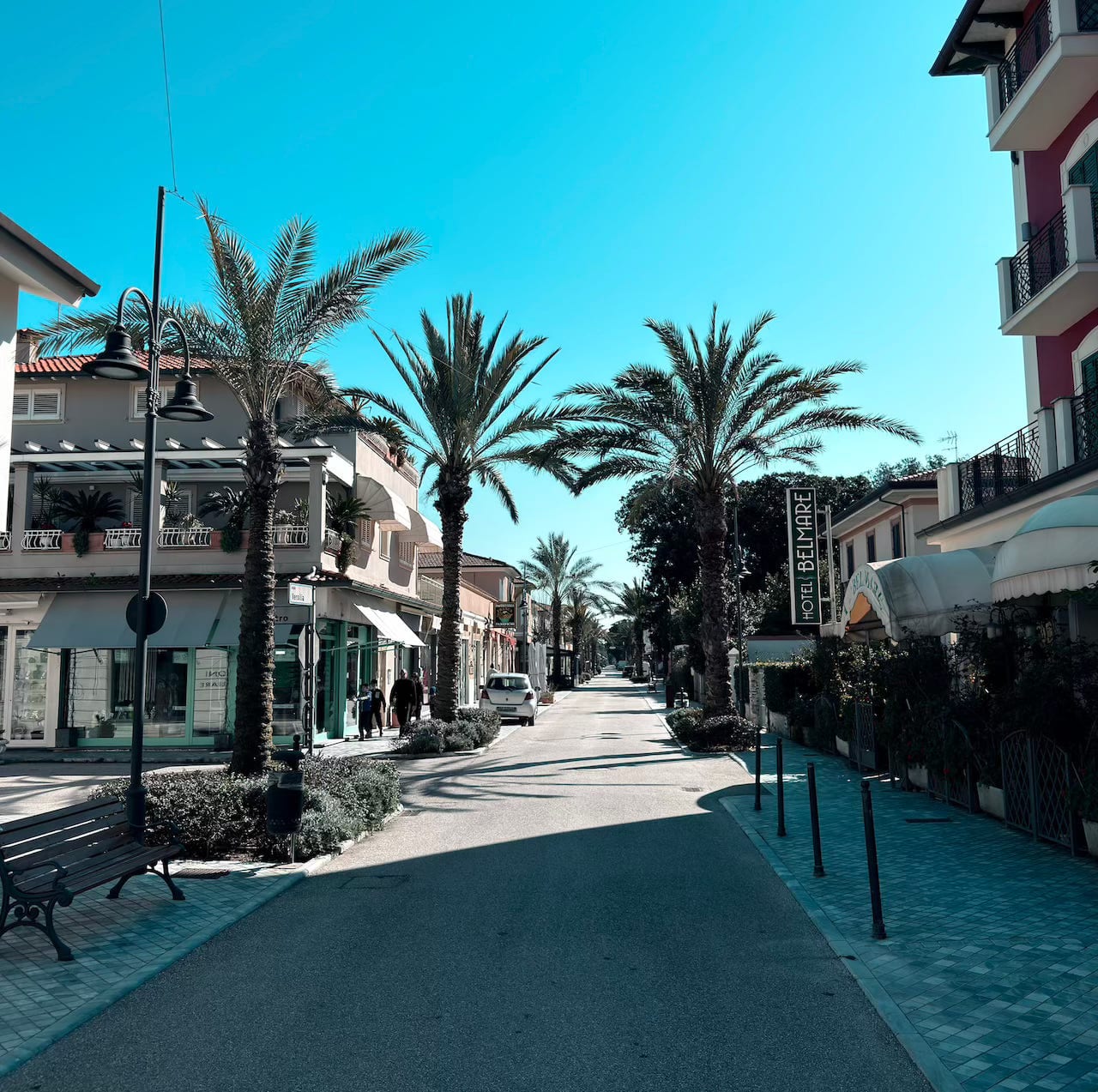
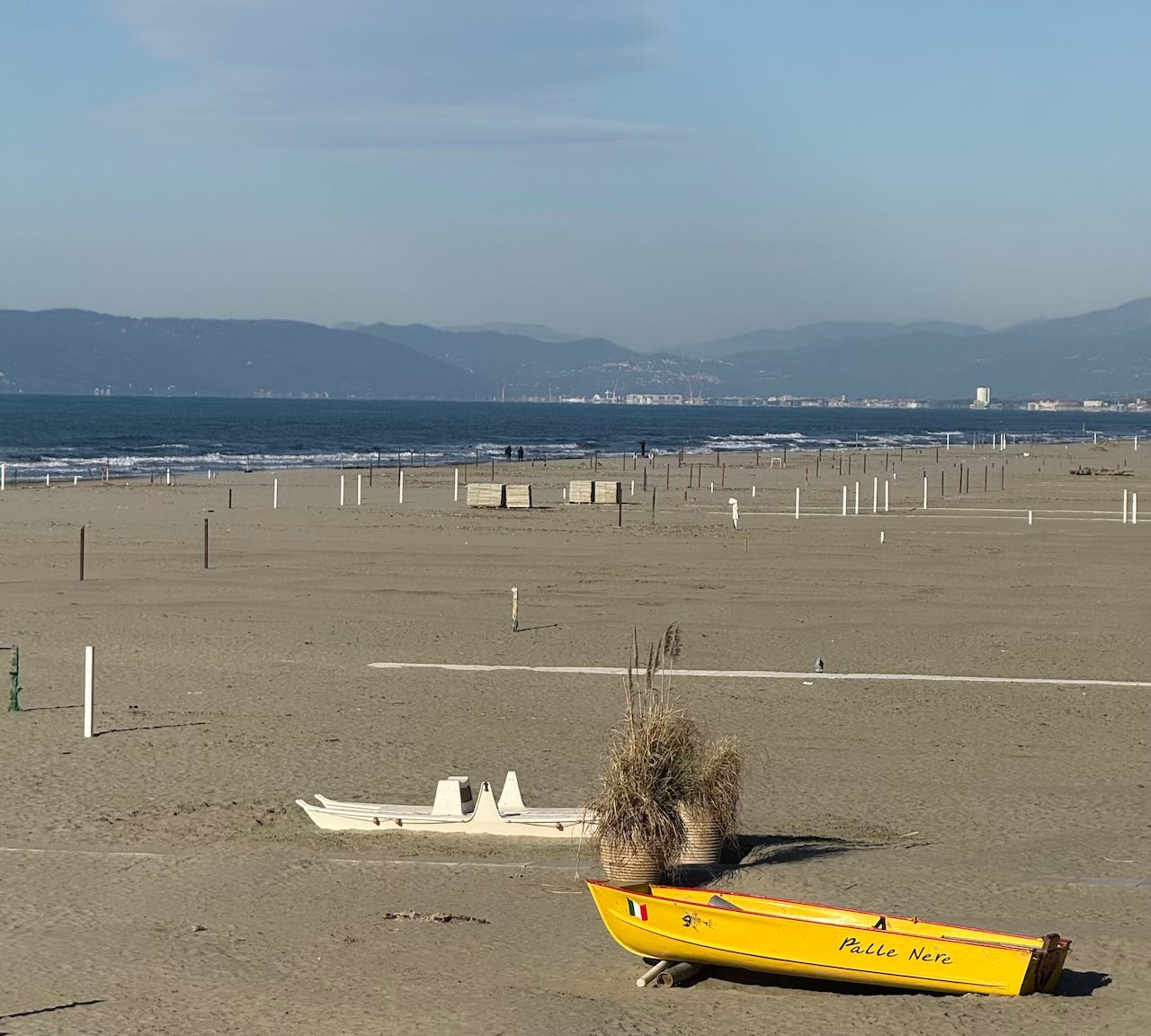
I think about Veronica every time I eat at Trattoria da Carlino, which is fifty meters from my front door in Tonfano, the quiet frazione of Marina di Pietrasanta, where the sea is a two-minute walk across Via Versilia and the beach clubs thin out before you notice. The two facts are connected.
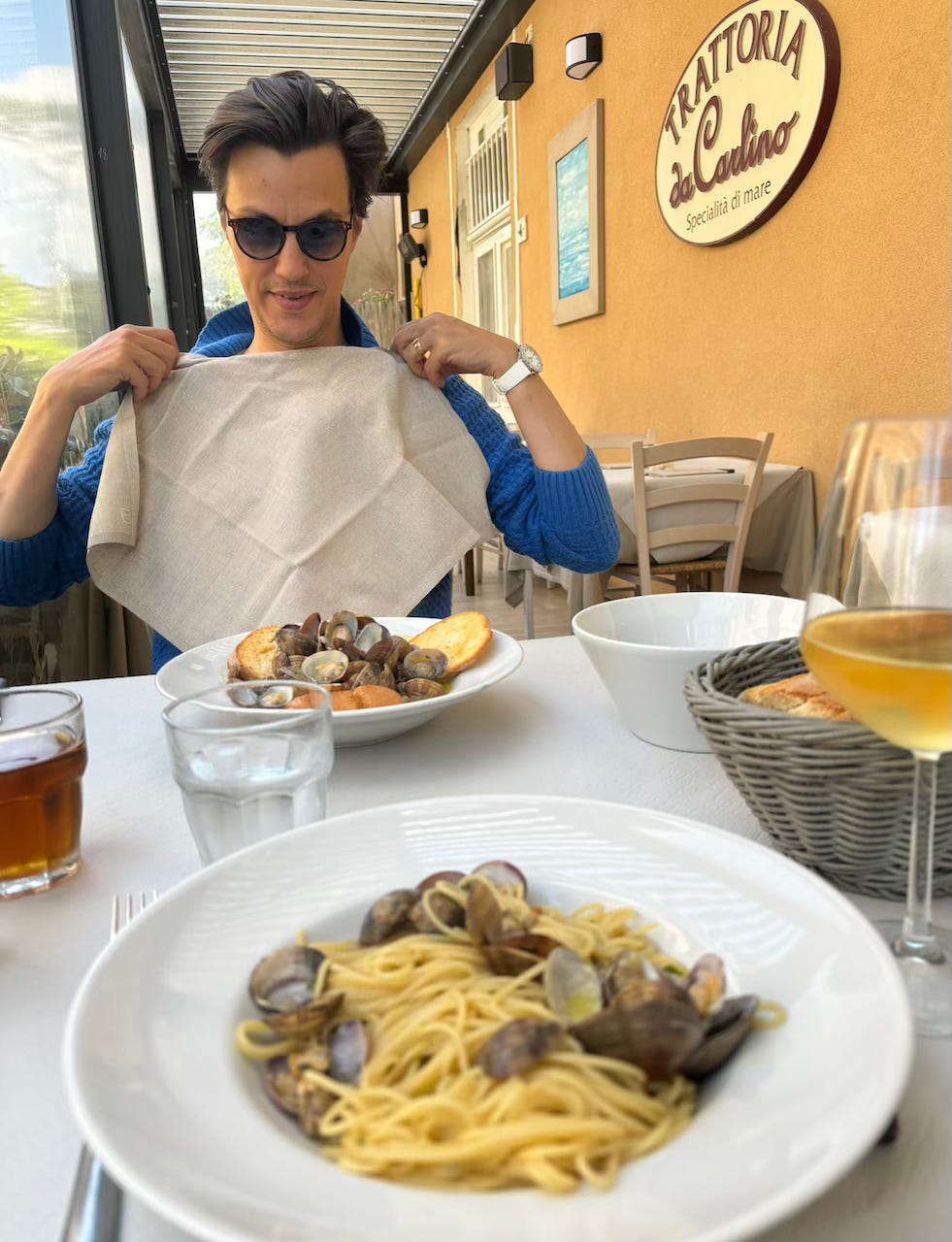
You order the vongole.
You can order other things. They are mostly fine. The seafood ravioli is good. The penne agli scampi are good. The fritto misto is fine. The grilled fish does what grilled fish does, which on this coast is honest and unadorned: the fish in front of the flame and then on the plate. But the vongole is the dish that makes Da Carlino worth the hundred-yard walk for me and the drive from Lucca for those who do.
Clams in a clean white-wine sauce, garlic, parsley, a heavy hand with the olive oil, and fresh-made pasta from that morning. There is no cream. There is no chef adding a signature herb. There is no foam, no quenelle, no dust of anything. There is a plate of clams in oil with pasta underneath, and the oil tastes like the sea decided to dress itself for dinner. The clams have been opened by heat, not pried by a hand in the kitchen, which means some of them come to you still closed, and you work them out yourself with a fork while the sauce underneath gets better and better. By the time the pasta is gone, you have a small pond of clam liquor and oil at the bottom of the bowl, and the bread on the table exists for this moment.
I have eaten this dish two dozen times, and it has not varied. That is the compliment. It is not a chef’s dish. It is the dish made by people who have made it so often that they have stopped thinking about it.
A small note about how they plate. If multiple people at the table order the same primo, the kitchen will bring it out as one massive shared plate rather than portioning it. This is not a rule I was told about. It is a rule I inferred after the third visit, when I watched four of us stare at a metal platter of vongole the size of a bicycle wheel and understood that we had ordered correctly. There is a small terra menu — tordelli, a couple of grilled meat dishes — and it is not why you come.
On Sundays, they make caciucco. Only on Sundays. The chalkboard is firm about this. They make the Viareggina version, which is the coastal-Versilia take on the dish: more shellfish and small fish than big white-fleshed pieces, sweeter, less spicy than the Livornese caciucco that gets all the press and all the tourism. Most restaurants on this coast do not put caciucco on the menu at all, because it takes hours, requires real technique, cannot be assembled to order, and does not photograph well in the era when food is supposed to photograph well. That Da Carlino makes it weekly with discipline and refuses to make it any other day tells you what kind of kitchen this is.
The house wine is fine. The bread is the standard Tuscan unsalted loaf, which exists for exactly the purpose of mopping up clam-pot oil at the end. There will be mopping. Wear a darker shirt than you were planning to.
The online reviews are mixed, and that is worth knowing. People who arrive expecting a destination restaurant find a neighborhood trattoria and feel cheated. People who arrive in August in a rented Audi and order the most expensive thing on the menu find the prices higher than they expected, because on the Versilia coast, everything is more expensive than they wanted, and they leave a one-star review about being tourist-trapped. The locals keep coming back through October, through January, through the rainy weeks of February when the place runs limited weekend hours, and you have to call ahead. The signal is in the second category, never the first.
This is what I think Veronica was getting at. Da Carlino does not stage its fish. It does not put it under a glass cloche, describe it in three languages, or arrange it on a slate. It cooks it the way the people in this town have always cooked it, which is the way they have decided is the right way, and it charges what that costs, which is something, but is not the price you pay for the story about the fish. The pleasure here is exactly proportional to the ingredient. No more, no less. That is the worldview. That is also why the vongole is good.
Veronica was not wrong about the sushi place, by the way. The Milan model has since moved to France with a new boyfriend, and the restaurant is closed. I miss it. I will keep missing it. But I am also not, as it turns out, eating sushi tonight. I am walking fifty meters down Via Versilia, sitting at the same paper-clothed table I have sat at fifty times, and ordering the vongole.
Because it is just fish. And in Tonfano, fifty meters from the sea, that is the highest compliment you can pay a plate.