

How to find free beaches in Italy
The Italian art of paying nothing for the sea.

The first thing to know about an Italian beach is that the sea, by law, belongs to nobody. The strip of sand directly at the waterline — the battigia, the last five meters before the foam — is public, and so is the corridor from the road to it, and so is whatever sand sits past the back row of any paid bagno. You can walk through any beach club gate in Versilia, Liguria, Romagna, anywhere on the peninsula, and nobody will stop you, because they cannot. The bagnino, in his pressed white shirt, watches you walk past the row of branded umbrellas and through the row of paid sunbeds and out to the wet sand, and he says nothing, because there is nothing to say. You drop your towel. You go in.
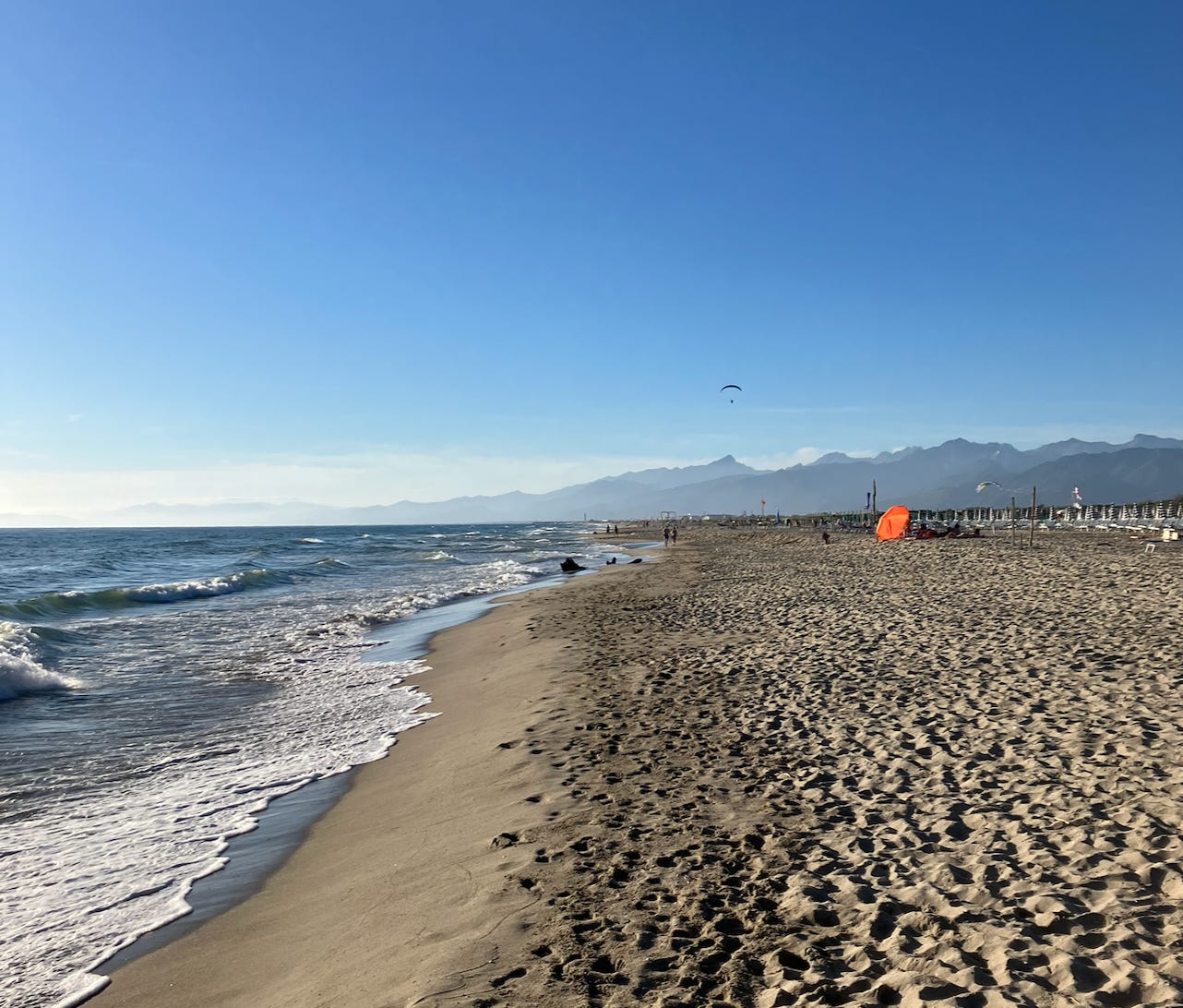
I learned this the way you learn most useful things in Italy — slowly, by watching, and by being slightly embarrassed for the first month. We had moved here in the fall and assumed the umbrella rows were the beach. Forty euros for two sunbeds and a parasol seemed like a Tuscan tax we had to pay if we wanted to swim. Then one Saturday in early spring, I was walking from the pontile in Marina di Pietrasanta toward what I thought was the public stretch and a small Italian woman in her sixties cut diagonally through the gates of a Forte dei Marmi bagno with a folded blue towel under her arm and a thermos in her free hand, and she walked the length of two paid rows like a person crossing her own kitchen, and she set up at the waterline twenty meters past the last umbrella, and she sat down. Nobody looked twice. The bagnino poured wine for a couple at the bar.
This is what we recommend to others: a free beach with amenities. There are official spiagge libere — spiaggia libera, libero on the sign, sometimes a small painted dolphin to help — and those are the easiest to find, free passages between the paid clubs that the comune has reserved for the public. You spot them on Google Maps, you spot them walking the lungomare, you spot them by the absence of branded umbrellas and the presence of, usually, more sand than the paid stretches because the paid ones get raked at six in the morning by men in waders with metal combs, and the free ones do not. The free sand is the sand the sea actually leaves. It has shells in it. It has dune grass at the back. The grain is bigger.
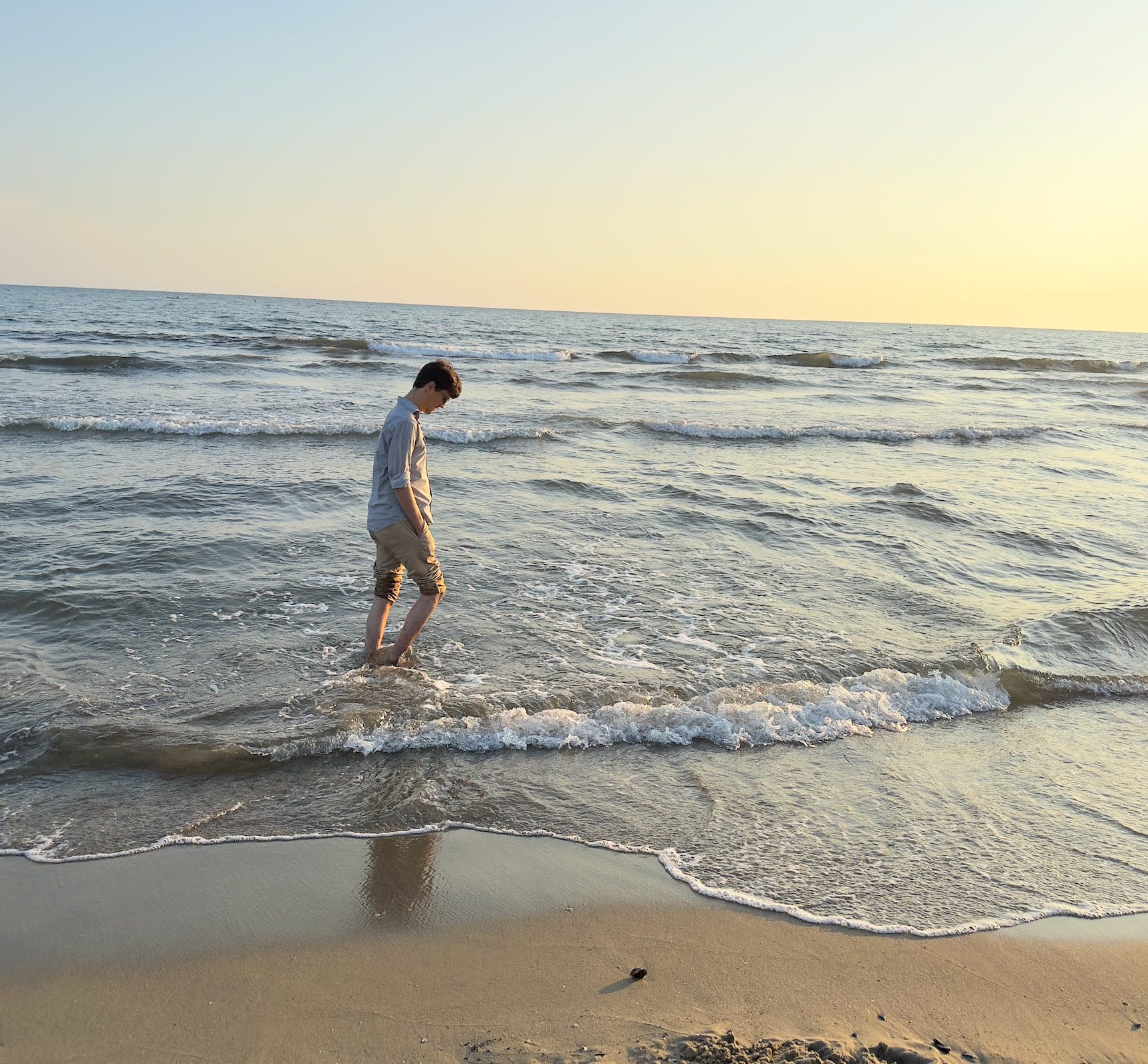
Then there are the spiagge libere attrezzate, free beaches with basic equipment — a small bar, a toilet, a shower, a row of cheap plastic sunbeds you can rent for ten euros a day instead of forty. These are the ones I prefer. Usually, every marina area has at least one serviced, free beach. In Marina di Pietrasanta, where we live, it’s called Kevin Beach. It’s sitting next to the camper park, hammocks strung between concrete pillars, a bar that puts a rockabilly band on the deck once a month in summer. Le Dune in Forte dei Marmi is another, and the joke of Le Dune — a free beach in Forte dei Marmi, where the bagno across the fence rents a cabina for the season at the cost of a small car — is the whole reason I love it. Trabucco in Marina di Massa sits by the working harbor with the small fishing boats and the sailboats, and the sand there has not been groomed in a decade, and nobody is asking it to be. Lido di Camaiore has the spiaggia pubblica with families, folding chairs, and a guy selling cold cocomero off a cart. The free stretch by the port in Viareggio has the cargo ships in the middle distance, which I think is the most honest view of an Italian beach you can ask for.
Then there is the third option, the one the woman with the thermos was using, and that most travelers never figure out. You walk into any paid bagno on the coast. You smile at the bagnino if you feel like it. You walk past the umbrellas. You drop your towel on the wet sand past the last paid sunbed. You swim. You come back and sit. You read. The bagnino does not approach you. He cannot. The water belongs to nobody, and so does the sand inside two meters of it. If you need a bathroom, the bigger paid bagni leave them open all day, and the smaller ones lock theirs, but you can usually walk into the bar and order a coffee for two euros, and they hand you the key. If you need to rinse the salt off, every comune in Italy has installed free showers along the lungomare every two hundred meters, and they work. If you brought a sandwich, you eat the sandwich. If you brought a cooler, you crack the beer. Italians bring their pizza boxes from the nearby local pizzeria. Nobody is going to enforce anything. The Italian beach economy is built on the people who pay forty euros for the umbrella, not the people who don’t.
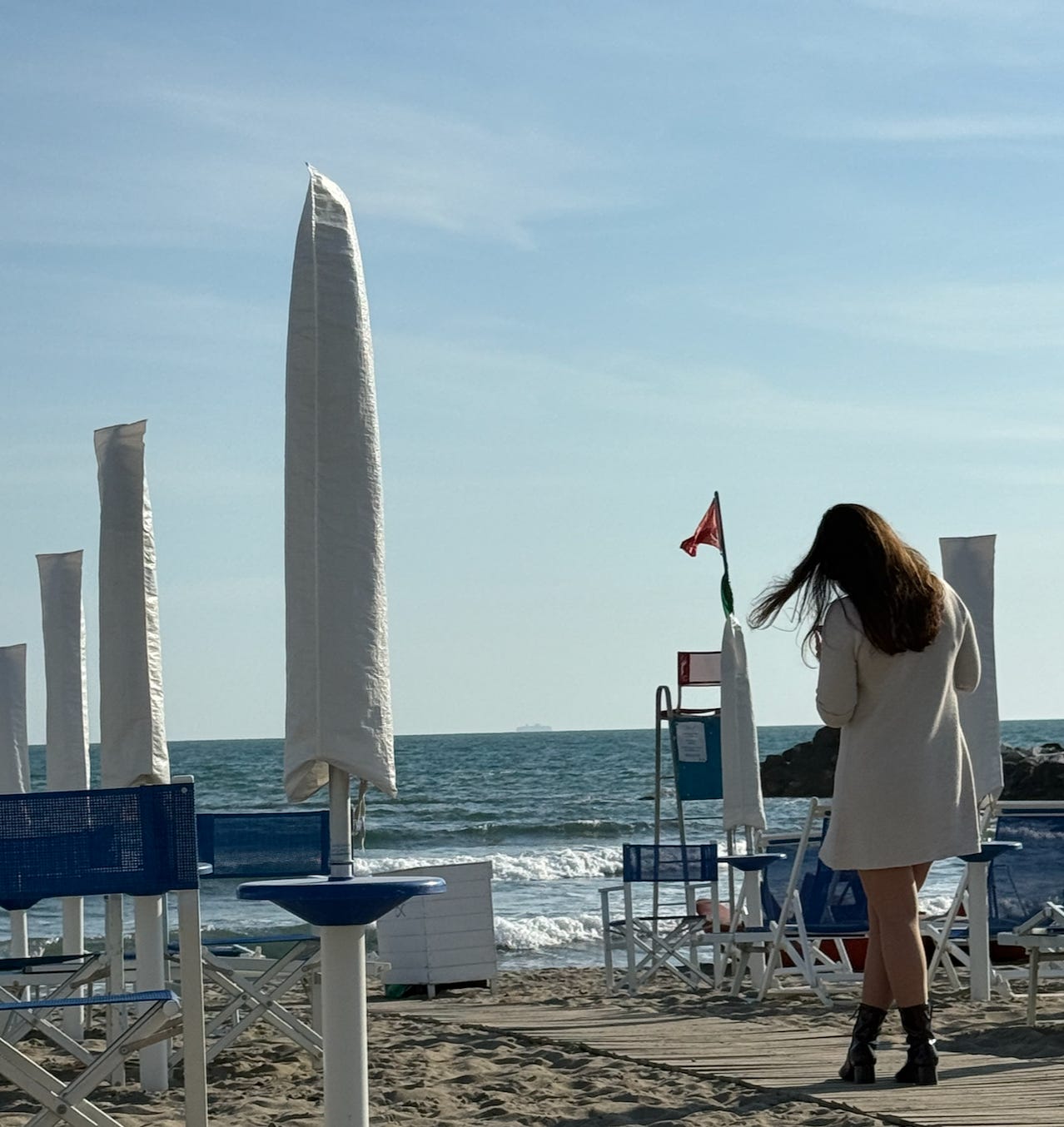
The thing I want to say about the free beach, though, is that it is not a budget option. It is not the discount alternative to the bagno. It is a better experience, and I would still go to it if the bagno were free, because the bagno is a haircut and the free beach is a beach. The umbrellas line up in pre-paid grids. The sunbeds face a single direction. A waiter brings you a spritz, and you tip him, and you tip the bagnino, and you have spent ninety euros by lunch, and you are sitting in a row with thirty other people who paid the same ninety euros, and the man under the next umbrella is taking a phone call. On the free beach, you put your towel where the sand stops sloping. You face whichever direction you want. The water is the same water. The light is the same light. You can hear the sea instead of someone else’s spritz.
For the price of a glass of Chianti, unlock the full Anywhere Italy experience. All of our articles, private stories, and access to our chat travel community.
Start your free 7-day trial.
The bagno sells you the idea of having booked a thing. The free beach sells you nothing. You have to bring your own water. You have to bring your own shade if you want shade. You have to leave your phone in the bag and get up to walk if you want to feel anything. None of this is hard. All of it is, weirdly, the part of the beach the bagno was preventing.
We live 50 meters from the sea, so it’s a bit unfair to tell you how we do this, but I’m gonna tell you anyway. We have a designated white bed sheet that we use for the beach. Yes, a simple cotton sheet, whatever. We bring two towels and a bag of goodies with water. We walk through a free passage (every beach has a free passage to the sea between 5-10 bagnos), sit down on the beach, not in a bagno. No sun-shade, no sun-bed, why need? Depending on our mood, the weather, and whatever we feel, we either stay for the entire day doing nothing, or just a couple of hours. We sometimes feel like we need food or coffee, so we just walk to the nearest bagno bar and grab something there. We do the bathroom stuff at home or at the bagno when we eat there.
Some bagnos ask 100 or 200 euros a day for a sunbed. Some ask even more. These are all paid for by tourists, vacationers, and visitors. I would be surprised if there’s a single local here who pays a fee for bagnos.
And lastly, the most local thing I saw once on the beach. A papa brought his own foldable armchair and a mini-fridge with beers in it. He walked past one of the most expensive bagnos here, which has white linen sunshades and big family-sized beds, and a Michelin-recommended restaurant with a pool in it, calmly walked past all of these, then, like a revolutionary, unfolded his chair at the end of the umbrella-forest, sat down facing the sea, and in total chill, finished his 6 beers from his fridge.
I am considering buying an armchair like that.


Planning a slow trip? My planner builds it for you. Free, no paywall, no email gate. Answer five questions (hub town, interests, travel month, days you want for slow discovery, and fitness level, because some of these towns make you climb), and you get a personalized route from my handpicked list of the 1,000 towns most travelers skip, with festivals, drive times, and a line on what each place is. Don’t like it? Refine it, swap towns, or browse the whole database by region.