What the tordello says
Tordelli versiliesi, lucchesi, massesi. A Dispatch.

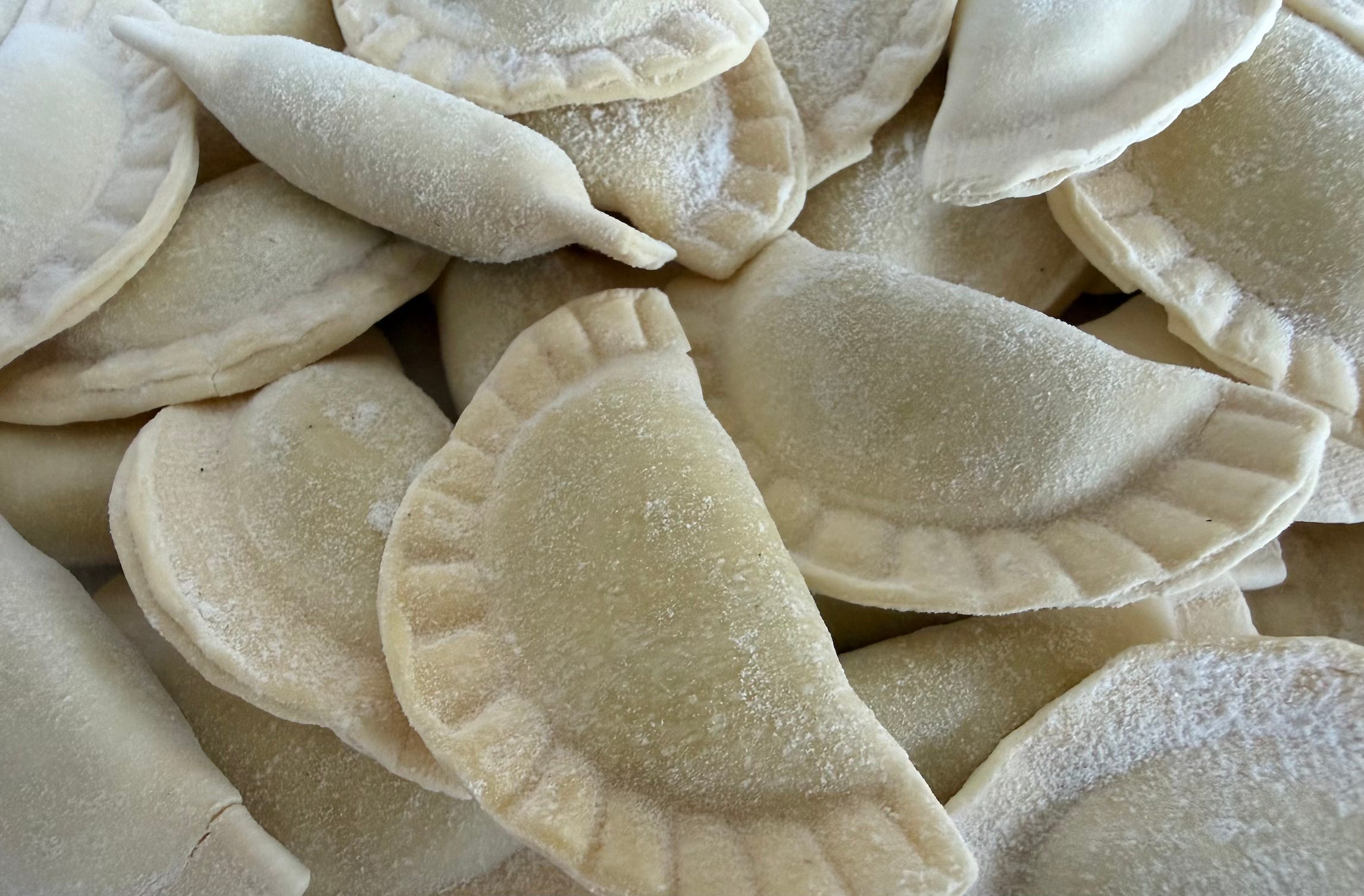
Pizza is Napoli speaking. Focaccia and pesto are Liguria speaking. Cassoeula is Milan, bagna càuda is Piedmont, orecchiette con cime di rapa is Bari, and on it goes: every Italian region and most Italian towns have a single dish that the place uses to tell the world we are us, and we are not them. The tordello is Versilia speaking. Specifically, the tordello is the way the towns of northwestern Tuscany, in three small contiguous corners called Lucchesia, Versilia, and Lunigiana, distinguish themselves from each other and from the much larger Tuscany around them. It is a half-moon of fresh egg pasta, filled with meat, chard, cheese, and a wild creeping thyme called pepolino, served under a meat ragù. It is also a sentence in the Italian conversation about what Italian means at all.
You have to remember, eating in this country, that Italy is younger than the food. The unified Italian state is a hundred and sixty years old, the Republic is younger than most grandmothers, the standard Italian language is essentially a manufactured product of twentieth-century radio and television built on top of fourteenth-century Latin, and almost everyone older than seventy here still speaks the dialect of their commune at home with their family. Italians do not, in their bones, identify as Italian. They identify with their immediate family, the place where they were born, and the food they eat together at the Sunday table. There is no Tuscan identity except as a posture against a Venetian one, and there is no Versiliese identity to speak of either, because the people of Pietrasanta and the people of Viareggio, who live ten kilometers apart along the same coast, do not particularly mix and do not particularly want to. The unsalted Tuscan bread, the pane sciocco you find on every table here, exists as unsalted because of a salt war between Pisa and Firenze in the twelfth century, and the bakers of Tuscany have stayed angry about it for nine hundred years. I once met a grandmother near Verona who had grown up in Florence and moved north sixty years ago and still asks her daughter to bring her pane sciocco every time she visits, hard as a rock and unsalted, and the daughter does, because the bread is part of the grandmother and they both know it.
This is the country in which a tordello argument is a real argument.
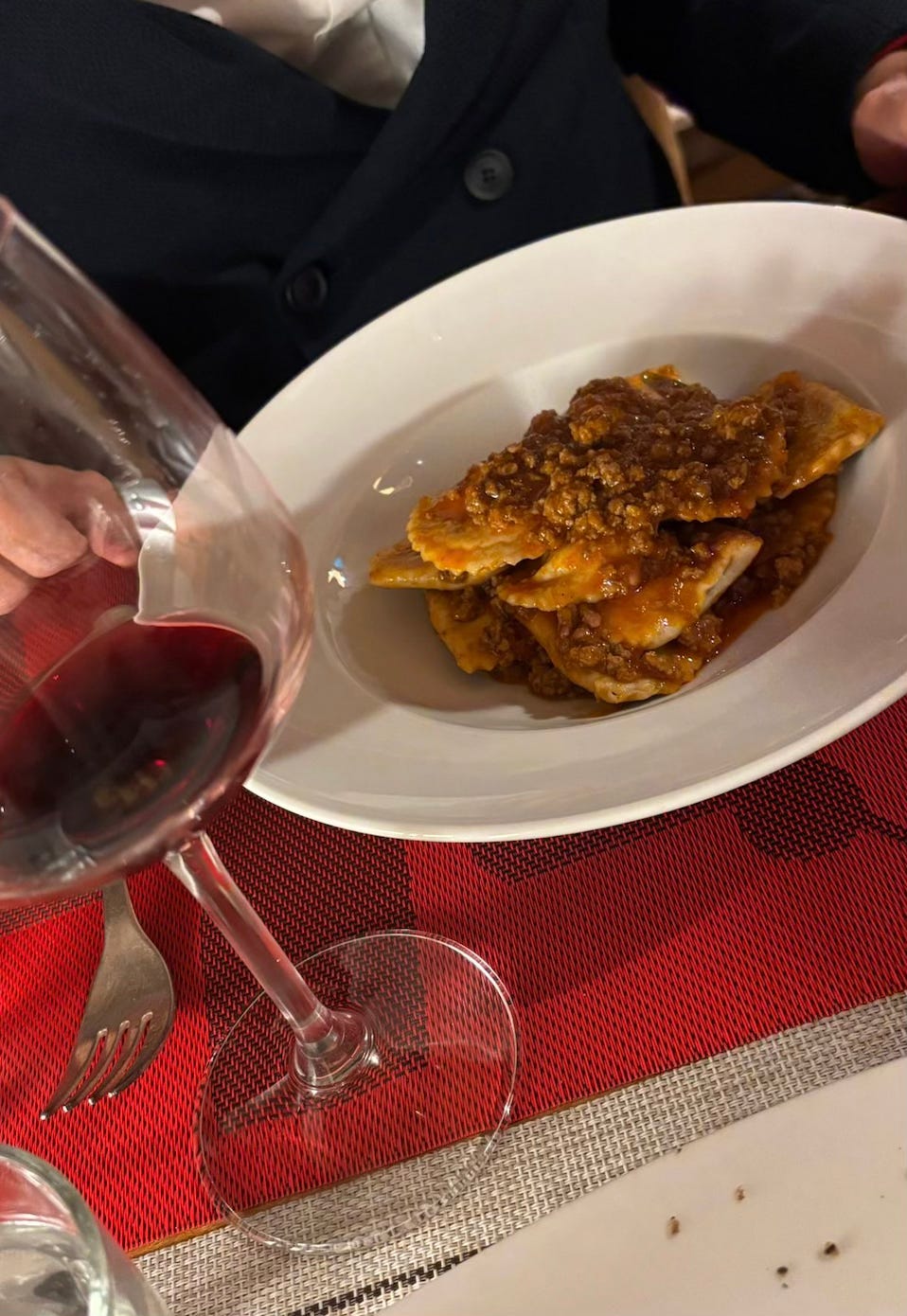
The first time I tried to be clever about it, I sat down in a small place near Lucca and asked the waitress if I could have the tordelli versiliesi. She looked at me without smiling. She said, signore, this is not the tordello versiliese, here we only do the lucchese, if it suits you I’ll bring you some. It suited me. The plate that arrived was, as far as my mouth could tell, almost exactly the same as the tordelli I eat in Pietrasanta. Maybe a little more thyme. Maybe a slightly different ratio of pork to beef. I ate every one of them without asking for cheese, and I have never tried that line again. The point is not that the difference is large. The point is that the difference exists and that it must be respected, because if the difference is not respected, then we are us stops meaning anything, and we are us is the only thing this country has ever really agreed about.
The recipe varies by valley. In Versilia, they use bietole, mortadella, and pepolino. In Lucca, they argue over which is the original. In Massa Carrara, some kitchens drop the ragù in favor of a simpler tomato sauce. Up in Casoli, a hamlet on the hills above Camaiore, they put the meat into the pasta raw, the way the women of Casoli have always done it, and this method, called alla casolina, won this year’s Tordello d’Oro contest in March. In Viareggio, they soften the ripieno with ricotta. In Pedona, a few kilometers inland, they keep it austere: beef, eggs, parsley, almost nothing else. Each of these is the real tordello. All of them are. The pepolino has to be present and tasted in the ripieno, otherwise, as one Lucchese cook puts it, son banali tortelli, they’re just boring tortelli. The d in tordello is a small thing. The d matters.
The Tordello d’Oro contest, mentioned a moment ago, is in its fifth edition, run by a Versilian magazine out of Camaiore. According to them, tordello is essentially this: there is no codified recipe for the tordello, no disciplinare, and there may not even be such a thing as the best tordello, because every one of us has in mind the version we grew up with, and the contest exists not to crown a winner but to keep the dish in the public conversation. The winners are almost always not in the towns. They are in frazioni, hamlets, places like Casoli, Lombrici, Capezzano Pianore, and Levigliani, small mountain villages on the lower flanks of the Apuans where the road winds up past olive terraces and chestnut groves to a piazzetta with three buildings, one of which is a trattoria. These are the kitchens that have been making tordelli the same way for four generations, and the women in them are the contadine, the farmers’ wives, and on the next ridge over, the cavatori’s wives, the marble quarrymen we wrote about last week. Tordelli is what they cook on Sunday. It always has been. They ate it on Giovedì Grasso, the Thursday before Lent, when chicken was the cheaper meat for the ripieno and beef came later, when there was money for beef. Today, it’s made from 2/3 beef and 1/3 pork, mostly.
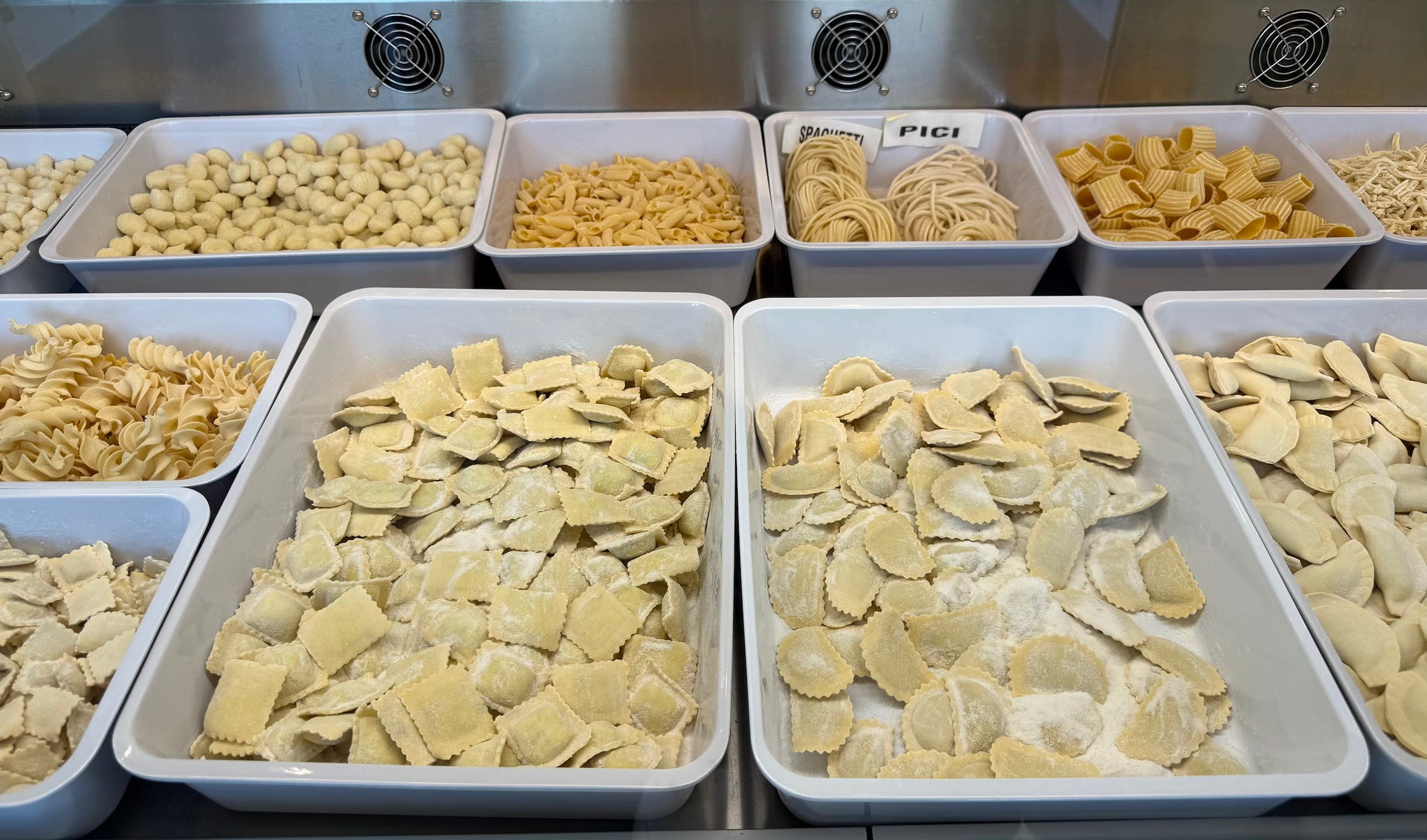
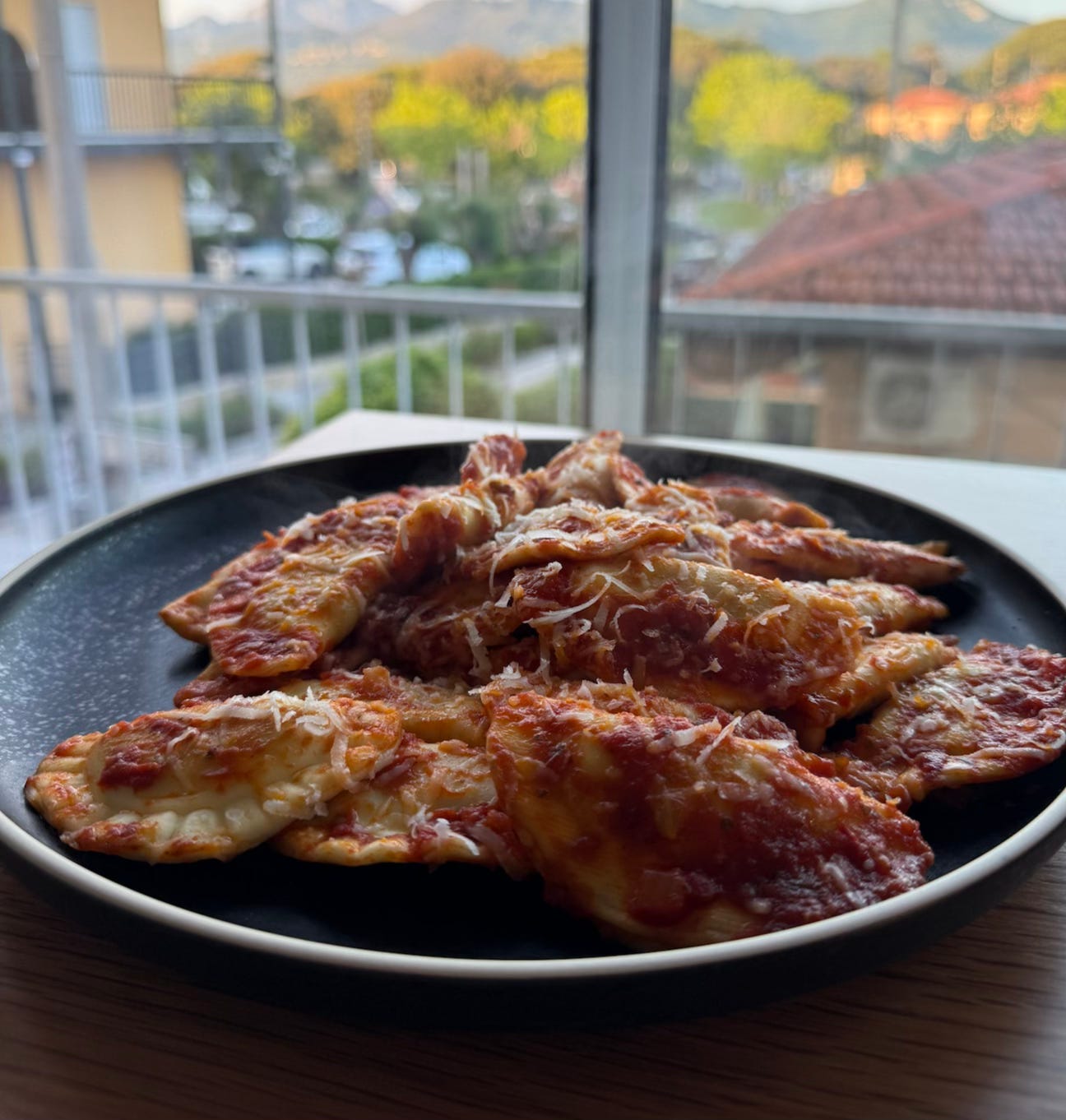
Don’t make tordelli at home. Filled pasta is for people who have done it for thirty years, who learned it standing next to their mother, who learned it standing next to her mother. Buy them. There is a pasticceria in Capezzano called Palmerini where I get mine, fresh from the back room on a small tray, and any Versilian town worth living in has its equivalent. Buy a small jar of meat ragù from the same place if you don’t make your own. At home: ragù in a wide pan over low heat, water boiling in a pot, three minutes for the tordelli, lift them straight out into the ragù with a slotted spoon, toss gently, plate, and grate parmigiano on top. It is the simplest thing you will cook this week. It will be one of the best things you eat.
What you are eating, when you eat a tordello in Versilia, is a small, specific argument that this place is not the next place over. The mountains behind you are not the mountains behind Lucca, even though they’re the same range. The bread on the table is not the bread of Bologna, an hour and a half north over the pass. The thyme in the ripieno grew on a stone wall that the cook walked past on her way home, on a hill that nobody in Pisa would recognize. The dish is the way the Versilian says I am here, I am from here, my mother and her mother were from here, and you are welcome to sit down at this table, but you are going to eat what we eat, and you are going to eat it the way we eat it. That is what a tordello is. The trophy on the shelf at Il Chiosco nel Bosco is papier-mâché. The dinner is real.