
Bolgheri | The story of an amaro
A bitter Hungarian drink and the family that carried it out of the country in a coat pocket.

You reach Bolgheri up a straight avenue of cypresses, five kilometers of them standing in two close files like a colonnade with the roof taken off, and the road does the thing it was planted centuries ago to do, which is tell you before you get there that you are arriving somewhere that thinks a great deal of itself. The comune the village belongs to carries its name. Everyone driving up that avenue is going up it for the same reason, and the reason is the wine, and I was the single exception on the road that day, a Hungarian heading to a small Tuscan hill town for a bitter drink and an ordinary café, because that drink is the bridge between the country I was born in and the country I live in, and I had wanted for a long time to stand at the exact place where its two ends meet. Or, at least, where it had a moment.
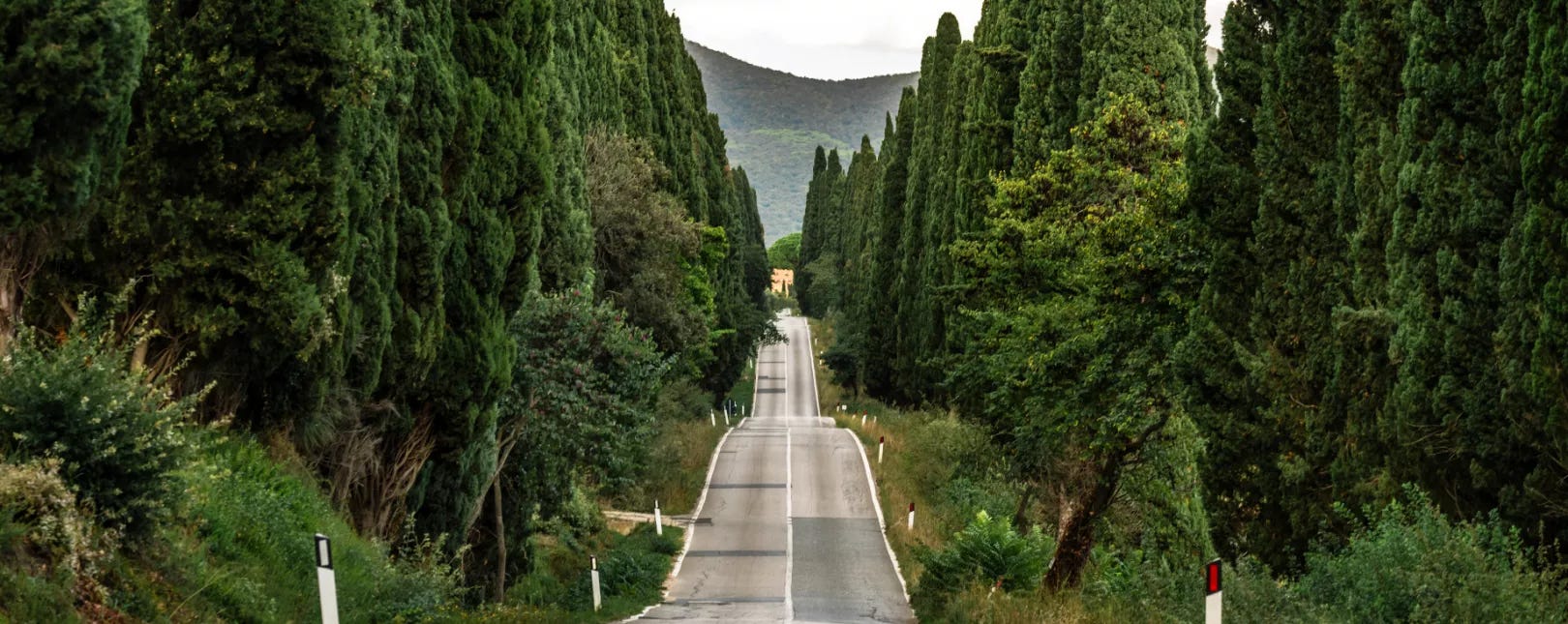
The wine is the real business of this place, and I will not pretend otherwise. Bolgheri is not Chianti. Most people abroad think Chianti is the Tuscan wine, the one and only, and Bolgheri is the rarer and more rarefied address, the bottles that the people who can pronounce them discuss in lowered voices, the wines that cost what a week costs. The country around the town is studded with the estates of Italian aristocrats, who are still very much a thing here, however much that startles anyone arriving from a republic. The hill town itself I can describe quickly, because if you have seen one Tuscan hill town, you have seen the shape of this one: a few streets, a gate, a small square, and that is most of it. The avenue is the remarkable part, and the land it runs through, the vines, and the famous names on the iron gates. I came for none of it. I came for the café on the square.
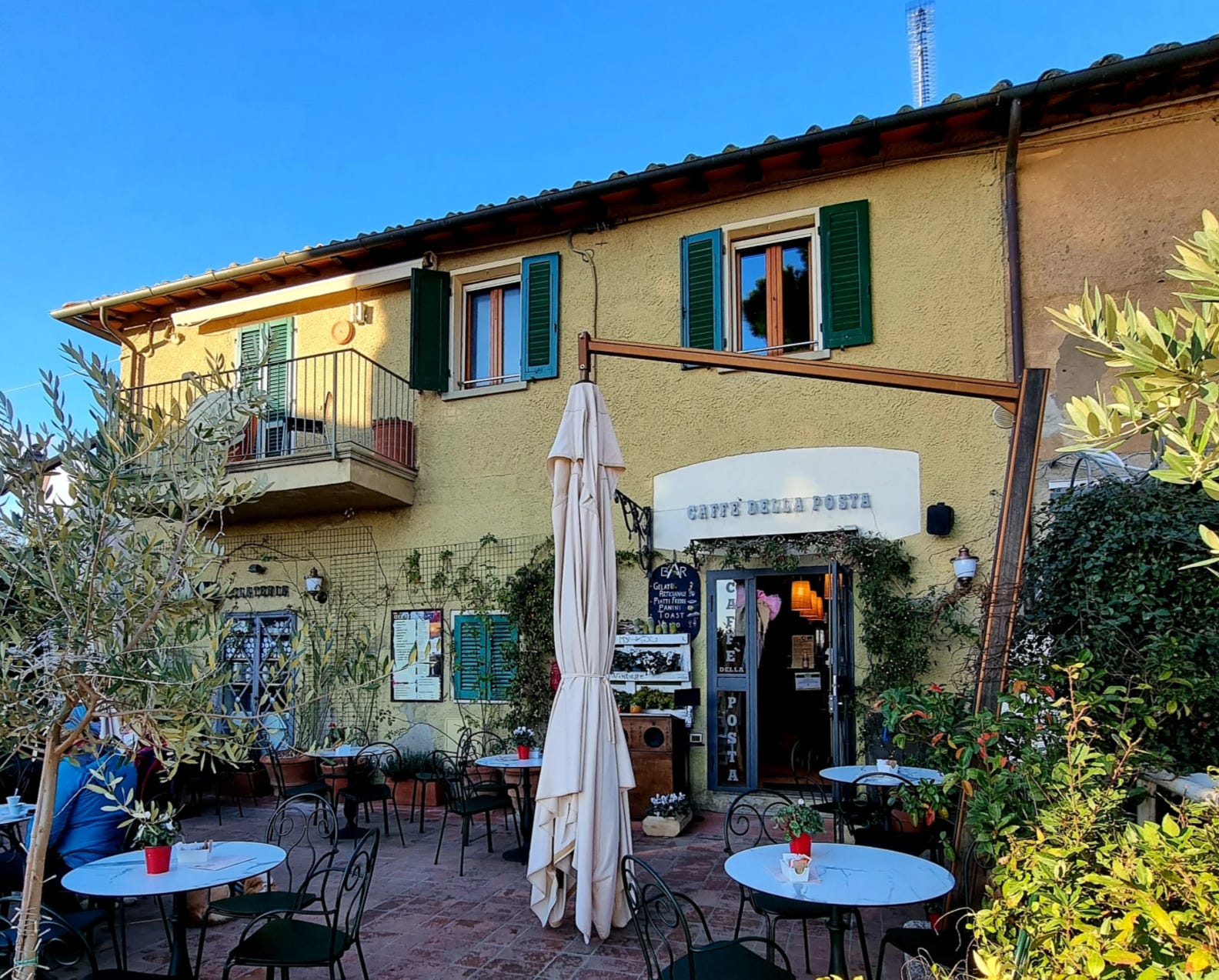
The Caffè della Posta is an unremarkable bar. You could step in for a coffee, drink it standing, step out again, and carry away nothing, and that is exactly what most people do, on their way to or back from a tasting. But stop and read the walls, and you understand that this is not a café that happens to have a few pictures up. It is a shrine in the clothing of a café. The photographs are all of one family across a hundred years, and the name on half the objects in the room is Zwack, and the drink in the faded old advertisements, the round dark bottle, is Unicum. I stood in front of those walls in the middle of a Tuscan wine village, and what I was looking at was Hungary.
To explain what I was looking at, I have to explain amaro, because it is the entire world this drink lives in. Amaro means bitter, and it is the great family of herbal liquors Italians drink at the end of a meal to put the meal to rest, every one of them claiming some medicinal ancestry, every one built from a guarded blend of herbs and roots and bark. Some are household names you can buy in any shop. Campari is an amaro, the one that goes into mixed drinks. Most of the others are taken neat, small, and dark as the night winds down. And some are made in such small quantities that one town turns out a thousand bottles a year and sells them to a handful of places that know to ask for them. I drank one of those once, up in the Lunigiana mountains, an amaro made from chestnuts and honey, bottled and labeled by the people in the village of Castelfranco who made it, the taste of one specific set of hills held in a glass. That is the range of the thing, from the bottle behind every bar in Italy to the thousand-bottle secret of a single valley.
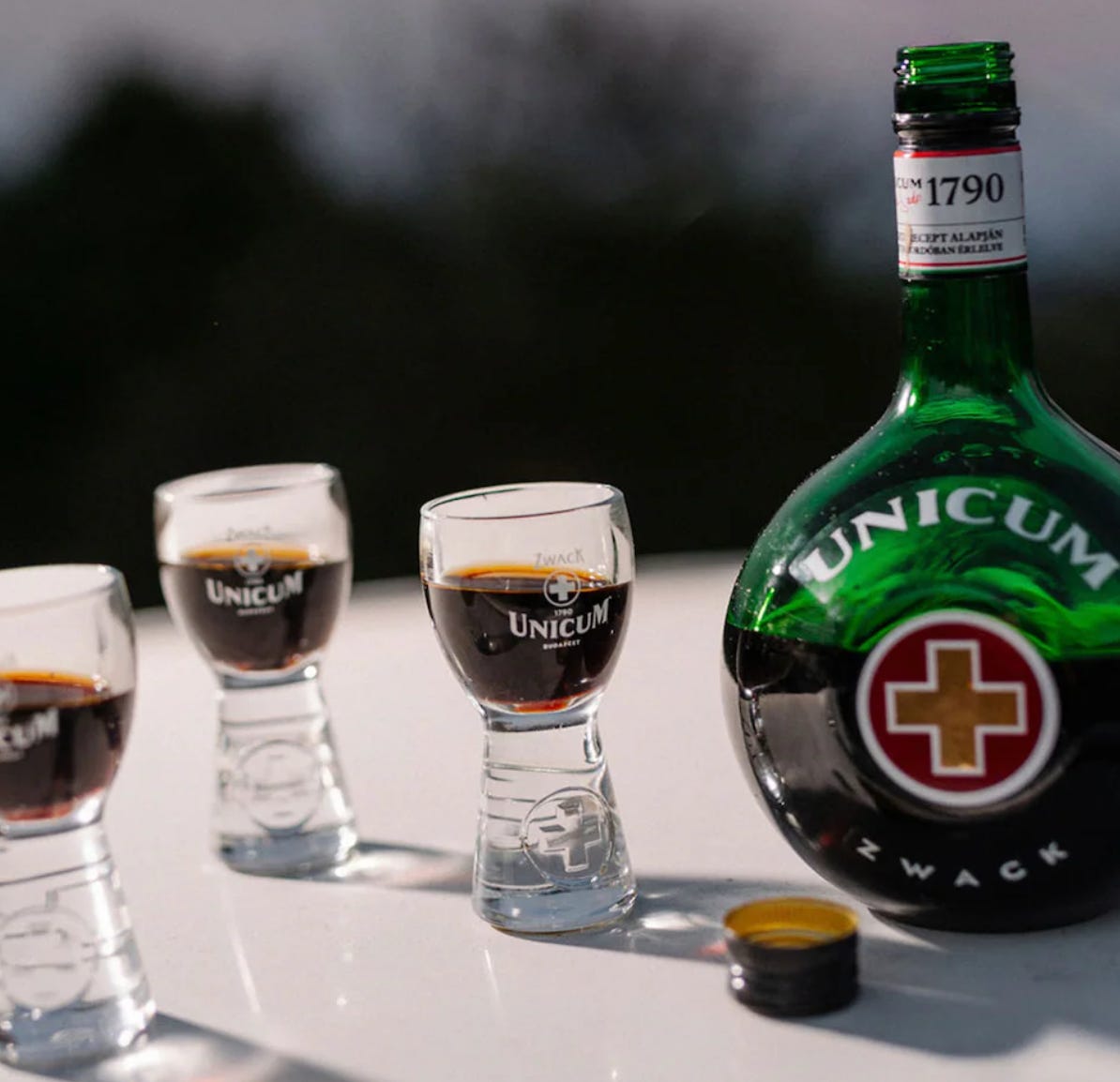
Unicum sits at the famous end. You see it on every shelf, known on sight by the bottle, a heavy dark sphere that looks less like a flask than a small bomb, and the shape was not chosen carelessly. There is a cross on the label, gold now on a red ground, though it began red on white, a Red Cross emblem the company rented by the year from the Hungarian Red Cross until the lease lapsed in the twenties, at which point the family simply reversed the colors and kept the cross. The liquid is thick and close to black, and it is bitter well past the point most drinkers are ready for, a bitterness that lands less like a flavor than a dare. Some say it’s so bitter that it is an acquired taste. Personally, I think it’s not bitter enough, obviously. The working men here take to it early and knock it back as a shot, not a long, polite sip. It is poured all over Italy as if it were Italian. And it is not Italian. It is the most Hungarian thing on the wall of this café, and the reason it hangs here is the best story my country owns.
For the price of a glass of Chianti, unlock the full Anywhere Italy experience. All of our articles, private stories, and access to our chat travel community.
Start your free 7-day trial.
What is actually inside the bottle is what gives the rest of the story any weight at all. The drink is built from more than forty herbs and roots and barks, and they do not come from one valley, they come from half the planet, some from the Carpathian hills back home and the rest gathered from Morocco and China and India and Sri Lanka and farther still, so that a glass of the most Hungarian thing on the shelf is in truth a map of the whole world steeped in spirit and shut into oak until it goes dark. The bitterness is not a flaw that the recipe has never managed to fix. The bitterness is the recipe. And the exact blend, the proportions, The Secret, is something like the recipe of the Coca-Cola or the spice blend of KFC, all kept secret.
Here is how we tell its beginning, which is not how the encyclopedia tells it. The legend puts the first glass at the Habsburg court in 1790, poured by a Dr. Zwack, physician to the emperor, who offered the bitter tonic to Joseph the Second as an aid to digestion, and the emperor tasted it and said, in German, that this was a unicum, a singular thing, one of a kind, and so named the drink for the man it was made for. Not a line of record supports it, so set the story to one side and keep the grounded version: a Zwack built the firm in Budapest in the eighteen hundreds, the round bottle and the cross went onto the label, and the bitter became one of the things Hungary made that the world knew Hungary by.
Then the century did to the Zwacks what it did to every one of their kind. The war flattened the factory, and in 1948 the new communist state took the company, the buildings, the brand, the family fortune, the whole of it, without paying a dime. The one thing the state could not take was the only thing that mattered.
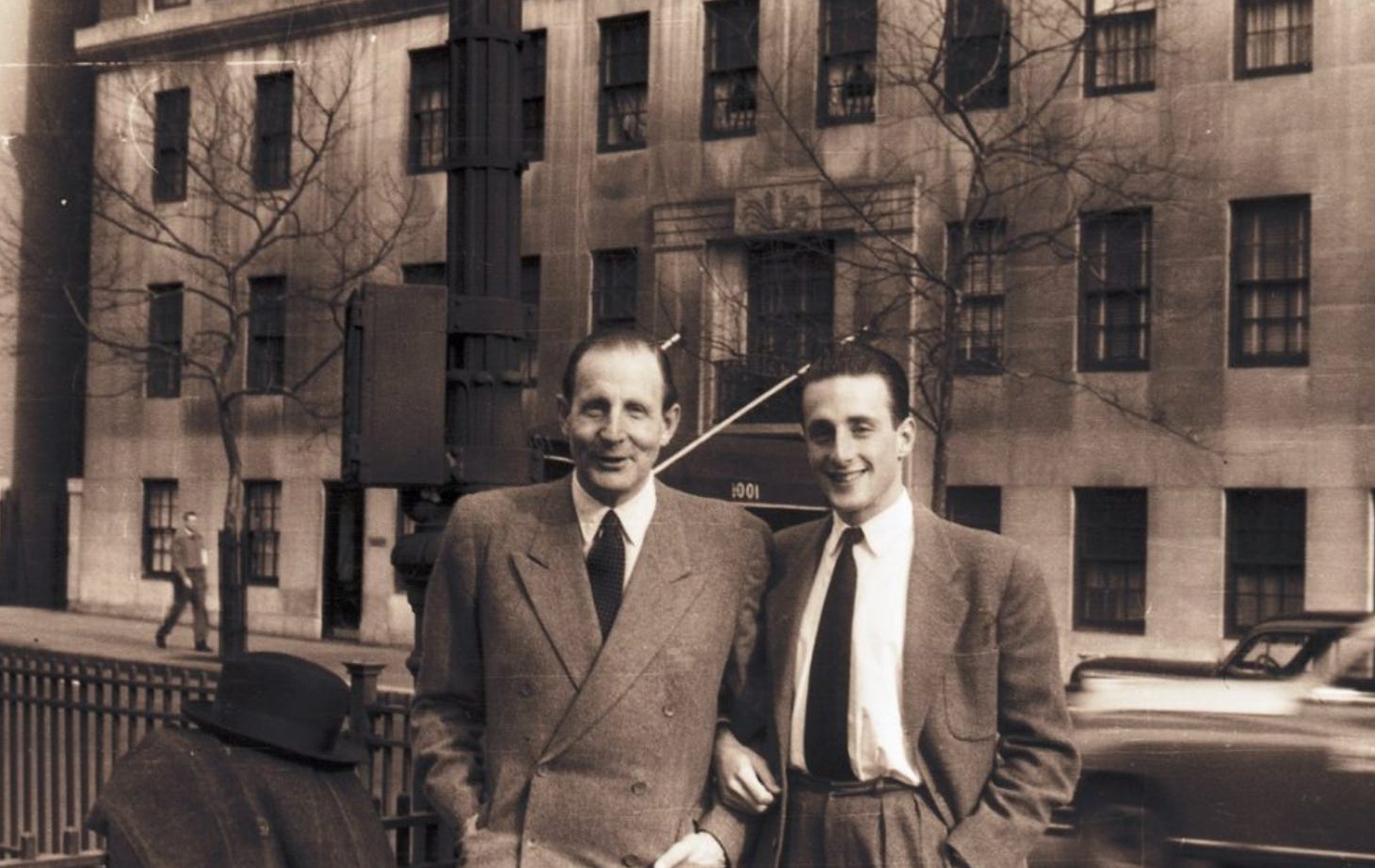
So when the authorities demanded the recipe, the family handed one over. It was a fake. The real one left the country in a coat. The family lived in Chicago, then in New York for a while, and then returned to Europe. Italy is where the drink came back to life. The production was set up in the north, the family settled in Tuscany, Florence first, and then the farmhouse here below Bolgheri, and the bitter found a second home faster than anyone had reason to expect. And the country gave the drink something back. The Zwacks arrived to find Italians refusing to take the medicine like medicine, pouring the brutal Hungarian bitter over ice instead, dropping in a slice of orange, sipping it slowly in the afternoon as an aperitivo rather than throwing it back as a cure. That habit, learned on squares exactly like this one, became in time a product the family carried back to Budapest. The drink had crossed a border running for its life, and the border, gently, taught it manners.
There is a reason it is rooted in Tuscany of all places, and it runs deeper than one farmhouse. For more than a century, after the last Medici died without an heir, the Grand Duchy of Tuscany was handed to the Habsburgs and governed in their orbit, the same imperial house that the drink had been born to serve. So when this bitter from the emperor’s table washed up on the Tuscan coast, it was not some foreign thing landing on neutral ground. It was a Habsburg drink, finding the one corner of Italy that had also once answered to Vienna, two surviving pieces of the same vanished empire recognizing each other across two hundred years.
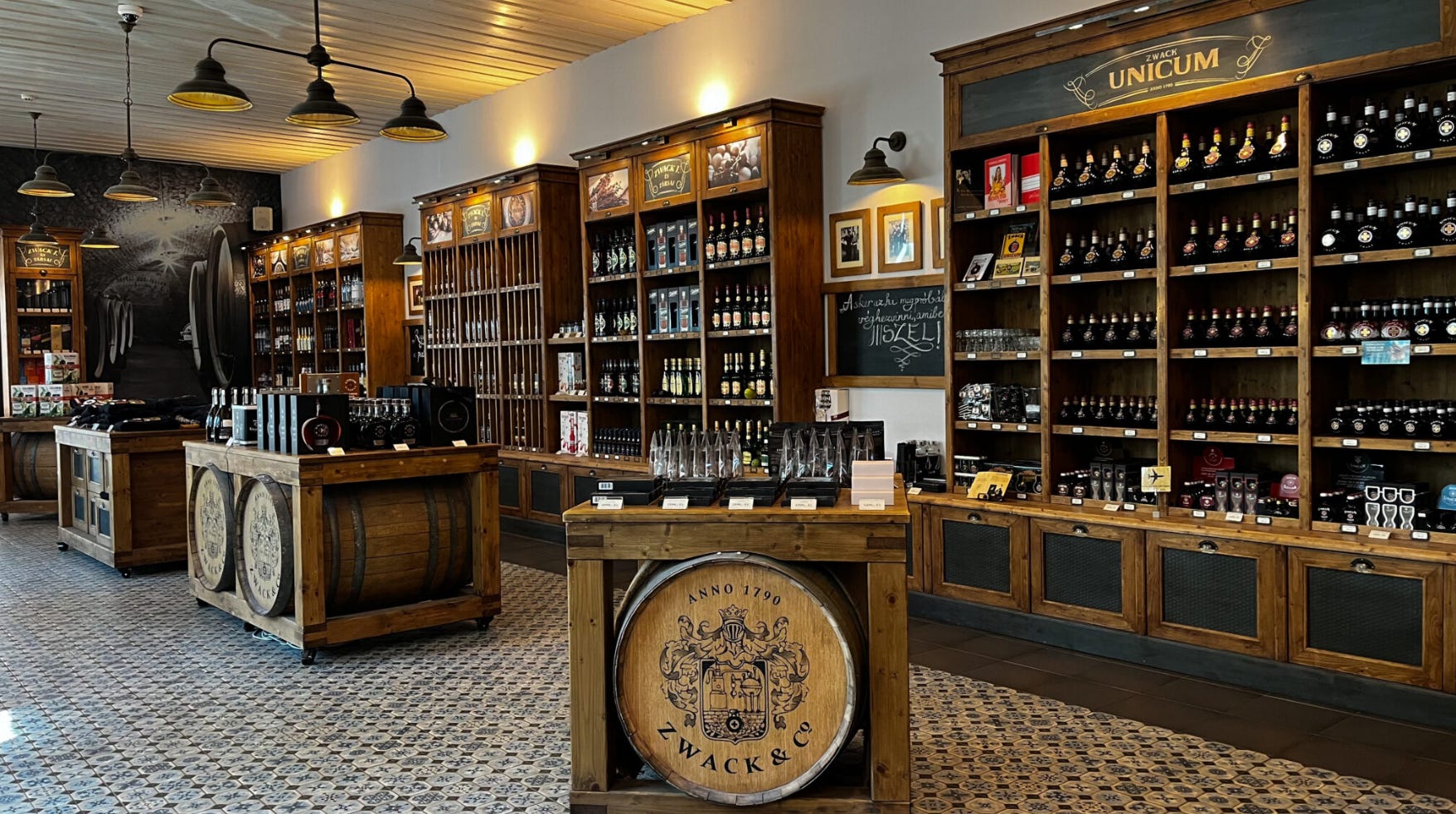
When the Wall came down, the family went home. They bought the Budapest factory back from the state, with debt, a partner, and a great deal of nerve, and began making the true Unicum again in the city where the fake had stood in for it for forty years. They own it still, still a family business, and half of them are still here in Italy, still keeping this café on this square. The man who carried the brand through all of it, who liked to say he had been among the last to leave the country and among the first to come back, died in 2012, by the local papers in a thermal spring up the coast in the Maremma, a short drive from where I was standing, an old exile letting the warm water of his second country close over him.
I was the one who drove all the way up for the drink and not the bottle, the Hungarian who came to a Tuscan wine town to stand in front of a wall and find, looking back at him out of the old photographs, the dark round weight of home.
PS: Photos for this post were taken from Zwack's official page. This is not a paid post by them.


Planning a slow trip? My planner builds it for you. Free, no paywall, no email gate. Answer five questions (hub town, interests, travel month, days you want for slow discovery, and fitness level, because some of these towns make you climb), and you get a personalized route from my handpicked list of the 1,000 towns most travelers skip, with festivals, drive times, and a line on what each place is. Don’t like it? Refine it, swap towns, or browse the whole database by region.