
How Italian Healthcare Actually Works
The SSN, the pharmacies, the ticket nobody warns you about, and why a back problem can get you sent to a spa

Before we jump right into it, I want to share my situation first because it affects how I write about this topic, and I think it is fair to tell you beforehand.
I am a citizen living inside the European Union, which means if you pay for healthcare in any EU country, you get treated in other countries for most illnesses for free. The two states (where you pay for healthcare and where you get treated) will settle the bill without you having to pay. But because I have some chronic health problems, I wanted to be fully protected in Italy. So when we moved here, I started paying taxes and registered for healthcare here. Before I did that, I paid my way into Italy, so I visited private clinics and private practitioners. Since I have been living here, I was in the ER twice (cut two of my fingers…), visited private clinics (some dermatologist issue), and was in public hospitals (heart issue). So what I share here is a mixture of my experiences, plus some research.
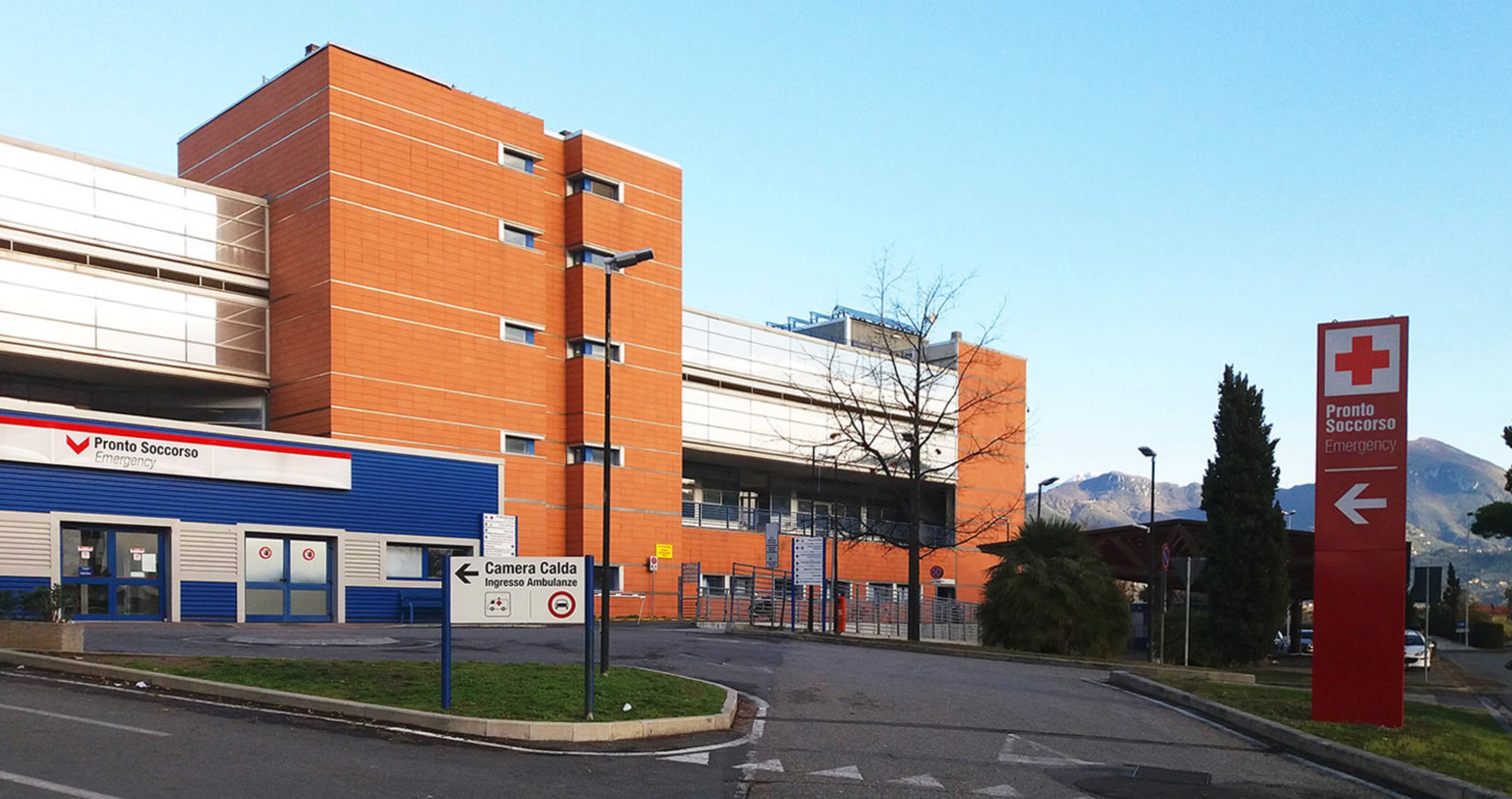
Start with the part that breaks an American’s brain. If you walk into an Italian emergency room with a genuine emergency, they treat you for free. They stabilize you first and work out who you are afterward, and that holds whether you’re a citizen, a resident here ten years, a tourist who slipped on a church step, or someone with no papers at all. Emergency care is free on the floor, and the floor is free because the Servizio Sanitario Nazionale (SSN) was built on the principle that urgent care is a right, not a purchase. That single fact is the thing most of the rest hangs off.
The SSN is the national health service, established in 1978 and modeled on the British NHS. It’s universal, funded through taxes, and free at the point of use for the things that matter most. The one wrinkle worth understanding early is that it’s run regionally. The principles are national, but the money, the hospitals, and the day-to-day administration sit at the regional level, so you register where you live, you choose your doctor from the local list, and your region is the one actually paying. Move from Toscana to Piemonte and you re-register. It’s the same system wearing slightly different regional clothes.
Getting into it as a resident isn't the bureaucratic nightmare you’d expect, and I’m not going to write you a step-by-step guide because the details vary by comune. The short version: if you work and pay taxes here, you’re in automatically. If you don’t, for instance an expat living on foreign income, you register voluntarily and pay an annual fee to join. Either way, you end up with a tessera sanitaria, the health card, and that card is the key to everything below.
The ticket, said honestly
Here’s where I correct the thing the brochures gloss over. For residents, it is not all free. There’s a co-pay, called the ticket, on specialist visits, tests, and non-emergency care. But the honest number is the point: it’s small. A first specialist visit runs around €20 to €25. You pay for lab work and other exams.
Enormous categories of people pay nothing at all. Children under six and adults over sixty-five below an income threshold, the unemployed, pregnant women, people with chronic conditions or recognized disabilities, all exempt. Your GP is free. A real emergency is free. A hospital admission is free. The one trap to know: turning up at the emergency room with something that isn’t an emergency can cost you a €25 ticket for wasting the slot, which is the system’s polite way of telling you that’s what the pharmacy and your GP are for.
When I was still paying for healthcare in another European country, I showed my European healthcare card and paid nothing, not even the ticket. I showed up in Rome’s biggest hospital’s emergency room with an almost mid-through cut finger. They treated me, and I paid nothing. My home country settled the bill. After I registered my healthcare here, I made the same mistake again: I cut through a different finger (I love to cook at home and have a Japanese chef's knife, so go figure…), showed up in the local hospital, got treated, and paid a €25 ticket. If you have private health insurance, this playbook might be different, so go check your insurance provider.
The pharmacy is your first line of defense
Let’s talk about the green cross because in Italy, the pharmacy isn't just where you pick up pills. It’s the front door of the whole system, and it’s open to everyone, with or without a healthcare card. You walk in, describe what’s wrong, and the pharmacist, who trained for years, will triage you on the spot: here’s what to take, or no, that one you need to see a doctor for. A lot of what would require a prescription and a doctor’s visit elsewhere is simply handed to you over the counter. We’ve solved more minor problems standing at a pharmacy counter than we ever did sitting in a waiting room in any other country we’ve lived in.
And there’s always one open. Pharmacies rotate a night-and-holiday duty, the farmacia di turno, posted on the door and online, so at three in the morning in a small town there is still a pharmacist on call somewhere within reach. It’s a quietly brilliant piece of infrastructure that most visitors never notice until they need it. In most community pharmacies, you can get vaccinated, have simple tests and exams, get blood work, and even have some basic hospital functions. I’ve never seen this elsewhere and am not sure if it is unique, but I think it’s a brilliant system that channels a lot of people out of the ER and regular hospital visits, so you don’t have to go around in circles with a minor cold or fever or if you need your latest influenza vaccine.
You’re never far from care
The reach of the SSN is the part that genuinely surprised me, coming from Hungary, where serious medicine concentrates in the capital. Here it’s the opposite. Nearly every small town has a hospital or a guardia medica for after-hours and weekend problems, and every university city, and Italy has a lot of them, anchors a major general hospital or policlinico with the full range of specialists. You are rarely more than a short drive from real care, not hours. The density is the point. The system was built to put medicine within reach of everyone, not to make the sick travel to it.
Speaking of accessibility, the car that comes to you when you dial 112 (the 911 equivalent) is probably driven by your neighbor. There’s a good chance the ambulance isn’t a state vehicle at all. Across much of Italy, emergency response runs on volunteers, braided out of two opposite traditions doing the same work.
One is Catholic: the Misericordie, lay confraternities dating back to 1244 in Florence, one of the oldest volunteer organizations on earth, with over 700 still running ambulances today. We have a station next to our apartment here in Pietrasanta, and my butcher, Angelo, volunteers there often. The other is secular: the green-cross and white-cross Pubbliche Assistenze under ANPAS, born from workers’ mutual-aid societies after unification, often set up against the religious ones, around 900 of them now. Add the Red Cross, and other local foundation-run services, and a startling share of the national safety net is ordinary people who trained on their own time.
It’s also why coverage reaches towns the state alone might never staff. Where we live, their crosses are on half the buildings in every comune. The medicine is national, the funding regional, but what actually comes to you is often local, voluntary, and older than the Republic.
For the price of a glass of Chianti, unlock the full Anywhere Italy experience. All of our articles, private stories, and access to our chat travel community.
Start your free 7-day trial.
Why it ranks where it ranks
People throw around “best healthcare in the world” loosely, so here’s the actual citation. The last time the WHO ranked the world’s health systems, in its 2000 World Health Report, Italy came second out of 191 countries, behind only France. The United States, which spends more of its economy on health care than any other country, ranked 37th. The ranking is old and has been criticized for its methodology, but no global redo has knocked Italy out of the top tier, and the outcomes still back it up.
Three things put it there. First, the access I just described: a system that reaches everyone is a system that catches the cardiovascular problem or the tumor while it's still a signal, before it becomes the thing that kills people in their fifties. When you need to move large numbers, accessibility comes first.
Second, the depth of the tradition. The Schola Medica Salernitana in Salerno was the first medical school in the world. The University of Bologna, founded in 1088, is the oldest university on earth. There are hospitals in these university cities that serve as training grounds for medical staff. The buildings are different and rebuilt, but the tradition has been going on for the last thousand years.
Third, the doctors themselves, who have the frankness and bravery to take on the hard, brave cases that more defensively run systems quietly decline. The innovation of the Italian healthcare system is unmatched: entire disciplines- anatomy, pathology, circulatory system- were discovered, started, and figured out first by Italians. Not to mention the modern additions like stem cell gene therapy (first approved in the world), and the fact that Italy is always at the top of the world in surgical marvels.
For residents, it gets better
Once you live here and have your medico di base, the family doctor you pick from the regional list at no cost, the system opens up. The GP is your gateway: free visits, prescriptions, referrals to specialists. Most of the medications you need long-term for a chronic condition cost little or nothing. And the back end is generous in ways that catch you off guard: post-operative care, rehabilitation, structured elder care, all built in. My favorite example, and I promise this is real: if you’ve got the right back problem, the SSN can send you to take the thermal waters. A prescription for a spa. There are worse healthcare systems to be stuck with.
The honest weaknesses, and the private escape hatch
It isn’t perfect, and pretending otherwise would make everything above harder to believe. The real failing is the wait. For non-urgent specialist appointments, the public queue can be long, and how long depends entirely on what you need, which exam, and where you are. Urgent gets seen fast. A routine check you’ve been meaning to book can sit for months.
Also, for those who are into longevity and test their entire body with multiple exams without any predefined conditions or symptoms, hard pill to swallow: the waiting list won’t favor you. But there is a solution: swing out those credit cards!
So there’s a private lane running alongside the public one, and using it is no drama. You skip the queue, skip most of the paperwork, and pay out of pocket, and the prices are a fraction of what the same visit costs in the US, with none of the insurance theater. In our first years in Rome, I did exactly this. If something was wrong, I just went private, paid for it, and got on with my life. I want to be clear: I do not earn a New York salary. That’s the part Americans struggle to absorb: here, paying out of pocket for good private care is a reasonable Tuesday, not a financial event that requires years of debt. Yes, it’s not affordable for most Italians, but it is there for those who want shortcuts.
One final note: if you’re coming from the UK, the NHS and the SSN are close cousins in structure and mechanics, which makes sense, since Italy modeled the SSN on the NHS in 1978. The differences you’ll feel are two. First, Italians lean on the private lane more readily than you’re used to, not because the public system is worse, but because paying out of pocket here is cheap and normal rather than a last resort. Second, the sheer reach. I’ve walked into general hospitals in small towns you’ve never heard of that run to the size of a decent London hospital. The access isn’t concentrated in the big cities. It’s genuinely everywhere, for everyone.
Absolutely final note: if you’re coming from the US, brace for the thing that won’t compute: yes, it’s free, even for you, in an emergency. But because it’s free, the hospitals don’t look like a billion dollars. There’s no big pharma covering the bill and no shareholders running the place as a cost center, so “shiny” and “comfortable” sit well below “accessible,” “free,” and “effective” on the list of priorities. A lot of these hospitals are housed in old buildings, sometimes literal former palaces. Don’t let the lobby fool you. It may not look like a billion dollars, but you’re in better hands here than in some bright, glassy clinic off a Midwest interstate.
Quick last clarification: there is always a random art piece in Italian hospitals, here in Versilia, Carrara is close, so almost all healthcare buildings sport some medieval marble statue, and obviously, everything has marble floors. So in a sense, it does look like a billion dollars!


Planning a slow trip? My planner builds it for you. Answer five questions, and you get a personalized route from my handpicked list of the 1,000 towns most travelers skip, with festivals, drive times, and a line on what each place is. Don’t like it? Refine it, swap towns, or browse the whole database by region. Simple. Free. No paywall, not even an email gate. Pure discovery for you.