

How the aperitivo actually works
A field guide for travelers who want to keep their car, their money, and their morning.

Almost everything you know about the aperitivo is roughly correct and slightly wrong at the same time. This is the situation with all the famous Italian rituals. The headline is right, and the wiring underneath is different from what you have been told.
I knew about the aperitivo before I moved to Italy. Most people do. It is somewhere in the first ten Italian words a foreigner learns, after pizza and pasta and ciao and grazie, on the same shelf as espresso and gelato. By the time you arrive in the country, you have a picture in your head. The picture is roughly this:
An afternoon thing, around five or six. A drink, probably a Spritz, probably orange. Some snacks on the table, olives and crisps and small focaccia squares. A social occasion, with friends. Outside if the weather is good.
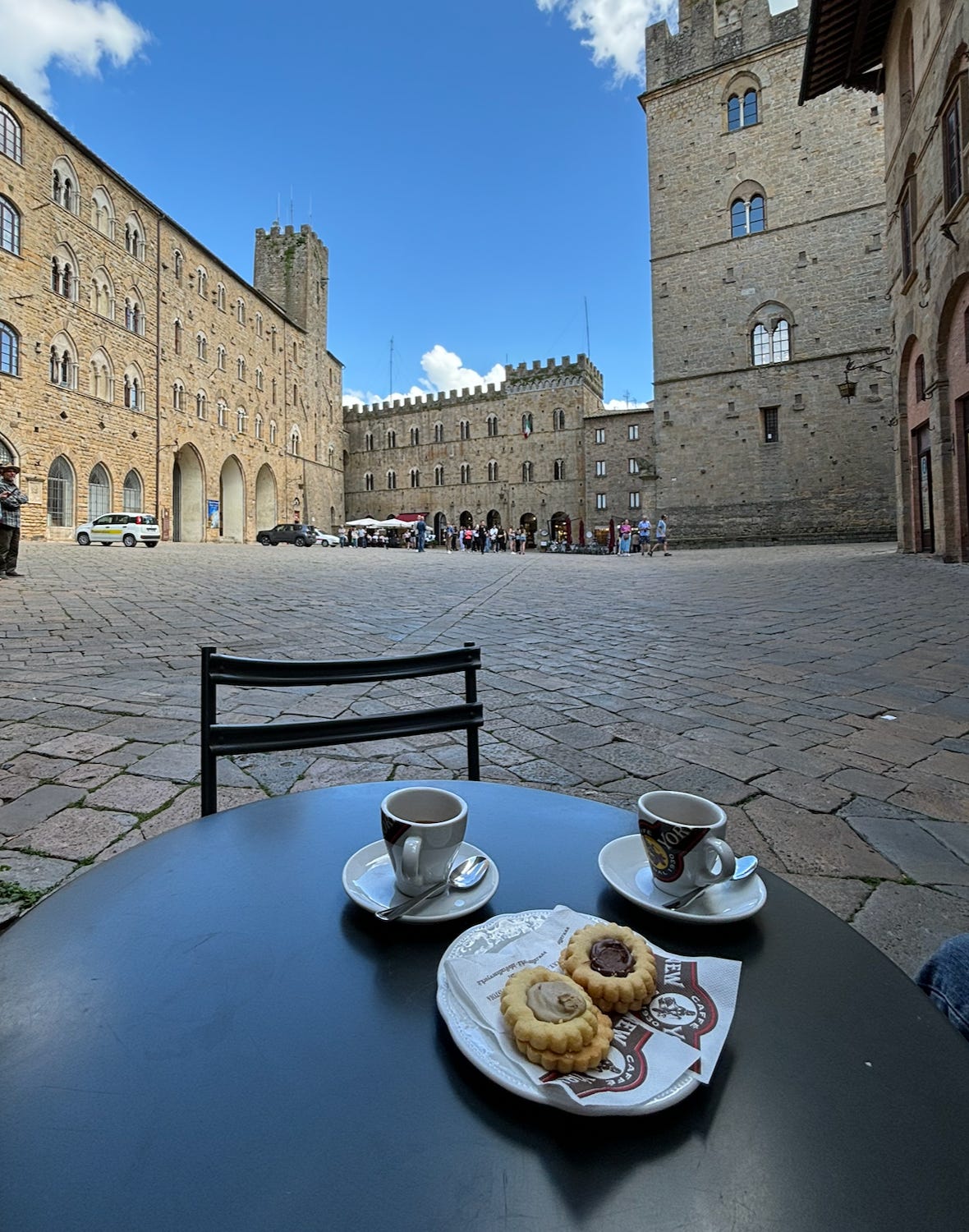
That picture is true. It is also missing most of what makes the aperitivo an institution rather than a drink.
I have lived in Versilia for over two years now, and I have done the aperitivo hundreds of times. What I learned, slowly, is that the aperitivo is not a drink-and-snack ritual. It is a structural hinge. Italians eat dinner late, around eight-thirty or nine, and they do not want to arrive at the table starving and exhausted. The aperitivo is the deliberate hour-and-a-half they put between work and dinner to bridge the gap. The drink and the snack are tools inside the hinge. The hinge is the institution.
Once you see this, the rest of it makes sense.
What I thought: it is an afternoon thing
What I learned: it is a pre-dinner thing, and the difference matters.
The aperitivo hour is locked to the dinner that follows it. Italians sit down to dinner at eight-thirty, sometimes nine (!). The aperitivo is the ninety minutes immediately before. In Versilia that means six-thirty until eight. In Milan it can run earlier, six until seven-thirty, because Milan is a working city and people eat slightly earlier. In Naples and Sicily it can start as late as eight, because dinner is later too.
If you order a Spritz at three in the afternoon, you are not having an aperitivo. You are having a Spritz. A Venetian woman once told a writer that when she went to Milan and tried to order an aperitivo at eleven in the morning, the woman behind the counter looked at her and said Aperitivo? You know what time it is? The hour matters. The hour is half the institution.
What I thought: it is a drink with finger food
What I learned: it depends entirely on where you are, and the food is almost always free.
This is the move that breaks every foreign expectation. In most of Italy, in most bars, the aperitivo food comes with the drink. You order a Spritz for six or seven euros and a small bowl of olives appears, then a bowl of crisps, then a small plate of focaccia, then maybe a few slices of salame. None of this costs extra. It is included in the price of the drink. The bar is making its margin on the cocktail and giving you the food to keep you in your seat for ninety minutes.
There is also a paid version called apericena, which is aperitivo and dinner combined into one transaction, usually a fixed price for a drink plus a board or buffet of food substantial enough to replace dinner. Apericena runs ten to fifteen euros, and it is a different institution, often complained about by Italian food writers because it has corrupted the original.
For our purposes, the rule is simple. If the aperitivo food is on a menu in English at a fixed price, you are in a tourist place. If the food appears at your table without you ordering it, you are in a real one.
What I thought: it is just cocktails
What I learned: it is whatever the bar wants it to be.
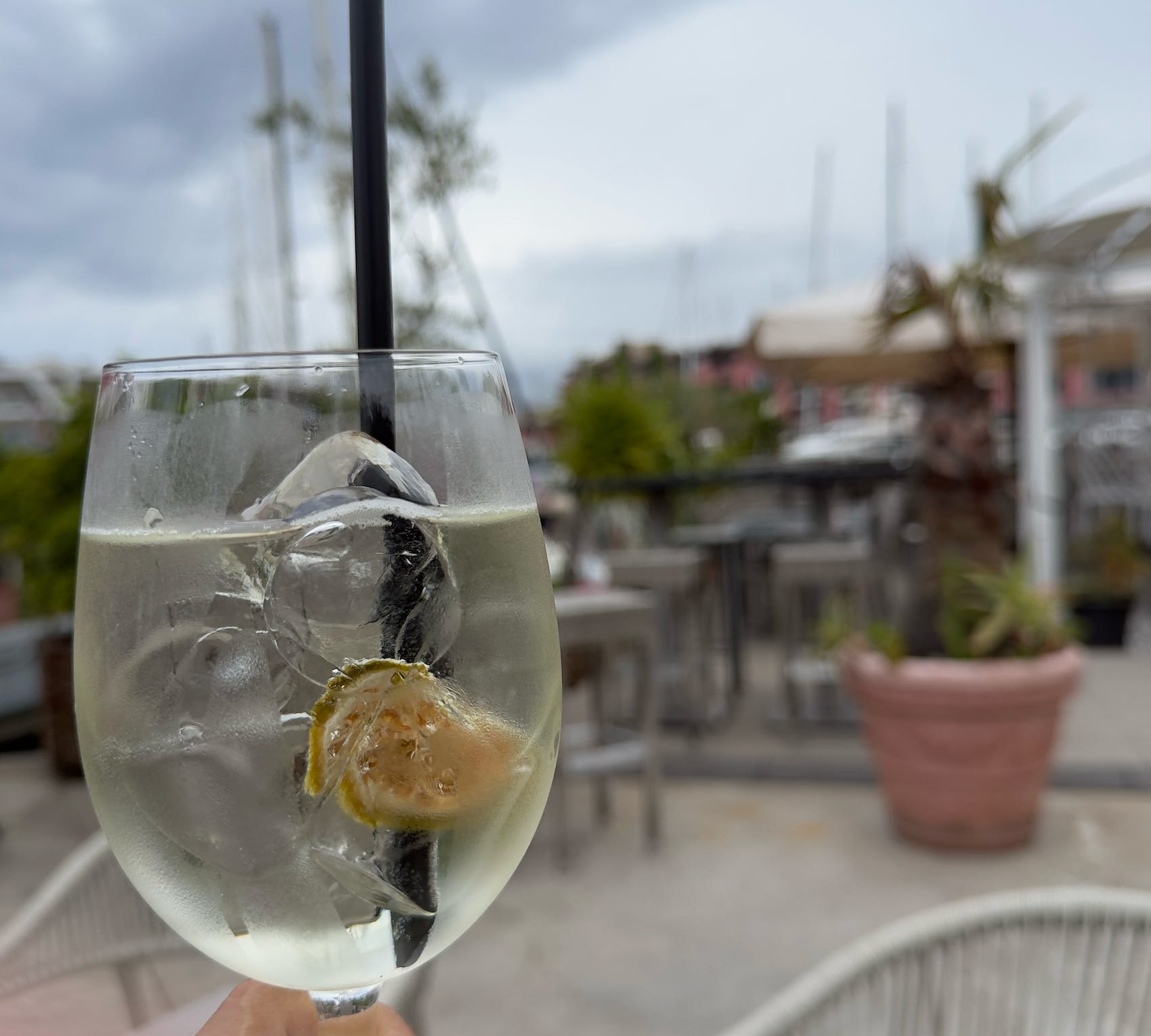
The classic aperitivo drinks are the ones the marketing has made famous. Aperol Spritz. Campari Spritz. Negroni. Americano. Hugo in the Alto Adige. A glass of Prosecco anywhere. These are the safe orders and any Italian bar can pour them.
But the real range is wider than that. I have had aperitivo with a glass of dry white wine and nothing else. With a Vermouth on the rocks with an orange peel, which is the original Turin version from the 1780s and still the best. With a small bottle of artisanal beer in a Tuscan craft brewery. Aperitivo is whatever you drink slowly with friends in the hour before dinner. The Spritz is the most popular form. It is not the only form.
What I thought: every place does it
What I learned: not every place does it, and the ones that do it best are not always the ones you expect.
The first rule of the aperitivo-place hierarchy is counterintuitive. The bars that do it best are usually not the simple morning-coffee bars. Those places focus on breakfast and lunch and they treat the aperitivo hour as a low-effort sideshow. You will get a small bowl of crisps, maybe a few olives, a Spritz that is fine but not memorable.
The bars that do it best are the ones that are only open in the afternoon and evening. Vinerie, cocktail bars, places designed around the drink rather than around the morning espresso. They have to make their entire week’s revenue between five and midnight, and they compete on the quality of what comes out with the drink. A good vineria in Pietrasanta will put down olives, crisps, focaccia, a small plate of salumi, a small crostino, maybe a slice of pecorino with honey. All of it free. All of it good. The Spritz costs the same as it does at the morning bar and you are getting four times the food.
The other rule is geography. The closer you are to the sea, the lighter the aperitivo. Olives, crisps, a little focaccia, maybe a bruschetta with tomato. The higher you go into the mountains, the heavier it gets. Salumi, cheese, sometimes a small bowl of polenta with a stew, sometimes a crostino with lardo. In an agriturismo in the Garfagnana I have eaten an aperitivo that was effectively a full meal of cured meats and pickled vegetables, and the bar that served it was a stone room with three tables and a wood stove. The aperitivo there was thirteen euros and I did not eat dinner that night.
What I thought: it is just for socializing
What I learned: it is for socializing, but the socializing is doing structural work.
The Italian dinner is long. It is, on average, two and a half hours from the moment you sit down to the moment the amaro is finished. It involves multiple courses, slow conversation, wine, and a real attention to the food. It is a substantial physical and social undertaking, and it does not work if you arrive at the table starved, tired from work, still mentally inside the email you sent at six-fifteen.
The aperitivo exists to solve this. It is the social airlock. You sit down at six-thirty, you have a Spritz with bitter botanicals that prime your stomach, you eat a few olives that prime your appetite without filling you, you talk to people, you watch the light change. By eight you have decompressed. By eight-thirty you are ready to walk to the trattoria and start the dinner properly.
This is also why good aperitivo places cluster near good restaurants. The aperitivo and the dinner are designed as a sequence. You do not stay at the bar through dinner. You drink, you talk, you leave, you walk five minutes to the place where you booked, you sit down, you start. The walk between is part of the architecture. So is the change of room.
For the price of a glass of Chianti, unlock the full Anywhere Italy experience. All of our articles, private stories, and access to our chat travel community.
Start your free 7-day trial.
What I thought: Italians make great cocktails
What I learned: Italians make great Italian cocktails.
This is an honest observation and worth saying directly. In a normal Italian bar, ordering a Negroni or an Americano or a Spritz is a guaranteed good move. The barista has been making those drinks since before you were born. The proportions are correct, the ice is right, the glass is the right shape, the orange peel is fresh. You will get a properly executed aperitivo cocktail almost everywhere.
What you should not do, in a normal bar, is order a Daiquiri. Or an Old Fashioned. Or anything that requires a long bottle bench and a barman who specializes in international cocktails. The Italian bar’s bench is usually short. Campari, Aperol, Cinzano, Prosecco, gin, vermouth, the local amaro. That is the kit, and inside the kit they are world-class. Outside the kit, they are guessing.
If you want a serious cocktail, go to a dedicated cocktail bar. There are some extraordinary ones, especially in Milan and Turin and Florence, where the entire room is designed around the bartender’s bench and the bench is forty bottles wide. Italians can absolutely make great cocktails. They just do not make them at the corner bar that opened at seven in the morning.
This is unlike the Anglo-American world, where even a small village pub can usually pour a decent Old Fashioned. The Italian bar is excellent at its specific repertoire. Asking it to do something else is the same mistake as ordering tacos at a trattoria.
What I thought: it is a relaxed informal thing
What I learned: it is more structured than it looks.
The aperitivo hour at the Margherita, our bar in Marina di Pietrasanta, looks loose from the outside. People drift in around six. They sit at the small round tables. They drink. They talk. By eight the place is half empty as people leave for dinner.
What is actually happening is a precise sequence. The order arrives within two minutes. The first bowl appears with the drinks: olives, always. Five minutes later, crisps. Ten minutes after that, a small plate of focaccia squares cut warm, just out of the oven. Twenty minutes in, sometimes a crostino with whatever the kitchen has. The drink is sipped slowly because the food spaces it out. The bar refills nothing automatically. If you want a second Spritz, you have to ask. If you do not ask, you finish your one Spritz over forty-five minutes, you have eaten a few light salty things, and you are now in the right physical state to walk to dinner.
This pacing is not accidental. The bar wants you to leave for dinner around eight, partly because the next round of customers is arriving at eight-thirty for the post-dinner digestivi run, partly because the entire ecosystem only works if everyone moves through it on the same clock. The aperitivo is a hinge, and the hinge has to swing on time.
Order a Spritz. Sit somewhere with a view. Stay ninety minutes. Walk to dinner.
That is the whole thing.


Planning a slow trip? My planner builds it for you. Free, no paywall, no email gate. Answer five questions (hub town, interests, travel month, days you want for slow discovery, and fitness level, because some of these towns make you climb), and you get a personalized route from my handpicked list of the 1,000 towns most travelers skip, with festivals, drive times, and a line on what each place is. Don’t like it? Refine it, swap towns, or browse the whole database by region.