The Fiorentina Steak | Leave it alone
Why everyone who tries to improve it ruins it

Hold a Fiorentina up by the bone and look at the outline against the light. The t-bone down the center, the long strip of meat on one side, the smaller fillet on the other, the slight curve at the top where the spine used to be. It’s the shape of Tuscany. Not a loose resemblance, the actual shape — the Apennines along the spine, the Maremma swelling out on the west, the Valdichiana tapering down below Siena.
Coincidence, obviously. But it is the kind of coincidence that this region, which does not believe in coincidences, has decided to take seriously. You are eating the country. On the plate, from above, it is a map.
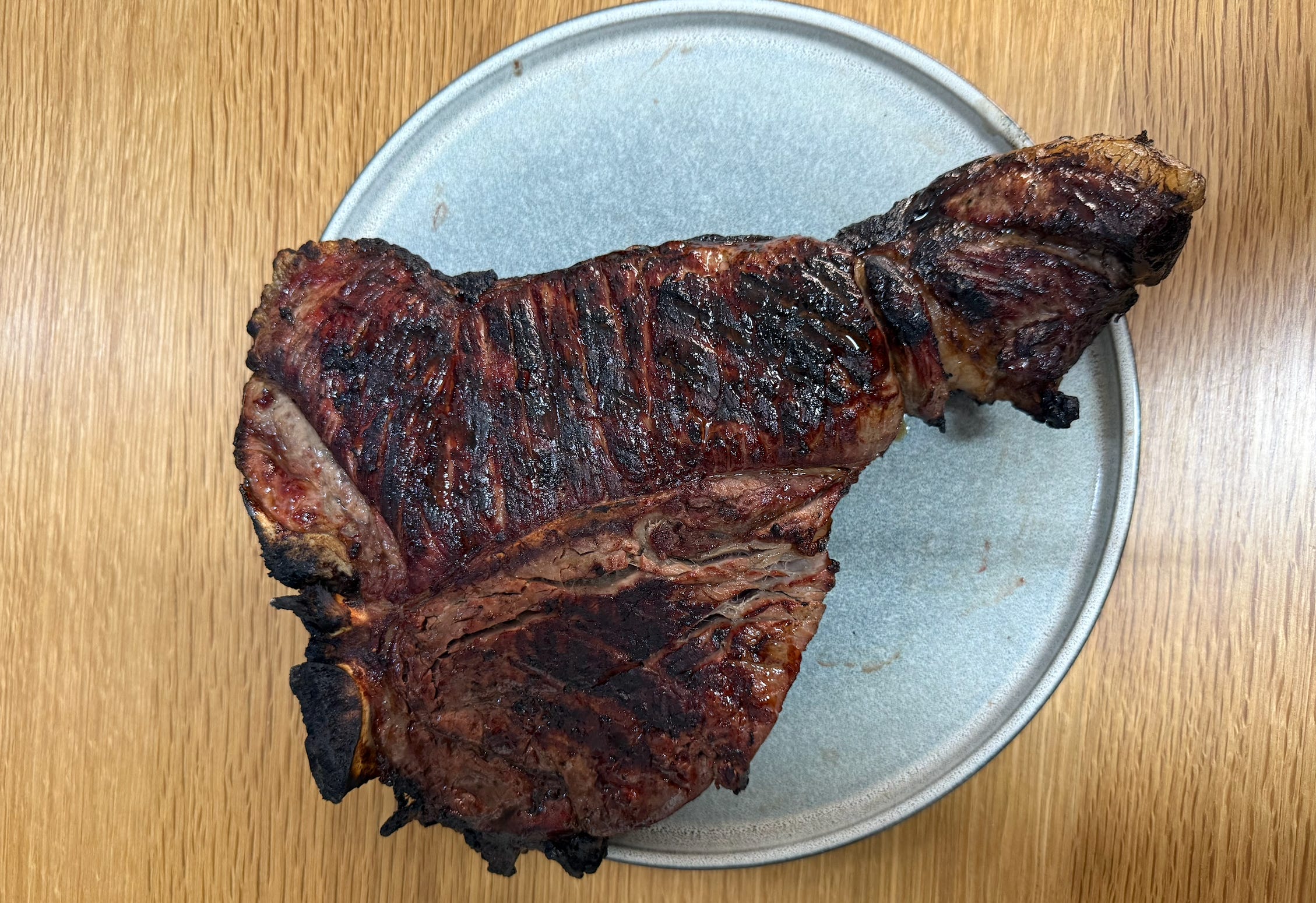
This is the most famous steak in Tuscany (maybe in the world), and it is the worst-cooked piece of beef in the world, because almost everyone who cooks it does something to it, and the entire point of the dish is that you do nothing to it.
That’s the whole recipe. I wish I were joking.
There is real beef involved, and we should be honest about that. A proper Fiorentina is cut from a Chianina cow, a breed so old it was herded across the Tuscan plains by butteri, the Maremma cowboys who arguably invented the whole profession. The line goes buttero, then Spanish ranchero, then Mexican vaquero, then the Texas cowboy in the John Wayne movie, and somewhere along the way, we lost sight of the fact that the man on the horse was originally Italian and was probably heading home to a two-kilo steak and a glass of Sangiovese.
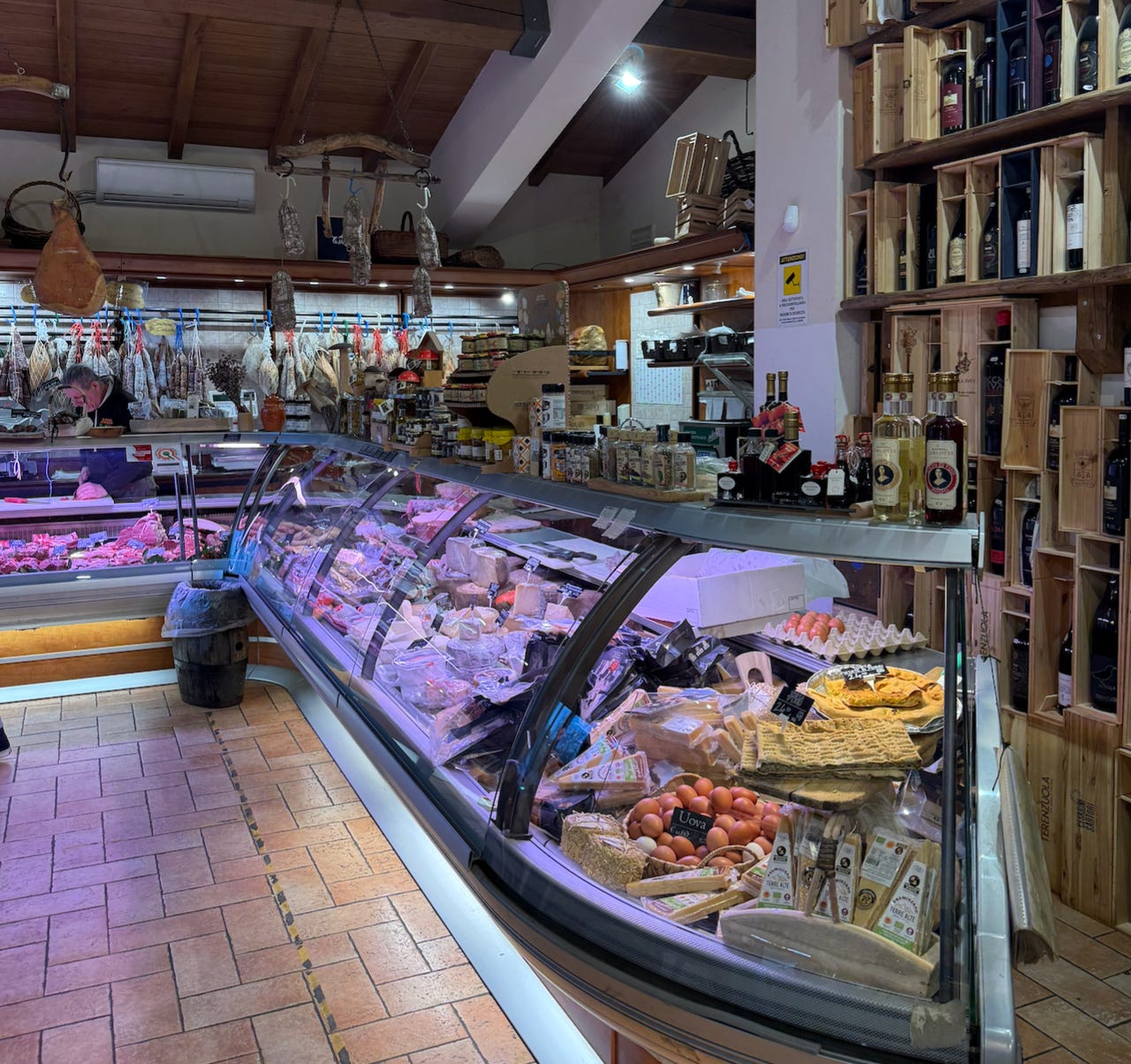
The Chianina is the beef. The Maremma is the country. A good butcher will tell you the provenance without being asked. I get mine either from La Bisteccheria di Alan in Camaiore, which is a traditional Italian butcher shop of the kind that is slowly disappearing, or from Azienda Agraria La Valle near Aulla, which is a farm-shop where you can buy the meat and then, on a weekend, sit down on their lawn and cook it on an open fire next to four other families doing the same thing.
The cut matters. It is why it is called Fiorentina. A Fiorentina is a minimum of three fingers thick, measured by your own hand against the side of the steak. Thinner than three fingers, by Tuscan lore, it is no longer a steak. It is a carpaccio. The butcher, who knows what I am buying the meat for, always asks me when I plan to cook it. If the answer is within a few days, he tells me to keep it in the fridge on a plate, bone-side down, uncovered. No plastic. No paper. No oil. Let it breathe. Let it lose a little water. This is kinda like dry-aging, and it is the only thing you are allowed to do to the meat before the fire, which should tell you something. By default, the meat is dry-aged for a month or more when you buy it.
Everything after this is where people go wrong.
You want a charcoal grill, ideally with raw fresh wood if you want to argue with the purists, and you want to light it an hour and a half before you intend to cook. I have a small Weber grill, so I cook it over good-quality charcoal. You want the coals eight to ten centimeters below the grate, no live flame. You want the meat at room temperature, patted dry with a paper towel to take off the surface moisture. And you want, before the meat goes on, to resist every single thing that your instincts will tell you to do to it.
No salt. No pepper. No oil. No rub. No marinade. No crushed garlic. No rosemary. No Dijon mustard or whatever bullshit that some cookbook or fake-Italian told you about. Nothing. Don’t try to be Gordon Ramsay and soak everything in butter.
The meat goes on the grill naked, exactly the way it left the fridge, and if you hear yourself thinking, but a little olive oil would, you have already failed. Put it down. Just trust the meat.
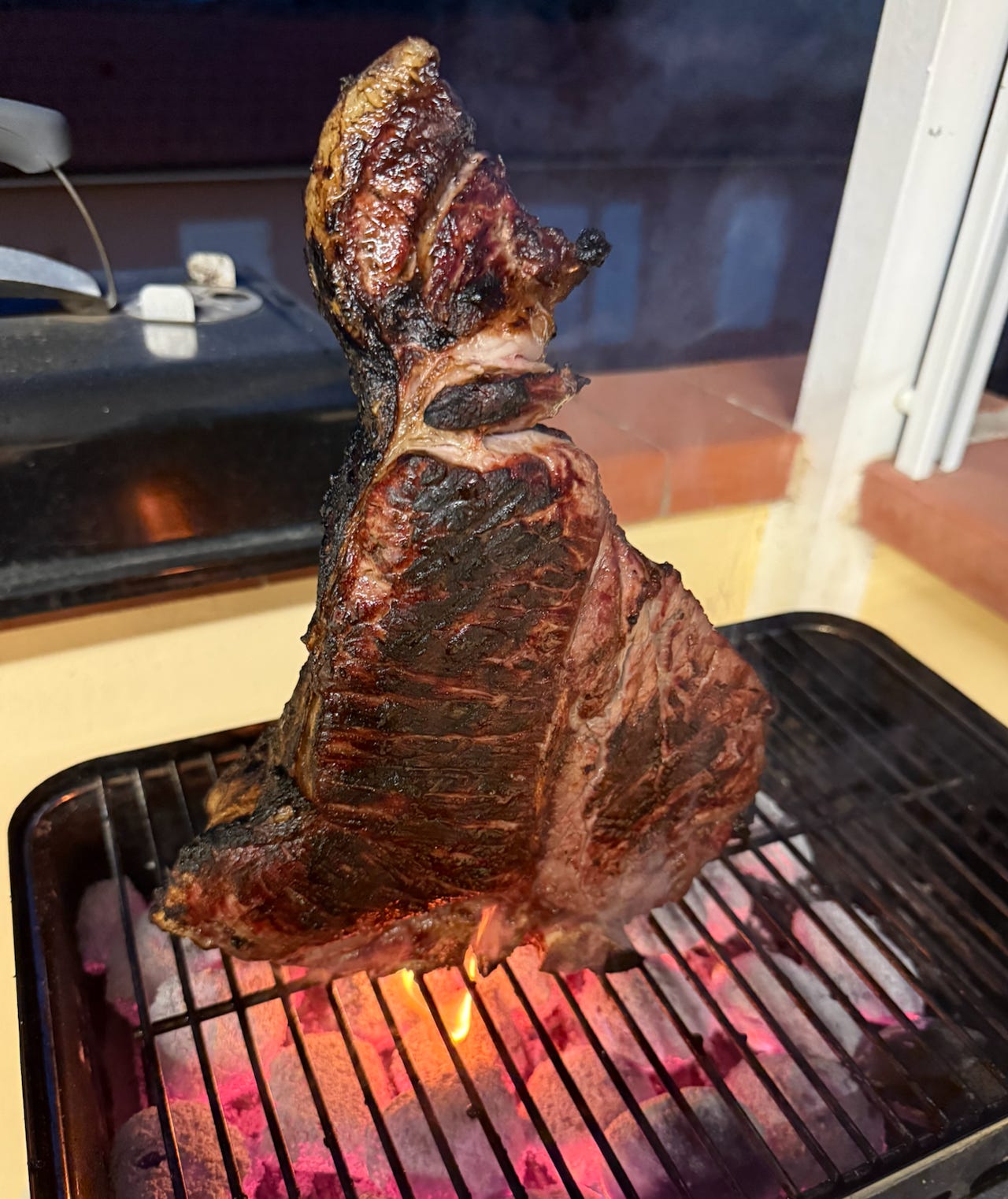
Eight minutes on one side. Eight on the other. Eight to ten upright on the bone, so the fillet and the strip cook through evenly from below. The bone can burn — who cares? The outside should go almost black. Flames should punch up through the grate as the fat renders, and you should let them.
Essentially, as the Tuscans say, it’s baptism by fire.
Thirty minutes, start to finish, for a 1,2-1,5-kilo steak. Then onto a wooden or stone board to rest. Minimum of 10 minutes, let the meat wake up from the shock. Then cut into finger-thick slices against the grain.
And then, and only then, only at this point, you touch your spices. A generous pinch of flaky salt and a small pour of good olive oil across the slices. Pepper only if you insist. Nothing else.
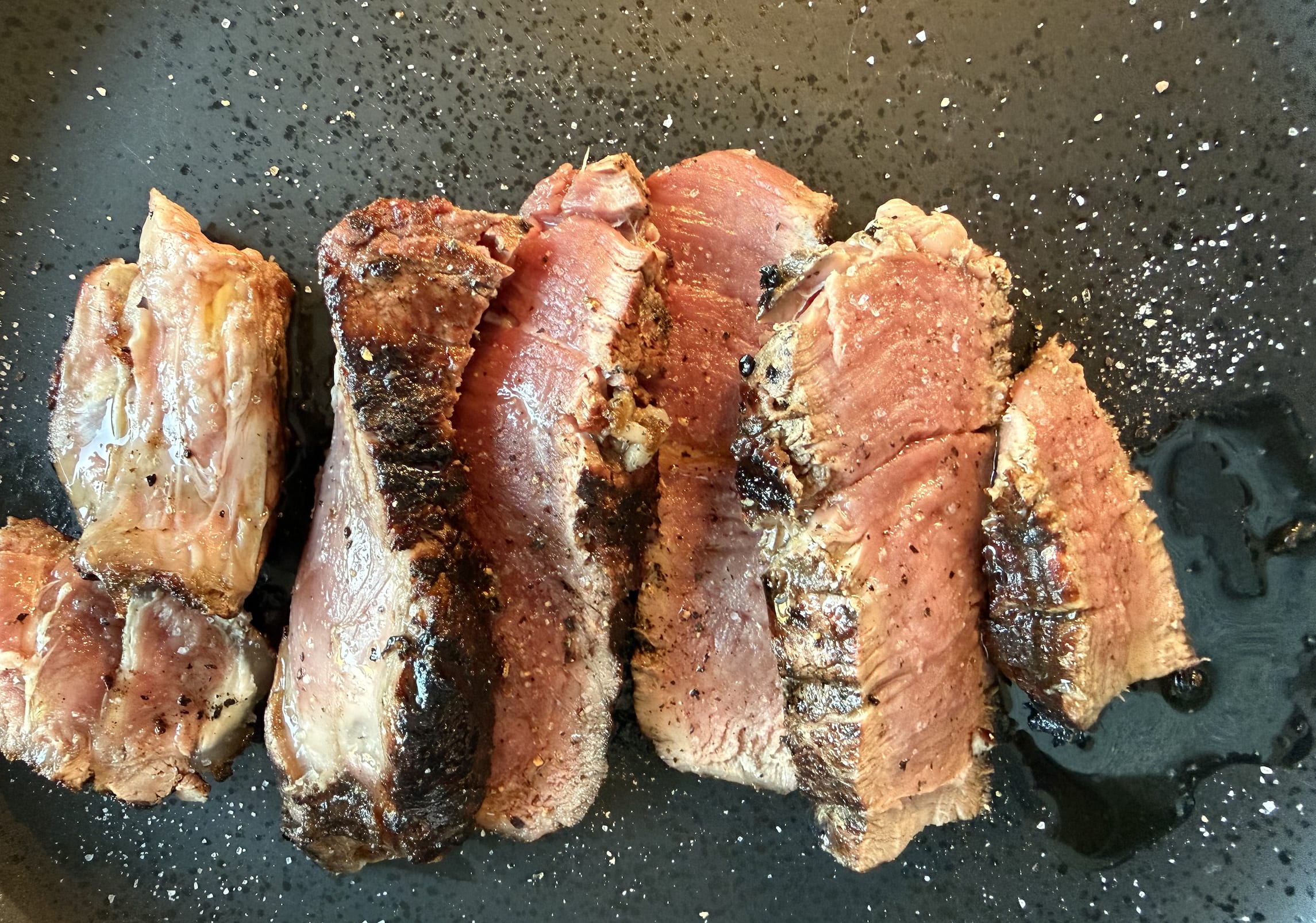
If you did it right, the edges are charred and crunchy, the inside is pink, going to almost raw at the bone, and what’s on your plate tastes like meat. Not like marinade. Not like herbs. Not like a competent chef’s reinterpretation of what beef could be if it tried harder. Like meat. Which is the thing a Chianina cow spent five years becoming, and the thing a butcher spent three days letting dry, and the thing you spent thirty minutes not ruining.
The side is bread. Tuscan bread, unsalted, to tear and put under a slice of meat. If you must have something green, a plate of boiled erbe with salt. If you must have something starchy, a few fried potatoes. No sauce. Nothing to dip into. The wine is red, and it is bold, Chianti Classico if you’re being traditional. I lived in London for years, and Britain holds a very special place in my heart, so I usually pour a glass of Scotch, ideally from Islay. If my scotch doesn’t smell like burned sheep hide and grass, I don’t drink it. No ice, just a pinch of water, obviously.
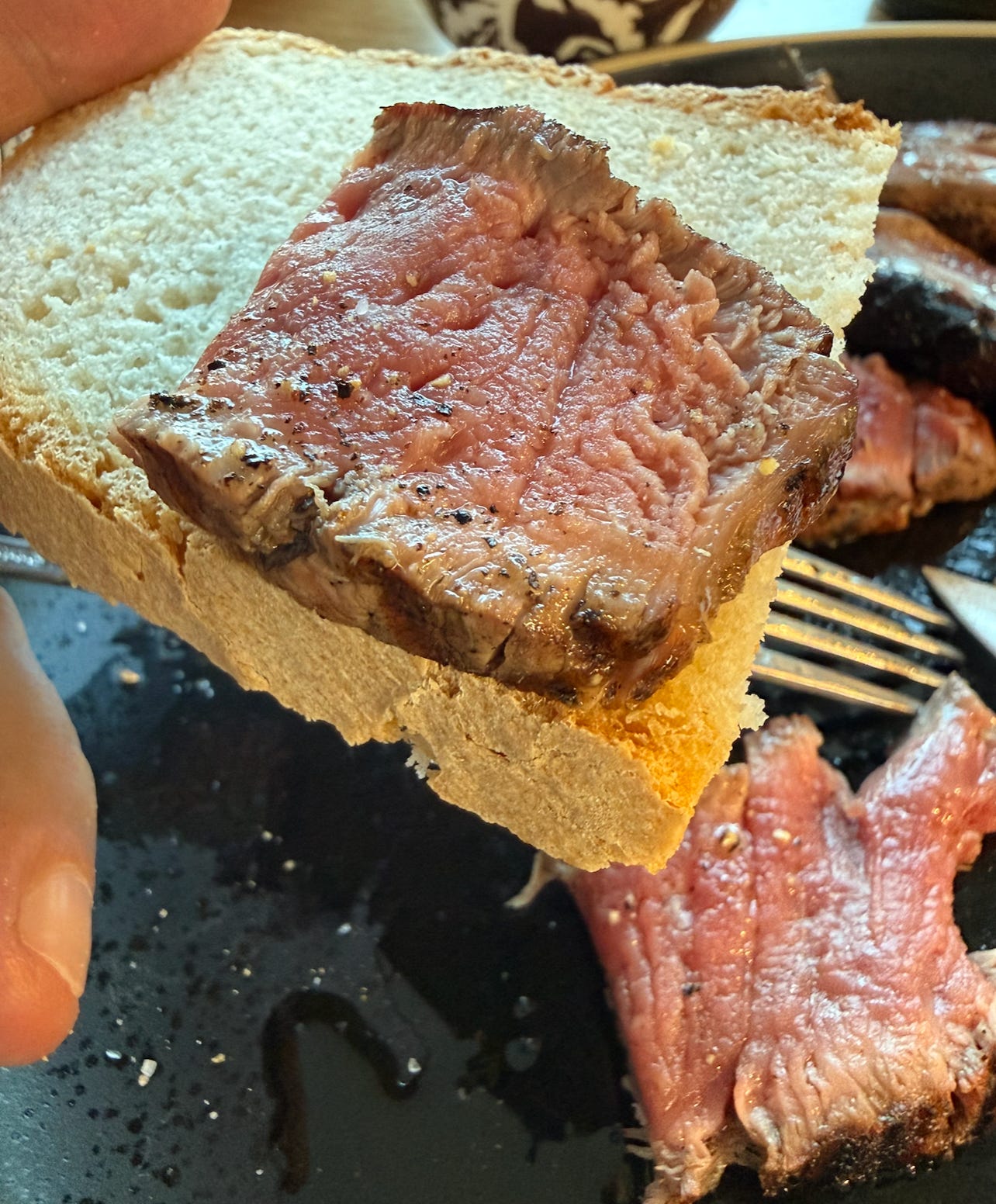
You know you are eating with a Tuscan when they cut the meat, eat the slices, and then pick up the t-bone with both hands and chew the remaining meat off the bone at the table. I once watched a woman do this in a trattoria outside Firenze, a woman who looked like Monica Bellucci, holding a glass of red wine in one hand and the bone of her Fiorentina in the other and conducting a perfectly civilized conversation with her table through both of them. Not counting moments with my wife, this was one of the sexiest things I have ever seen.
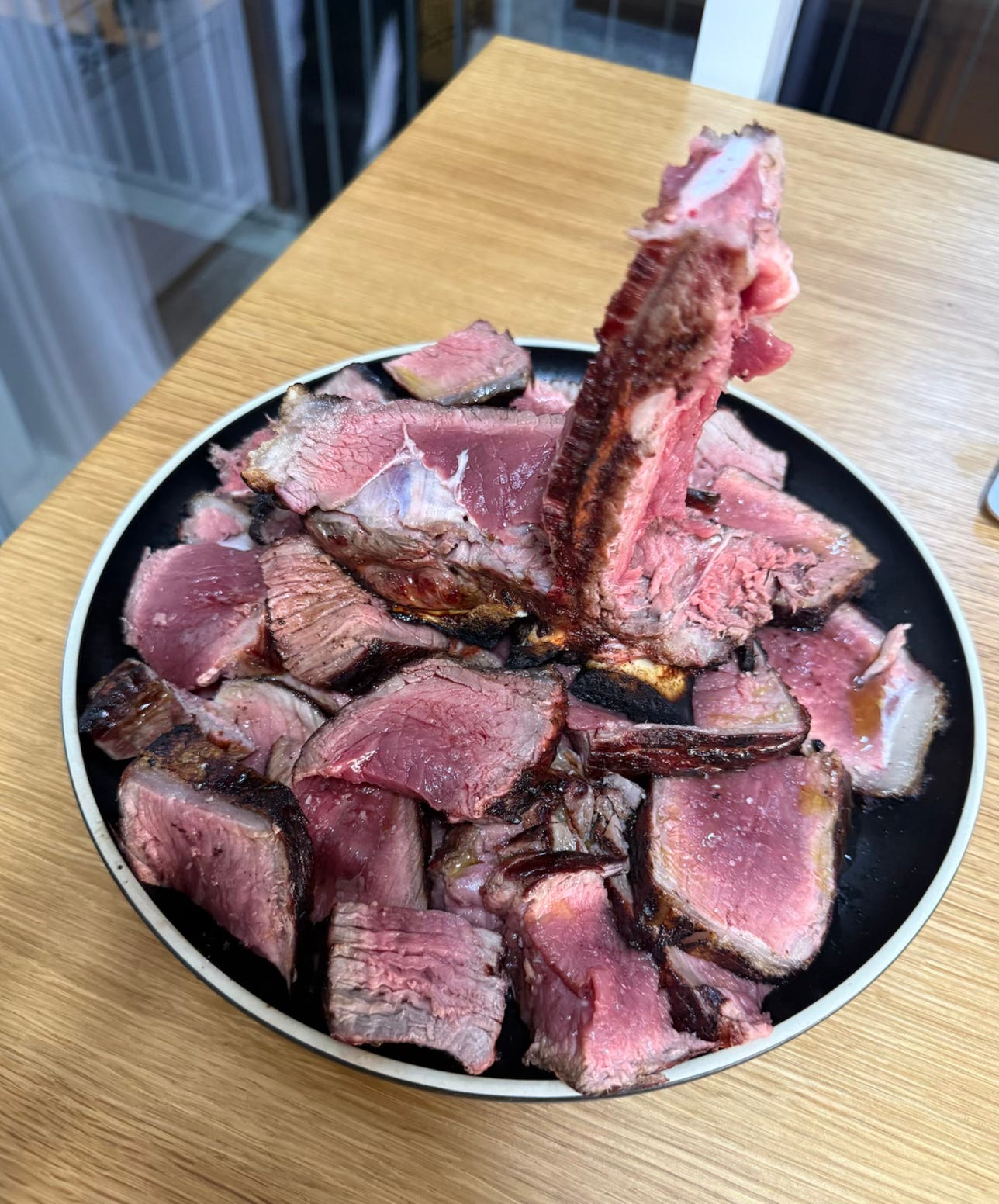
A Fiorentina cannot be ordered well done. It cannot be ordered medium-well. It cannot be cooked to your preference. If you want a steak done to your preference, order the tagliata, which is the same cow, a smaller cut, and more permissive of personal taste. The Fiorentina is not a democracy. It is a constitution. You either eat it the one way it is meant to be eaten, or you eat something else.
The genius of the dish is that it is almost entirely a matter of restraint. Good beef, good fire, good salt. The end. Everything else is unnecessary. Chefs who cannot leave it alone, grill guys who want to impress you with their rub, cooks who cannot bear the thought of putting a piece of meat on a grate and walking away.
The Fiorentina is a statement against modernity.
PS: I highly recommend watching this video from a famous butcher, Dario Cecchini. He has a butcher shop and “restaurant” which he calls the “butcher’s table” between Firenze and Siena, in Panzano, a small village. He is something of a media celebrity, and his shop is crowded with tourists because of it, but the way he talks about meat and the art of butchery is still heartwarming.
He says that a sculptor leaves a beautiful statue, a painter leaves a wonderful painting, or a poet leaves their poetry. The butcher, on the other hand, is an artisan, and whatever an artisan creates, it doesn’t remain. The artisans' work remains only in the hearts of those who experience its artisanry. In this case, the Fiorentina.