

Lerici | An Old Friend on the Gulf of Poets
The Ligurian town we came to in the summer of 2021, sight unseen, and have been returning to ever since

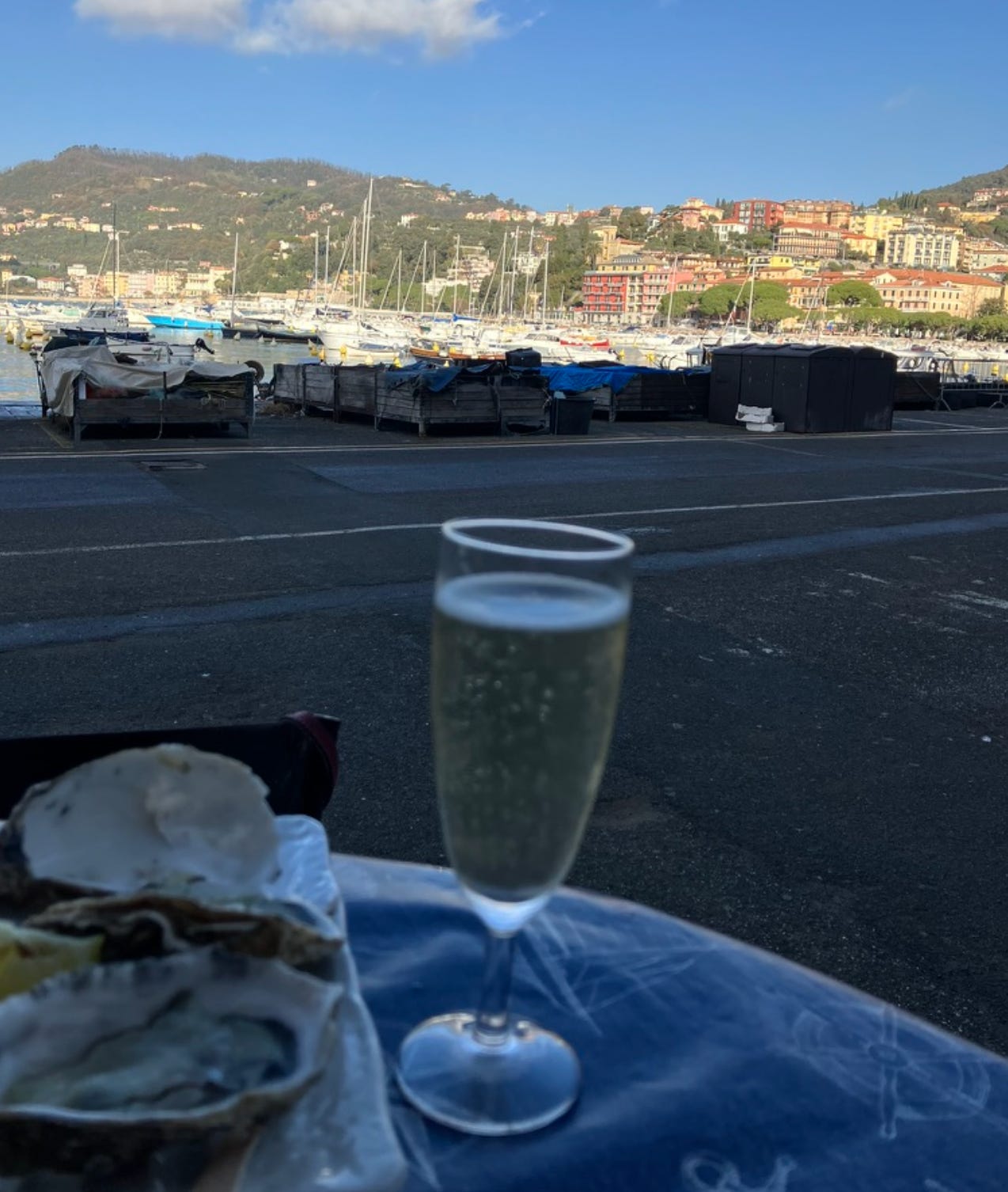
The kiosk under the castle is a small aluminum thing that should not, by any honest accounting, exist. It is open. It is on the harbor. It sells you mussels and oysters from a refrigerated case, pours you a glass of sparkling wine from a bottle kept in a bucket of ice, and the whole transaction takes as long as it takes to be hungry and costs about three or four euros. The faded sign reads Chiosco di Lerici Frutti di Mare, which translates honestly to Lerici Seafood Kiosk, which is exactly what it is and nothing more. We were back in Lerici, Sophia and me, on the way to nowhere in particular, and we walked down to the harbor and ate oysters under the castle the way we have eaten them most of the times we have been here, which is many. The Marco (I tend to call Northern Italians Marco until I know their real name, and 70-80% of the time, Marco works just fine to be honest), so Marco didn’t ask what we wanted, only the number: how many oysters and with or without wine.
We are returning visitors at Lerici in a particular way. Most places we write about are places we went to once or twice. Lerici is the place we lived in for two weeks in the summer of 2021 and have been going back to every two or three months for five years. We know the steep streets above the castle by heart. We know which restaurant is for the view and which is for the dinner. We know that the gelato in San Terenzo, made at a place called La Rana Golosa, is worth the half-hour walk along the sea to find. We know the underpass that takes you to the small free beach under the castle, the rocks at the back of it, and the bench halfway along the promenade to San Terenzo where, on a good day, the wind off the Gulf has the precise temperature of being alive.
This is the love letter to the town we came to first, before everything else in Italy that we now call ours.
The summer of 2021 was its own thing. Europe had spent a year in various lockdowns, with borders open one month and closed the next, and the rules on testing and vaccination changing every six weeks. By that summer, the bigger picture had relaxed enough that you could travel within Schengen if you carried the right papers, which we did, and most people had not bothered yet, so the famous places were not yet famous again. We had been working online for years by then, both of us, and we did the thing we had been threatening to do for months, which was to pack the car in Budapest and disappear into Italy for months.
The plan had three clauses, and three only: Florence without the crowds, Rome without the crowds, and a stretch by the sea without the crowds. If you have been to Florence or Rome in any normal year, you understand why that no crowds clause was the load-bearing one.
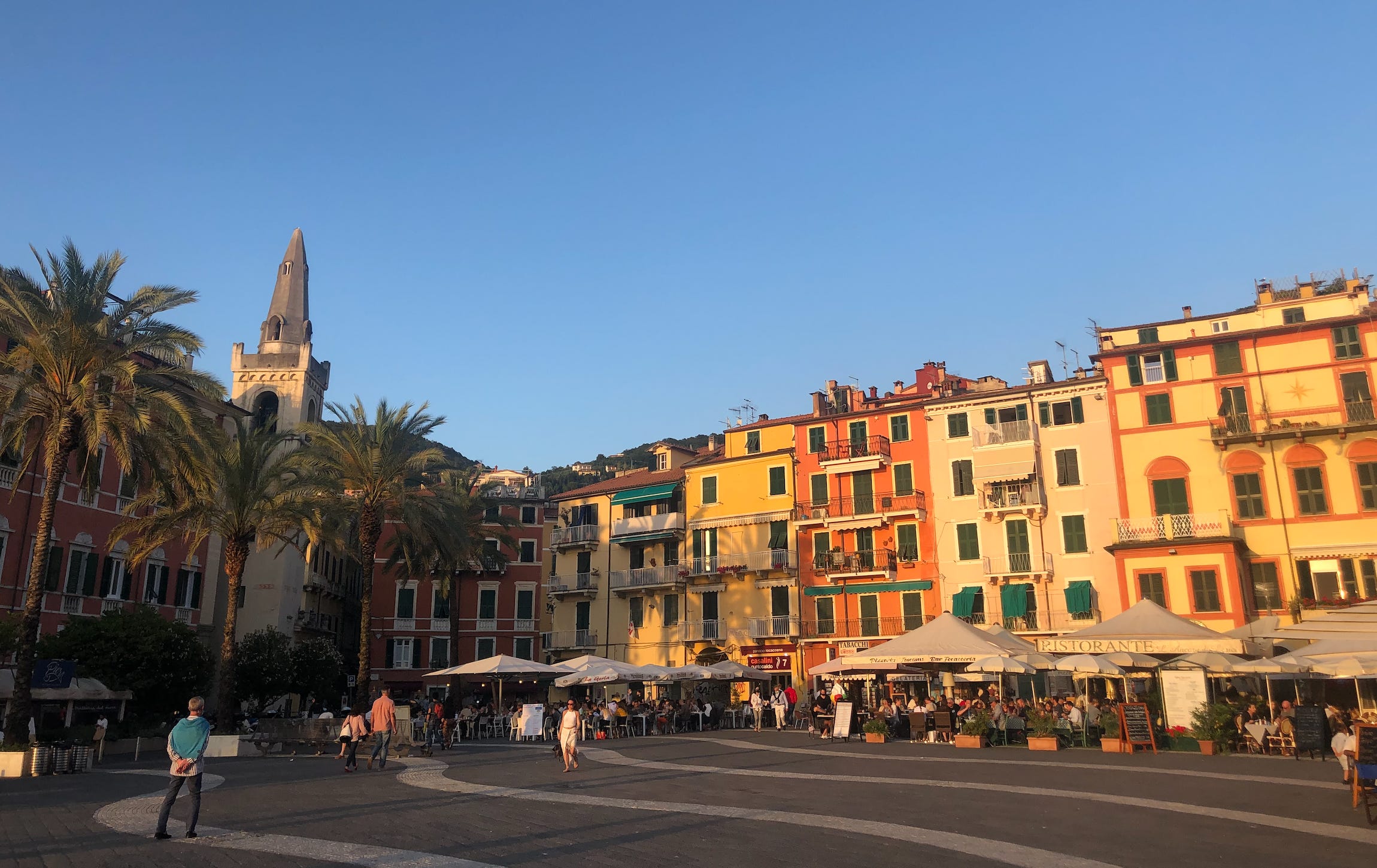
Lerici was the part of the plan we had not really planned. We had never been to the Ligurian coast. We had never seen the Cinque Terre. We had a two-week rental booked next to the castle, sight unseen, picked because the apartment looked good in the listing and the town sat on the map between two longer stays. We drove in from Florence, parked badly, walked through the old town for the first time, and within an hour we were already lying about leaving.
Those two weeks remain among the best two weeks we have spent in Italy. Some of it was the moment, of course. We were younger then, and the country was emptier than it had been since the war, and everything we touched had the quality of a place that had just been given back to its own people. But most of it was Lerici, and Lerici has carried the quality forward into every return since.
For the price of a glass of Chianti, unlock the full Anywhere Italy experience. All of our articles, private stories, and access to our chat travel community.
Start your free 7-day trial.
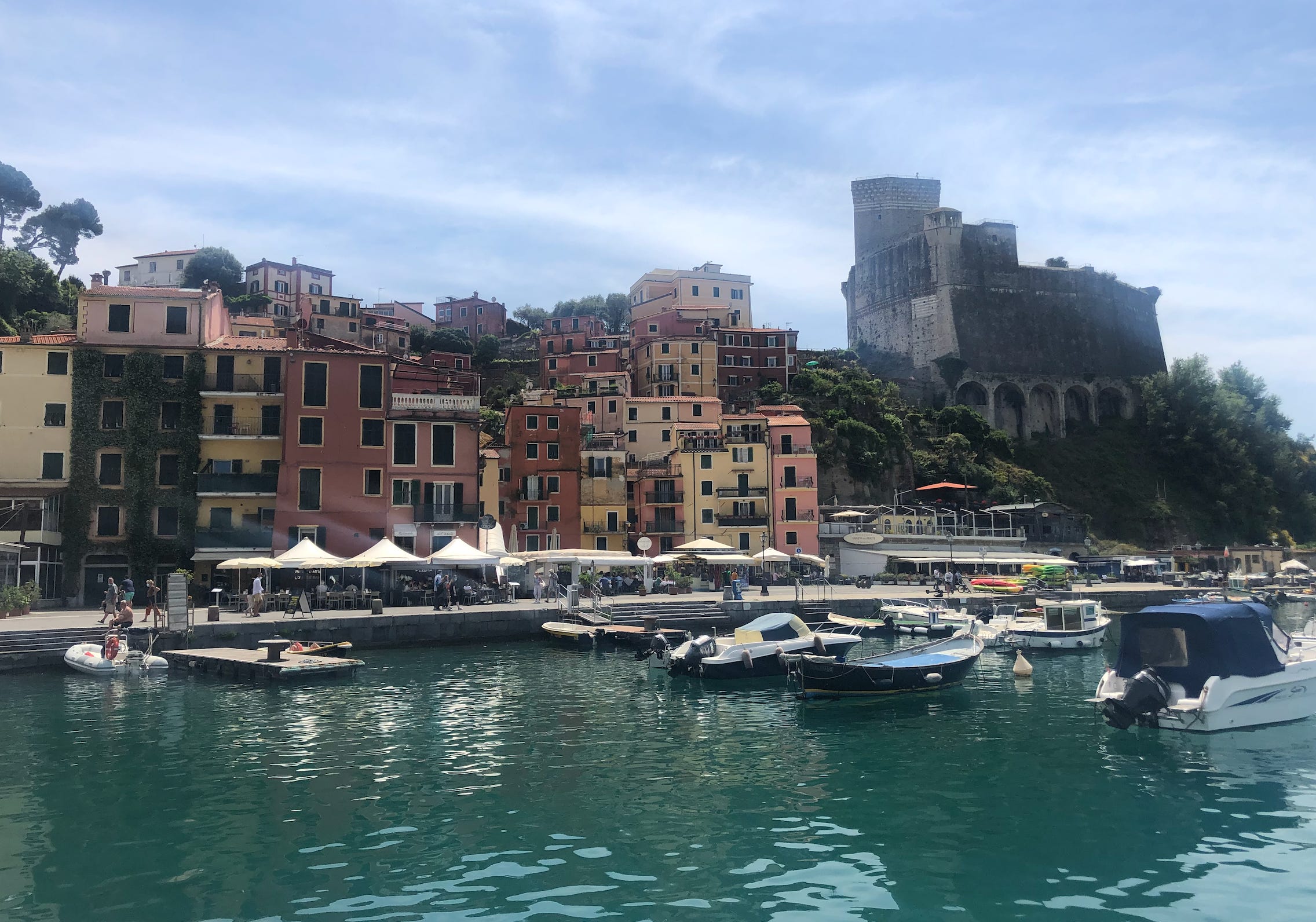
The town climbs in tight terraces above a half-moon harbor that looks east across the Gulf of La Spezia. There is one castle at the top, built by the Pisans in the middle of the thirteenth century to fight Genoa, and lost a few decades later to the Genoese after Lerici turned its small navy against the people who had built the castle. The town that had been the Pisan outpost helped finish Pisa as a sea power, and the castle that Pisa had built was repurposed within a generation to keep Pisa out. It is a small story, complete, and the castle still stands at the top of the hill above the kiosk, telling it.
There is an old town, narrow and steep and entirely walkable. There is a long promenade that runs along the water from Lerici proper to the village of San Terenzo, half an hour one way at a comfortable pace, and the promenade is the thing we always do first when we come back, because there is almost nothing in Liguria that is both right next to the water and not vertically punishing, and this promenade is both.
The flatness, I want to say, is the secret. The Cinque Terre, twenty kilometers up the coast and the reason most people know the eastern Ligurian Riviera at all, is built on cliffs. The five villages everyone goes to are five exhausting stair-climbs separated by ferry rides and a train. Photogenic, beautiful, brutal on the knees, and by ten in the morning impossible. La Spezia, the big working port at the head of the bay, is not a town you go to on holiday unless you live there, work there, or have a ship leaving that afternoon. Lerici sits to one side of all of it. The old town is small, and you need to climb only to visit the castle on the hill. The promenade along the harbor is flat. The ferries from the Lerici dock cross the gulf to Porto Venere and the Cinque Terre villages, which means you can walk down from your apartment, see Manarola for two hours, and be back in Lerici for dinner without standing in a single queue or taking a single bus. The town is the base. We figured this out by accident in our first week, and we have never seen anyone else write it down clearly.
The rhythm of our days that first stay was small. We walked the promenade in the morning before the heat, drank coffee somewhere with a view, sat for two hours of work with our laptops, and at noon walked down to the kiosk for the oysters and the sparkling wine. After lunch, we went either to the free beach, reached via the underpass beneath the castle you have to know about, or to the ferry. The free beach matters here. Free beaches in Liguria are rare, and the one under the Lerici castle is one of the small structural reasons the town is liveable in a way other Ligurian towns are not. In the late afternoon we sometimes ate at Ciccillo a Mare, a small restaurant on the rocks at the back of the same beach. The food at Ciccillo is not the best in town. The position is. We learned to go there for the coffee, the simplest things on the menu, and the view of the gulf turning gold, and the visit became its own ritual. In the evenings we ate at Focacceria dai Fanti up in the old town, which makes the kind of heavy, oily, sometimes-greasy focaccia that Liguria knows how to make and the rest of Italy does not, and pairs it with a cold beer for the price of one drink in Forte dei Marmi.
The literary content of the bay you may be wondering whether I am going to address. Briefly, yes.
Lerici and San Terenzo are where Percy Shelley and Mary Shelley lived for months in 1822. They rented a white arcaded house called Casa Magni on the beach at San Terenzo, where Percy spent that summer sailing a small boat back and forth between Lerici and Livorno, where Byron and Leigh Hunt were trying to start a magazine. On the eighth of July Percy sailed from Livorno back toward Lerici in his boat, which Byron had named the Don Juan and which Percy had renamed the Ariel. A storm caught the boat between the two ports. The boat went down. Percy’s body washed up ten days later on the beach at Viareggio, which is to say in the middle of Versilia, which is to say a few minutes from where we live now. The bay was renamed the Gulf of Poets ninety years later by an Italian playwright, in honor of all this, and the bay's institutions have been selling the story ever since.
There is a plaque at a grotto in Porto Venere commemorating Byron’s heroic swim across the gulf to visit Shelley at Lerici. An annual swim race honors the swim. A grotto carries his name. The swim probably never happened. Byron most likely did not make it. The plaque is from later, the legend later still, and the race much later. I find this very Italian and quietly moving. A town that builds a plaque for a swim that may not have happened, holds an annual race for it, and gives the grotto the swimmer’s name, is a town that has decided the story is more useful than the fact. I find no fault with the decision.
I will admit a personal interest in one of the side stories. On the hills above the harbor stands a villa called La Padula, built in the late nineteen-twenties for a Hungarian baroness called Emma Orczy and her husband, an English painter named Montague Barstow. They lived there from 1927 to 1933, all the autumns and springs of six years, with the winters spent in Monte Carlo. There is a plaque at the gate. Anyone who grew up in the part of Hungary I grew up in knows the Orczy name the way Americans know the Astors and the English know the Sackvilles. They were one of the older Hungarian aristocratic families, with land in our region, a name on a square in Budapest, and a long reputation. Emma was the one who left for England as a child, married a painter, taught herself to write, and produced The Scarlet Pimpernel, which made her enough money to buy a villa in Monte Carlo and then to build another one above this bay. She left Italy in 1933 because fascism was getting too loud for her.
You come to a bay because the English Romantics drowned there, and you find that one of the Hungarian baronesses had figured the bay out a hundred years before you, and you keep walking, because it is lunchtime, and there are oysters waiting at the kiosk.
We almost lived there, in the end, after that summer. We looked at apartments in the old town and at a small house near San Terenzo. The numbers nearly worked. We ended up in Pietrasanta, but years later, which is half an hour south of Lerici. We come back constantly. There is one of the small villages within the Lerici commune that we like better than any of the Cinque Terre, because it is the only one we can guarantee will be quiet, and we will write about that one, Tellaro, on its own. The piece you are reading is the one for the town we almost lived in.
On the morning we left for Florence in 2021, we got up early and walked the promenade one last time. The harbor was awake. The fishing boats were going out. Sophia took a picture of the castle in the morning light. We ate at the kiosk, of course, you can’t have enough raw oysters. Then we drove down the coast to begin the part of the trip that was supposed to be the sea-without-crowds clause of the plan, and we did not yet know that we would be back in two months, and then again in four. The old friend was already an old friend by the second visit. The first stay had just been long enough to make it so.
