

Piccolo Tito | The Other Tito
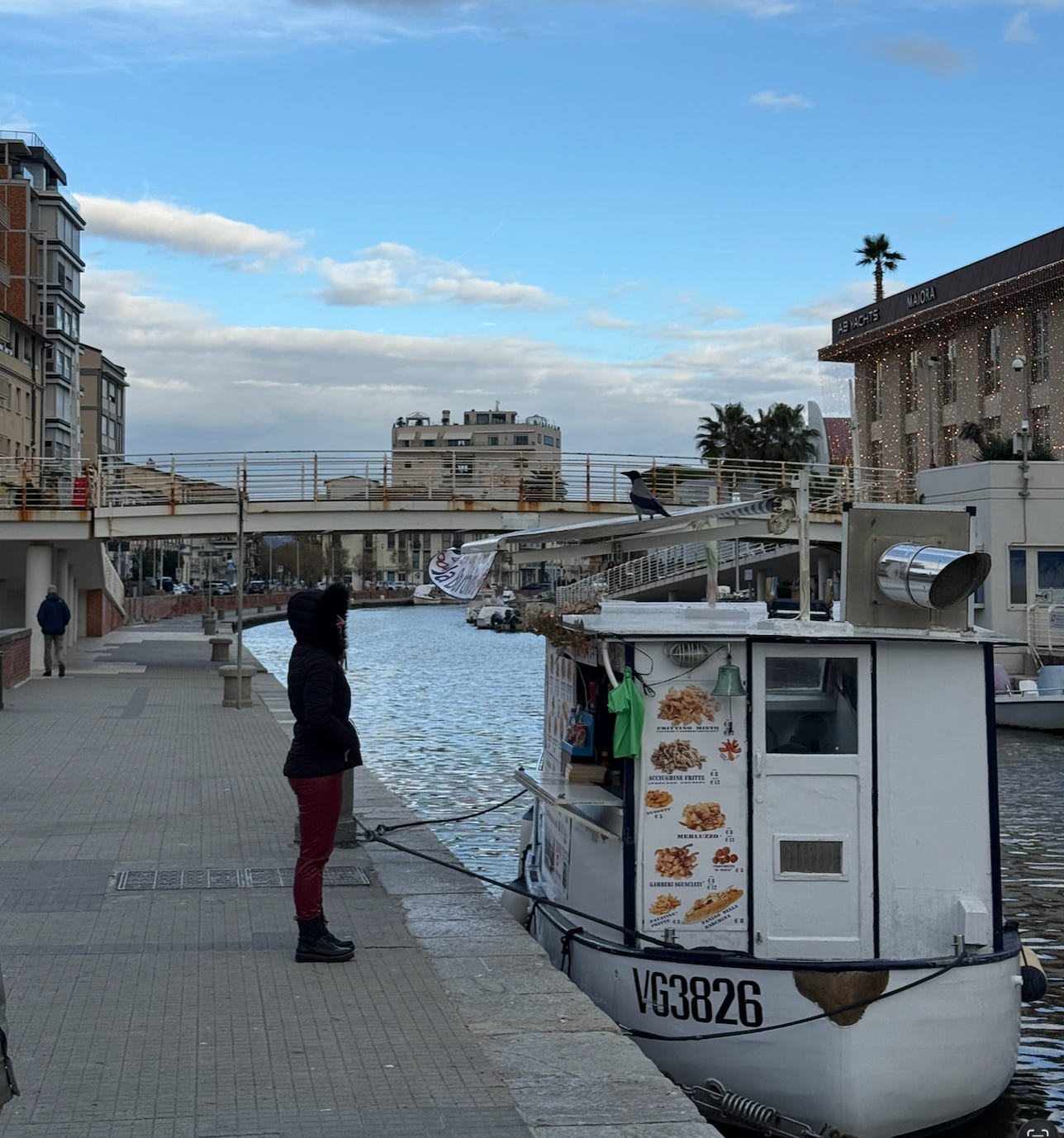
The takeaway counter on the Viareggio pier

We walk the Lungo Molo del Greco often, Sophia and I, the long stone pier that pushes out into the sea from the back of Viareggio between the working harbor on one side and the open Tyrrhenian on the other. The walk is something close to a kilometer one way, and on a good morning it is the cleanest hour you can spend on this coast. The air is salt-loud, and the boats are still going out, and on the harbor side, the fishermen who have come back from the night are setting up small plastic stools at the edge of the pier with their crates of the day’s catch in front of them, selling by the kilo to whoever has come down for it. Sea bass, mullet, octopus, calamari, sardines, the small fried things still alive. Anchored just off the pier, a couple of small kitchen-boats are already grilling whatever was on the line three hours earlier and handing the result up to passers-by in greaseproof paper with a lemon and a plastic fork. We walk past all this most weekends. At the start of the pier, where the harbor turns, we stop at a building that is technically two restaurants and structurally one kitchen.
The corner restaurant is called Tito del Molo. It has been on the same pier since decades, and the current version is the formal one in the most straightforward sense: linen on the tables, wooden chairs that match the bar, a laminated menu in three languages, a wine list with sections for Vermentino and Chianti and the bottles Tito imports because Tito imports them, attentive staff in aprons, a terrace that looks down at the fishing boats coming in. The food is the same as the kitchen has been making for nearly a century. Cacciucco the way Viareggio cacciucco should come out, the day’s fried catch in the local style, raw fish off the boat. It is, by every visible signal, the restaurant you stop at after the walk along the pier. Many people do. The bill, depending on the depth of your order, runs to fifty or seventy euros a head, which for what it is, in the spot it sits, is honest.
Directly behind it, sharing a back wall and the kitchen door, is the other one. It is called Piccolo Tito. Little Tito. The first time we walked up to it, I thought it was the restaurant's takeaway window in front. It is not.
It is a separate operation that the same family runs out of the same kitchen, opening to the side instead of the front, with a name printed in plain block letters above the door and no signal of any other kind that it should be taken seriously, and that arrangement is the entire reason this piece exists.
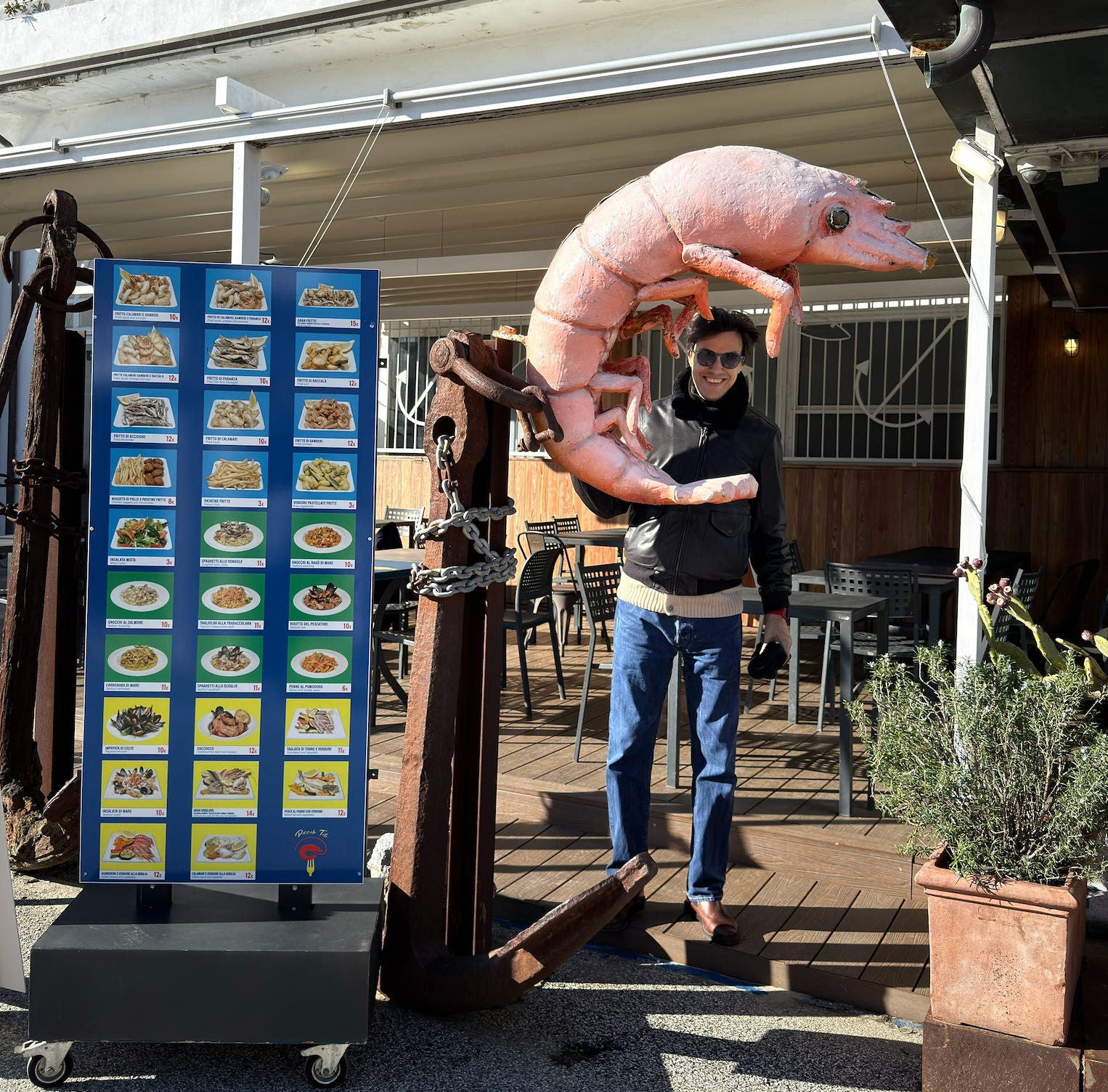
Piccolo Tito has no menu. There is a board behind the cashier with photographs of about twenty dishes, printed in slightly faded colors, each labeled with a number and a price. You stand in front of the board and decide what you want. There is no appetizer-pasta-main-dessert structure. There is fried fish in several configurations. There is grilled fish in fewer. There is spaghetti with clams (vongole) and one or two other shellfish pastas. There is bread if you ask. There is a Vermentino in a proper bottle, a couple of beers in cans, mineral water, and a Coca-Cola for the children. That is the whole offering. You point at the photographs. The cashier writes your order on a slip, tells you the total, takes your money, hands you a number printed in large black ink on a white card, and tells you to find a table.
For the price of a glass of Chianti, unlock the full Anywhere Italy experience. All of our articles, private stories, and access to our chat travel community.
Start your free 7-day trial.
The tables are plastic. The chairs are plastic. There is no tablecloth. The cutlery comes in a sealed sleeve, usually plastic itself, sometimes inexplicably steel, with no system I have ever decoded for which day delivers which, and the plates are paper or plastic depending on what is on them and whether the kitchen has decided that what is on them needs heat protection. The wine, however, arrives in proper glasses, in the proper bottle, with the proper opening ceremony. This is Italy. The wine is the one part of the operation that is allowed to remember it is a restaurant.
The number gets shouted from the counter when the kitchen is finished with it. You walk over, pick up the tray, walk back to the plastic table, sit, and eat. If the tray is heavy or you have come with more people than hands, one of the men who circulate on the floor sometimes carries it over, but the default is that you do it yourself. After the meal, you carry the tray back to a station by the door and tip the plates into the bin. The whole place has the rhythm of a school cafeteria run by people who happen to be excellent cooks.
The food on the tray is what the place is for. The spaghetti alle vongole comes in a paper-rimmed plastic bowl, the portion roughly twice the version next door, oilier, salt-bright, the clams in a small pile on top because no one had ten seconds to arrange them around the edge of a porcelain plate. The grilled prawns come on a flat plate, a dozen lined up as they landed when the cook tipped them out of the pan, with a half-lemon and nothing else. No bed of arugula. No drizzle. The frittura mista, which is the dish that has made Piccolo Tito’s name in the town that knows it, arrives in a paper cone the size of a small bouquet, the small fish and the calamari and the prawns and the fried squash blossoms all together, hot, salted, eaten with the fingers. There is a wedge of lemon. Sometimes there are two. Sometimes the lemon is forgotten, in which case you ask, and a wordless plate of lemon arrives within ninety seconds.
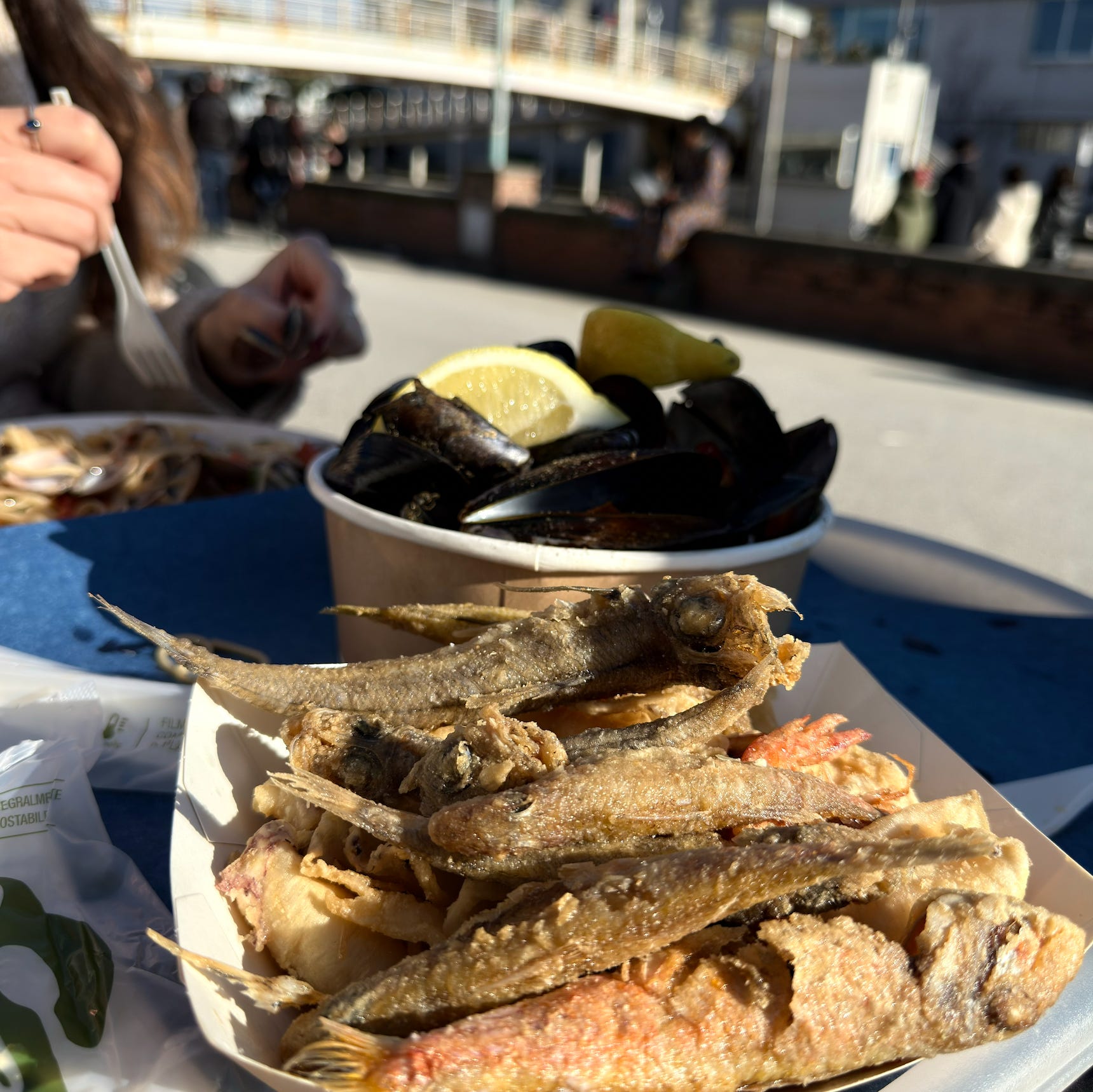
The secret, and the reason I am writing this, is that the plate sitting in front of you at Piccolo Tito came out of the same kitchen that produces the plate at Tito del Molo, twenty meters away, around the corner. The same fish. The same cooks. The same grill, the same fryer, the same morning’s catch sourced from the same fishermen at the same kilo price. The kitchen door behind the counter at Piccolo Tito and the kitchen door at the back of Tito del Molo open onto the same room. What Tito del Molo adds is the linen, the porcelain, the parsley sprinkled on top of the pasta, the wedge of lemon placed deliberately, an extended appetizer-and-dessert section to round out a meal in the formal sense, and the wine list that runs to 10+ pages. What it charges for those additions is, by our rough accounting over the years, just under double what Piccolo Tito charges for the same fish without them.
I do not begrudge Tito del Molo the markup. Some occasions earn the linen. If it is a date, an anniversary, or a parent in town to whom you would prefer not to explain why your dinner came on a plastic tray, you take the linen. That is what the linen is for. The point is that on most evenings most of the year, with most people you are eating with, the linen is the thing you are paying double for, and the food is the thing you came for, and the food is identical.
The crowd at Piccolo Tito is locals. Older men from the fishing harbor still in their work clothes. Carpenters from the shipyard at the far end of the pier. Families with three generations at the table, the grandmother carrying her own tray with both hands, the grandchild running the number-card to the counter as a small game while the parents wait at the plastic table with the bottle of Vermentino already poured. We have never seen another foreigner there. Not once. The foreigners are next door, eating the same fish off a porcelain plate, paying for the chair.
The choice between the linen and the plastic is, in compressed form, the choice this whole publication exists to argue for. It is the same choice between Lucca and Florence, between Pisa‘s south bank and its tower, between Livorno and Forte dei Marmi, between Sestri Levante and Portofino, and the logic is identical each time: the destination version costs more and looks better in a photograph and gives you something to point at later; the other version is closer to the thing the place is actually about. Picking the second one requires a small amount of nerve. The other version looks, from the outside, like nothing. You have to be willing to walk past the linen and into the plastic, to eat off a paper plate twenty meters from a restaurant you could have eaten at instead, to be the kind of person who would rather have the fish than the photograph of the fish.
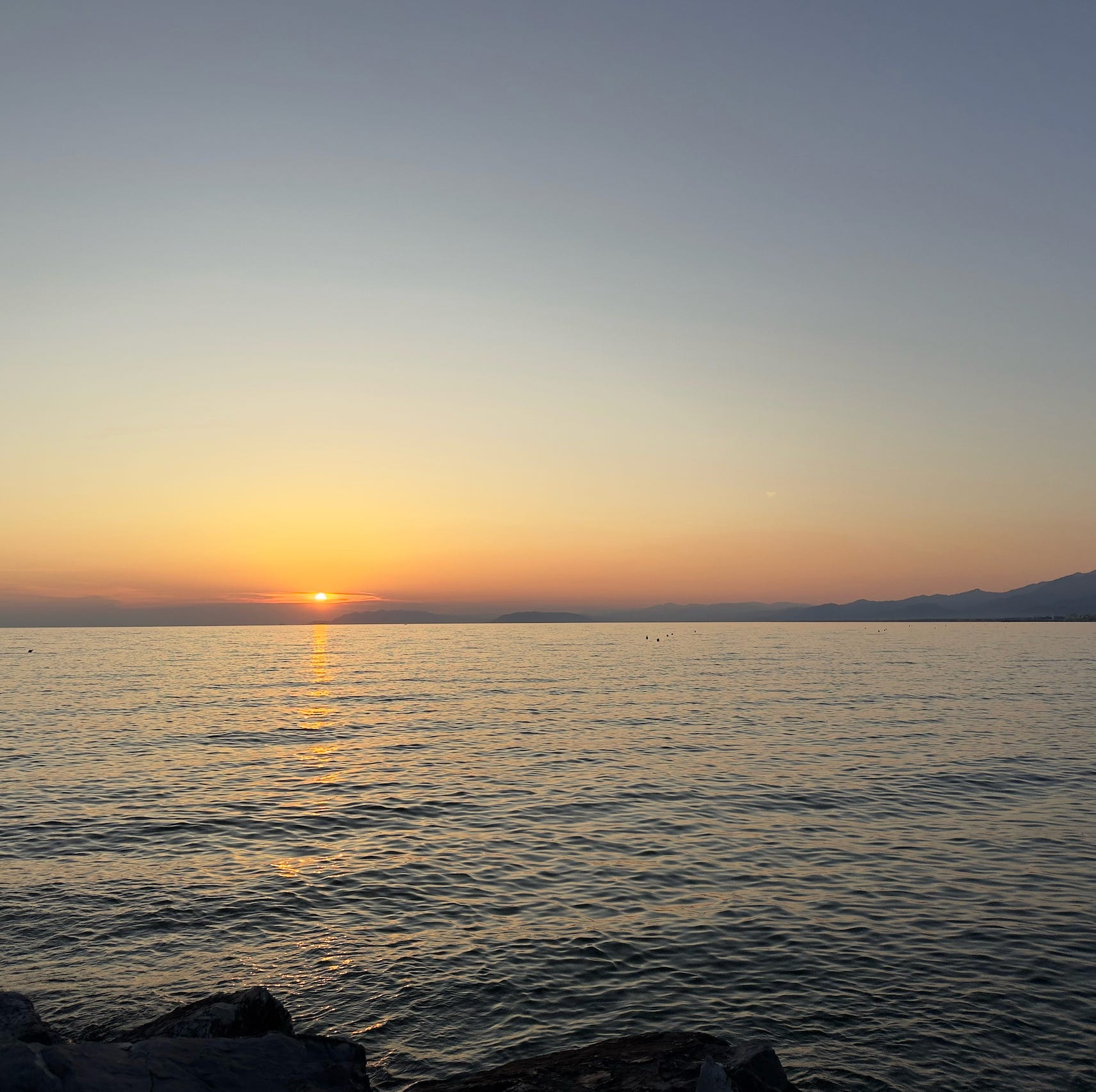
After lunch, we take the same walk as the people from the linen-cloth restaurant. Out to the cat at the end of the pier, back along the same stone path, with the same view of the same boats coming in. The fishermen have gone home by now. The kitchen-boats have packed up. The light off the water is what late-lunchtime light off the water is. The restaurant behind us continues to fill with people who decided the linen was what they came for, and the counter behind it continues to feed those who decided it was not. The cooks in the one kitchen at the back of both buildings go on cooking the same fish.
If you prefer, we recommend trying out the Delfino as well. Same concept, same prices, just next to Tito, but they cook with a bit more garlic and oil, which is sometimes too much for us, though they somehow manage to source fresh octopus, as they always have fried octopus on the menu. Just that dish is worth the stop.
