

The Lunigiana | The Real Off the Beaten Path Italy
Notes from a borgo at four hundred meters

We chose it the way you choose a card from a deck. Sophia and I had spent half a year in Budapest by then, sitting with a death in the family, and we wanted to come back to Italy for the part of Italy that has nothing to do with anyone else’s idea of it. No Chianti. No Val d’Orcia. No Montepulciano, no San Gimignano, no Volterra, no stone farmhouse with a cypress driveway and a tasting menu on the lawn. We wanted a mountain, a small one, with a few houses on top and silence underneath. We pulled up the map, ignored everything we recognized, scrolled north until the roads thinned out and the names stopped meaning anything to us, and there, behind the marble of Carrara, in a fold of the Apuane I had never heard of, was a borgo called Marciaso. There was one Airbnb. The photographs showed a stone house with a terrace and a view of a valley. We booked it. We wanted to experience what it’s like to live in an end-of-the-world mountain-top Italian village anyway, this was the timing we hadn't waited for, but it just happened to be in front of us.
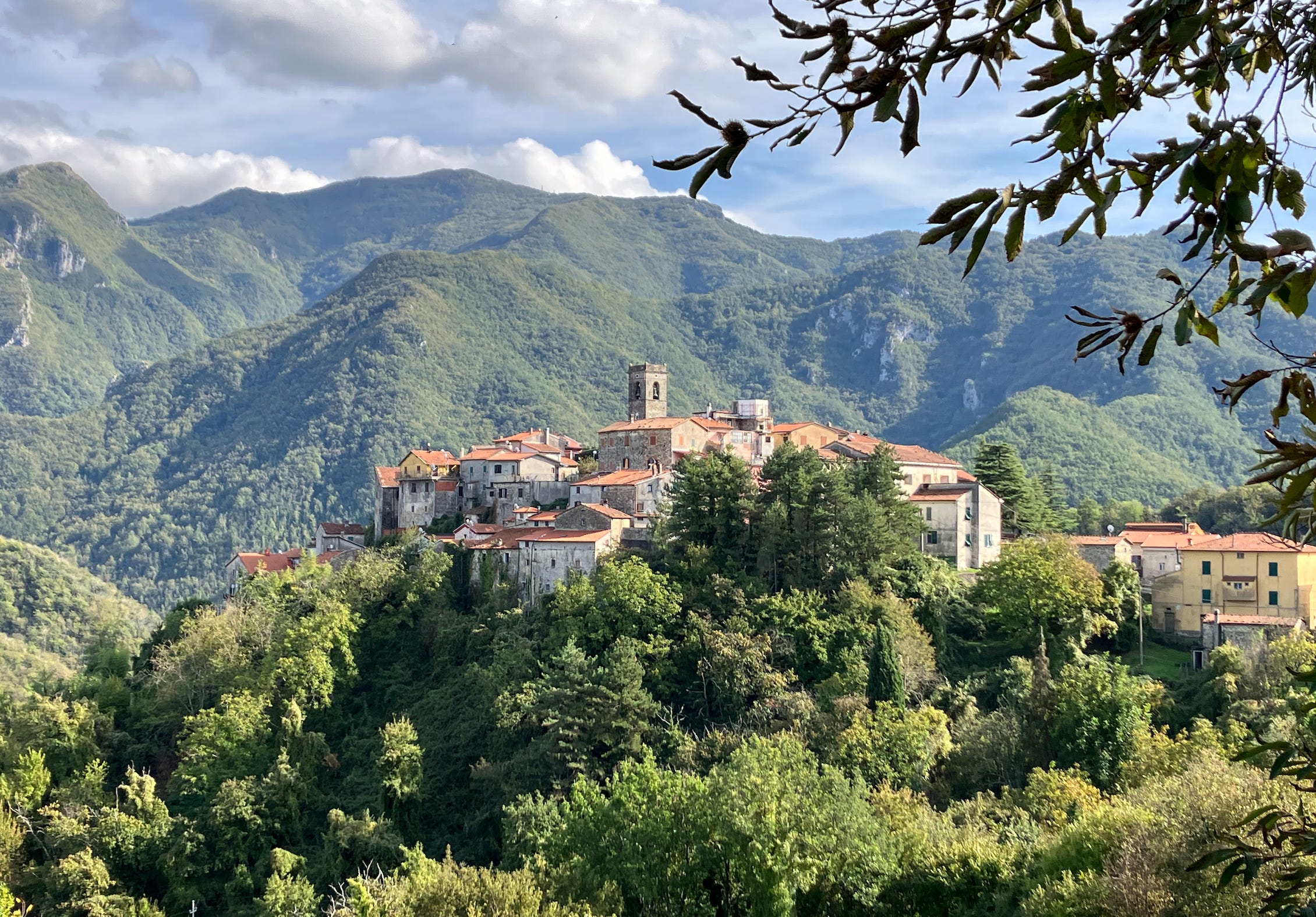
The drive-in tells you what you’ve done before the village does. From Aulla, you peel off the SS63, wind through Pallerone and Serricciolo, then the asphalt becomes patched, then patched again, then for stretches just held together by habit. It was October, so after heavy rain, there were leaves and dirt and small branches everywhere, and you go slowly because you have to, and because no one is behind you. There are no signs in English. There are no signs at all, really, beyond the white-on-blue commune markers, and at a certain altitude the radio loses its grip on whatever it had been playing and goes to static, and you turn it off and drive in the sound of the engine and the gravel and your own breathing.
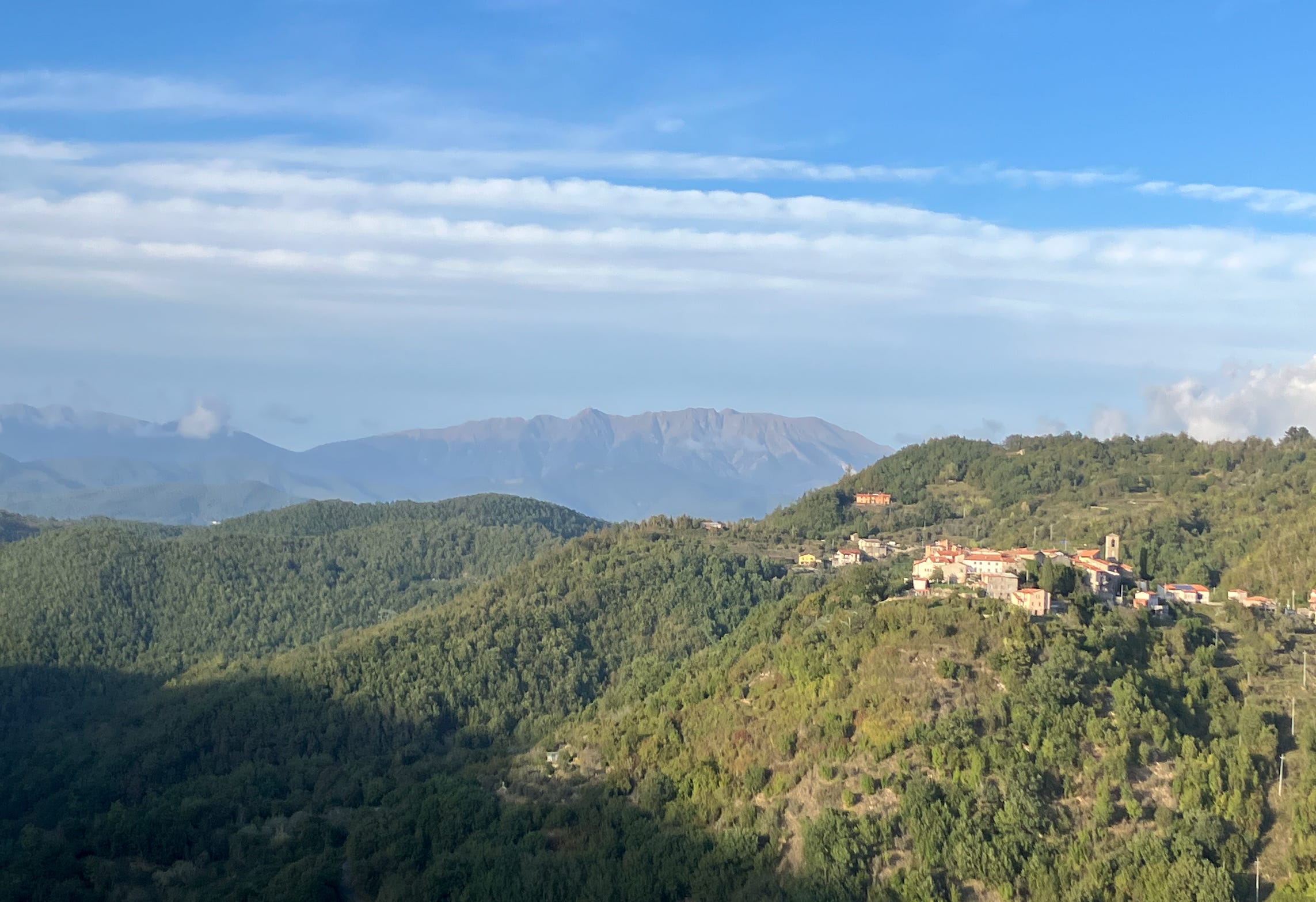
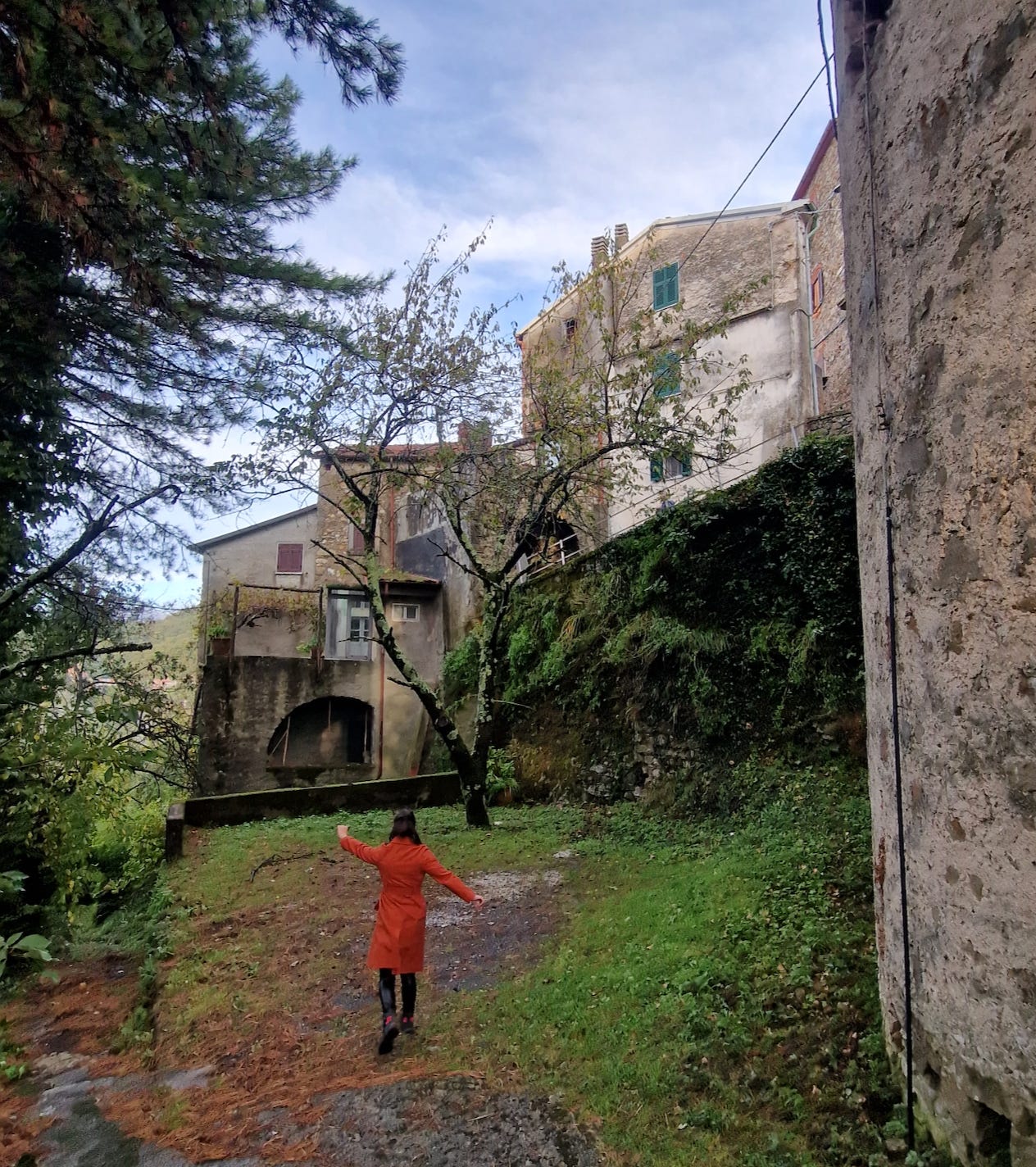
Marciaso is a hundred people. Maybe fewer. As we described it to our friends: “We live in a village that has 80 people total, most of them are above 80 years old.” The borgo sits atop a hill in two concentric loops, the older houses higher, the rest set lower. There is one footpath that circles the old stone houses around what is left of a castello, which is mostly memory now, walls returning slowly to the ground. There is a place called Bar e Trattoria da Lino that opens only on weekends. There is a bus stop, and the bus comes two or three times a day (maybe), and goes down to civilization. There is a food truck that parks in front of the small church at the edge of the borgo once a week for three hours, selling salumi and cheese and a few shapes of fresh pasta. That is the village. That is what is there. Nothing else. Oh, and cats. Lots of cats. We also befriended some crows who were living in the old abandoned tower of the castle. I think you get the picture of how empty the place was and still is.
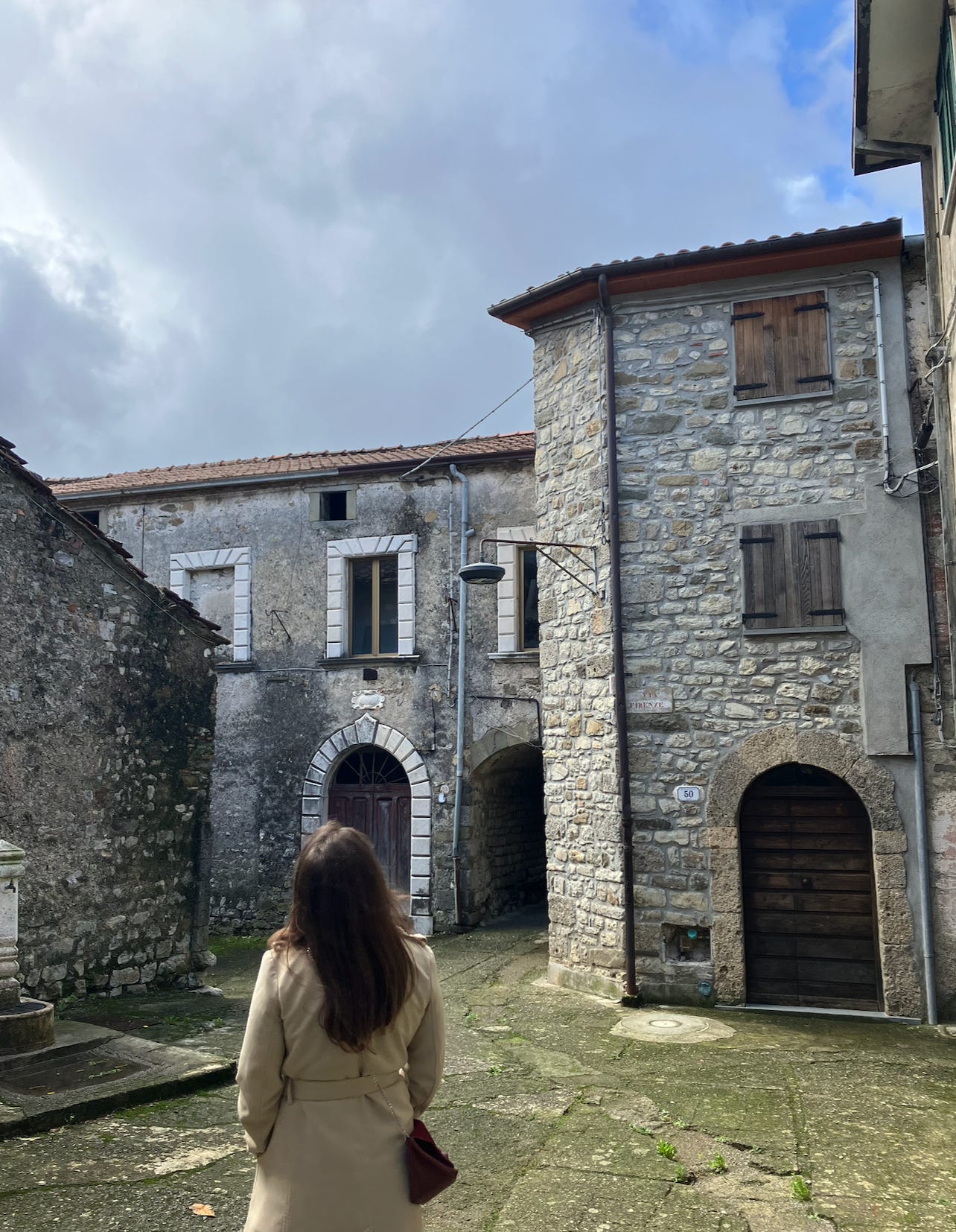
We had lived in palazzi before, and in apartment hotels, and in modern buildings in modern cities, and we are not the kind of people who pretend that hardship is romantic. There is nothing romantic in being poor, and there is nothing wrong with being well-off or above. The house had been renovated, which meant the air conditioning more or less heated and cooled, the walls were not, at that time, fully overtaken by mold (thankfully, only the outside), and the internet worked. The hot water was hot. There is a particular pride in writing those last sentences and meaning them as praise. I also reserved myself and haven’t used the word “mostly” much here, because we had some mold inside, the internet dropped when it rained a bit, the clouds totally overtook the sky, so ciao Starlink, and we’ve lost hot water due to electricity outages around 10 times. We also had fist-sized geckos and spiders everywhere.
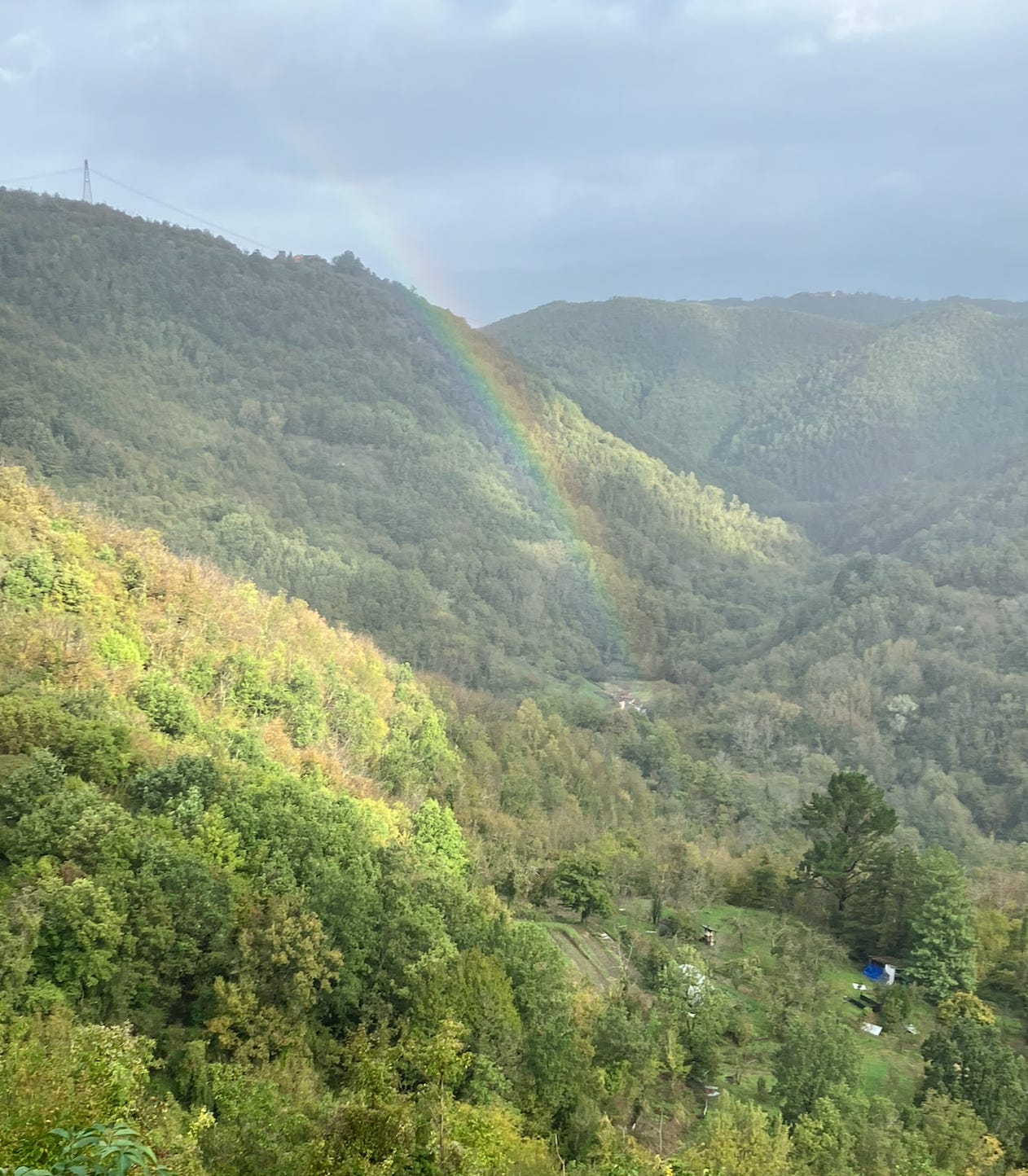
But the terrace. From the terrace, the entire valley opened beneath us, the chestnut woods running down on every side, the farther ridges blue in the morning and grey by afternoon, and then, for ten minutes, pink before they became nothing. Our dog, who is gone now but was with us then, walked the loop of the borgo with us every morning and every evening, the same loop, the same houses, the same cats on the same walls. He liked it the way dogs like a thing they understand. We liked it the same way.
The region we had landed in is called the Lunigiana, and most Italians outside it could not point to it on a map. It is the long inland valley of the river Magra, tucked into the top corner of Tuscany, where the region presses up against Liguria on one side and Emilia on the other, with the spine of the Apennines closing it off to the north and the Apuane closing it off to the south. The name comes from Luni, a Roman colony on the coast that was once important and is now in ruins, which we visited years later. The Malaspina ran most of it for five centuries from a string of castles set on every defensible spur, and you can still see them, half a dozen ruined towers visible from any high road. The dialect bends toward Liguria. The food, for the same reason, leans that way too: chestnut flour, panigacci and testaroli cooked between hot terracotta discs, the same fried bread strips we had eaten at the La Posta restaurant in Equi Terme, lardo cured down in Colonnata over the ridge, pesto from the Ligurian side mixed with pecorino from the Tuscan side.
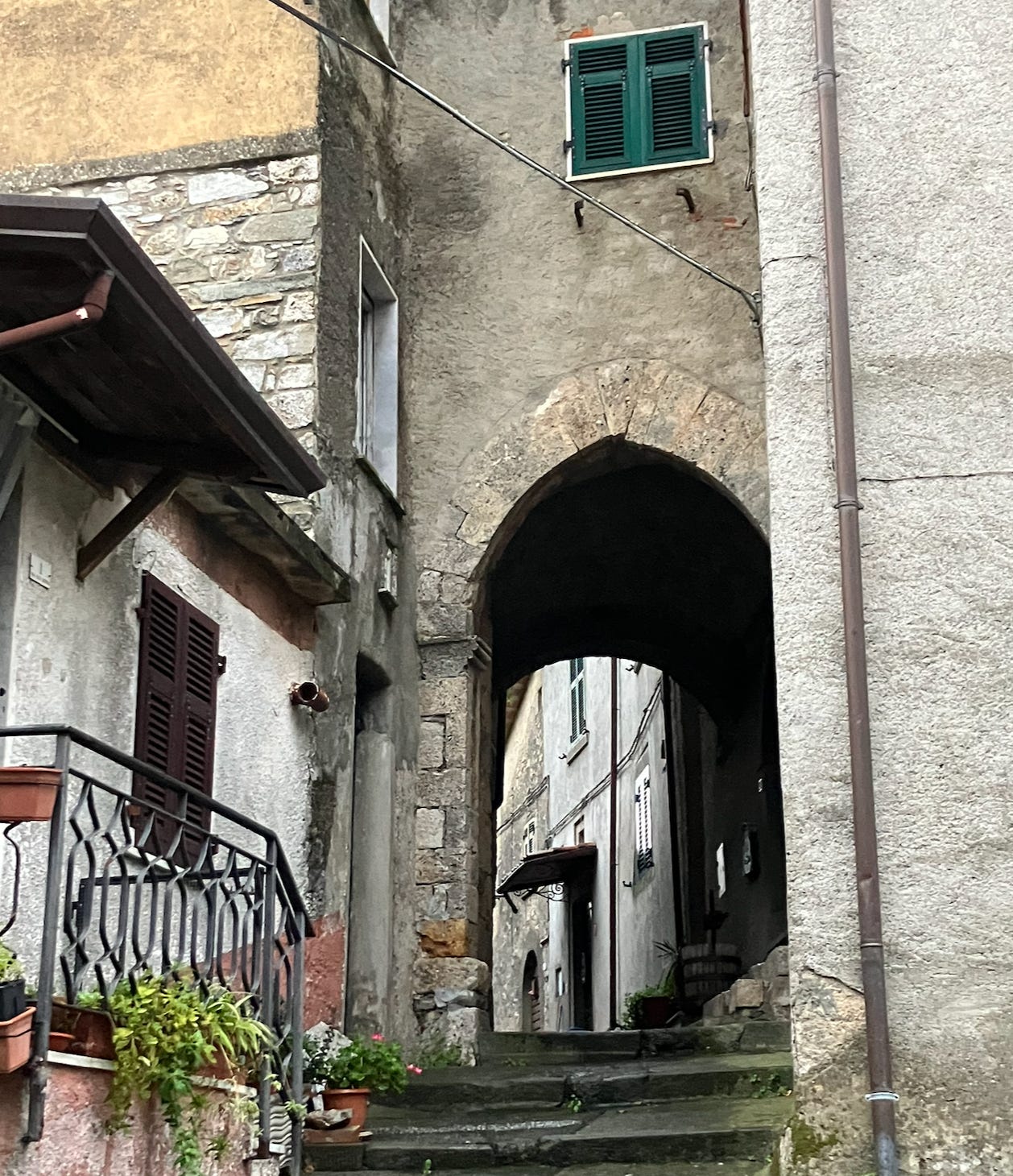
Lunigiana is one of the older parts of Italy and one of the least visited, and that those two facts are connected. It was a transit corridor for two thousand years, the way the Via Francigena pilgrims walked from Canterbury to Rome, and it was poor for almost as long, and the modern motorway and the modern railway both threaded through it on their way to somewhere else and left the valley itself alone. The chestnut woods that run down from Marciaso are the same chestnut woods that fed the people of these mountains for a thousand years, when they were too far up for wheat, and the chestnut was, locally, the bread tree. The marble quarries you can see from any high point are the same quarries Michelangelo came to choose his stone from, and the men who work them now drive home up the same valleys their grandfathers walked. Nothing about this region was ever picturesque in the way the brochures sell. It was working country, mountain country, and it has stayed that way because nobody arrived to convert it into something else.
Which brings me to what I want to say about Marciaso, and what I did not understand until we had been there a few weeks. The village has nothing to sell you. There is no shop that pretends to be artisanal. No one has printed a postcard. There is no boutique with linen aprons in the window, no enoteca with a tasting flight at thirty euros, no laminated menu in three languages, no carved wooden sign in the lettering that means rustic. The walls are stone because the houses were built of stone. The doors are old because nobody replaced them. The piazza is small because a village that has barely hundred people do not need a large one. There is a church and a bar and a bus stop, and beyond that, the village is just itself, doing what it has done since the twelfth century, which is to be a place where some people live.
This is, I have come to understand, the actual Italy. It is also, by a strange accounting, the rare Italy. Most of the borghi people traveled to villages exactly like this one, until they were not. Somewhere along the line, a guidebook noticed them. Then a magazine. Then a film crew. Then the buses started coming up the hill. The bar that served the locals got a Negroni list. The trattoria where the men ate at noon received a Slow Food sticker and a wine pairing. The piazza filled with people taking photographs of each other. The shops that sold flour and shoelaces became shops that sold ceramic Pinocchios and Tuscan-themed olive oil in ten-euro bottles. The houses got bought, and the families left, and the place that the photographs were of is no longer the place the photographs are of.
Marciaso has none of that, because Marciaso has nothing for anyone to want. There is no view spot for the bus to disgorge a crowd onto. There is no famous painting in the church. The Malaspina, who were lords of this corner, spent their attention on Fosdinovo, ten kilometers west on its proper ridge, and they left Marciaso to itself, and self is what it has stayed. Not that if Fosdinovo was any more popular or crowded than Marciaso now…
Which means that walking the loop of the borgo at six in the evening, when the light goes that particular Apennine pink, you see what you came to Italy to see in the first place, before anyone explained it to you. An old woman with a basket of greens is going slowly up the steeper street. Two men outside the closed door of Da Lino, talking about something that happened in 1987 with the same intensity as if it had happened that morning. A cat. A smell of woodsmoke and onions and something braising. The mountains, which were here first and will be here last, holding the village in their hand.
And the hospitality, the actual hospitality, not the version of it printed on hotel brochures. Sophia and I are foreigners. We were obviously foreign, walking the same loop at the same hours every day with our dog. Yet, the barwoman at Da Lino, on the one Saturday we ate there, brought us a small glass of something at the end of the meal that was not on the menu and would not be on the bill, and she did not make a thing of it. We were strangers, and we were treated as guests of the place, with the particular Italian grace that does not ask you to perform gratitude in return. Nobody was selling us anything. There was nothing to sell.
When we ate out, the food was the food the village ate. Down in Monzone, in the Lucido valley where two streams meet, and the railway runs along the lower town, there is a place called Da Remo. We went there for the first time in our second week and went back almost weekly after. The room is bright. The tables are full of men eating quickly, families on a Sunday eating slowly, two old men in the corner who have eaten there for forty years and will eat there for as many more as they get. The menu is a single sheet of paper with that day’s dishes typed in black, no flourishes, no English. We ate wild boar stew, and a pasta with meat sauce (probably from the same boar stew) whose shape I no longer remember, and they brought us a basket of panzerotti, the small fried strips of bread dough they make in this valley, with a plate of soft cheese and salumi to wrap them around. The boar was dark and slow and tasted of the woods we had been walking in. The pasta did not pretend to be anything. The bread was hot. The wine came from a jug, not a bottle. The bill, when it came, embarrassed us.
I had eaten in Italy for years. I had eaten well, by every measure travel writing uses. I had not eaten anything as good as that, and the reason I had not eaten anything as good as that was that nobody at Da Remo had ever needed to convince anyone of anything. They were cooking what people from the valley eat, for the people from the valley, and the people from the valley were eating it. The cooking was honest because the audience was honest. Take the audience away, replace it with people who flew in from Atlanta to have an Italian Experience, and within five years the boar would have a foam on it, and the panzerotti would come three to a plate with a quenelle of something, and the bill would have a zero added to it. The wine would come in a fancy bottle. Same wine.
We started venturing further. Fosdinovo, the commune we technically belonged to, the castle on its ridge looking down toward the sea, five centuries of Malaspina. We walked the borgo and saw the same architecture as Marciaso, the same stone, the same loop of streets, only larger, with a piazza that worked and a bar that opened every day. After a while, we realized that almost every village in this area, probably in the entire country is the same village in different sizes. A spur of rock. A castle, ruined or kept. A church. A loop of houses. The food shifts a little from valley to valley, the dialect bends, the saint changes name. The bones are the same.
And here is what I want the reader to do, slowly, in their head. Picture Fosdinovo, with its castle and its piazza and its stone. Now picture Montepulciano. Now picture San Gimignano. Now picture Volterra. The castles are the same castles. The stone is the same stone. The pink hour is the same pink hour. The piazza is the same piazza. The bones, as I said, are the same. The single, only, total difference between Fosdinovo and San Gimignano is that someone wrote about San Gimignano in 1972 and nobody has yet bothered to write about Fosdinovo. That is it. That is the whole thing. The cheap painted plates in the windows of San Gimignano are not a feature of Tuscan villages. They are a feature of Tuscan villages that have been told they are Tuscan villages for long enough that they have started agreeing.
Drive an hour up from the coast in this country, into the actual mountains and not the hills, and you find the unwritten version. The same materials, the same medieval geometry, the same old men outside the same closed door, the same plate of pasta. Only without the layer of gloss that has been laid over the famous places like an Instagram filter. The economy is different. The climate is different. October on the coast is a long, warm afternoon. October at four hundred meters is a short, cold one with leaves coming down in handfuls and the woodsmoke starting at three. The people are different, slightly, in the way that people who have spent their lives in a valley with one road in are different from people who have spent their lives in a valley with a railway station and a thousand-year-old reason for outsiders to come look. Less practiced. Less suspicious, oddly, because they are not constantly being asked things by strangers. More likely to take a few minutes with you because they have a few minutes.
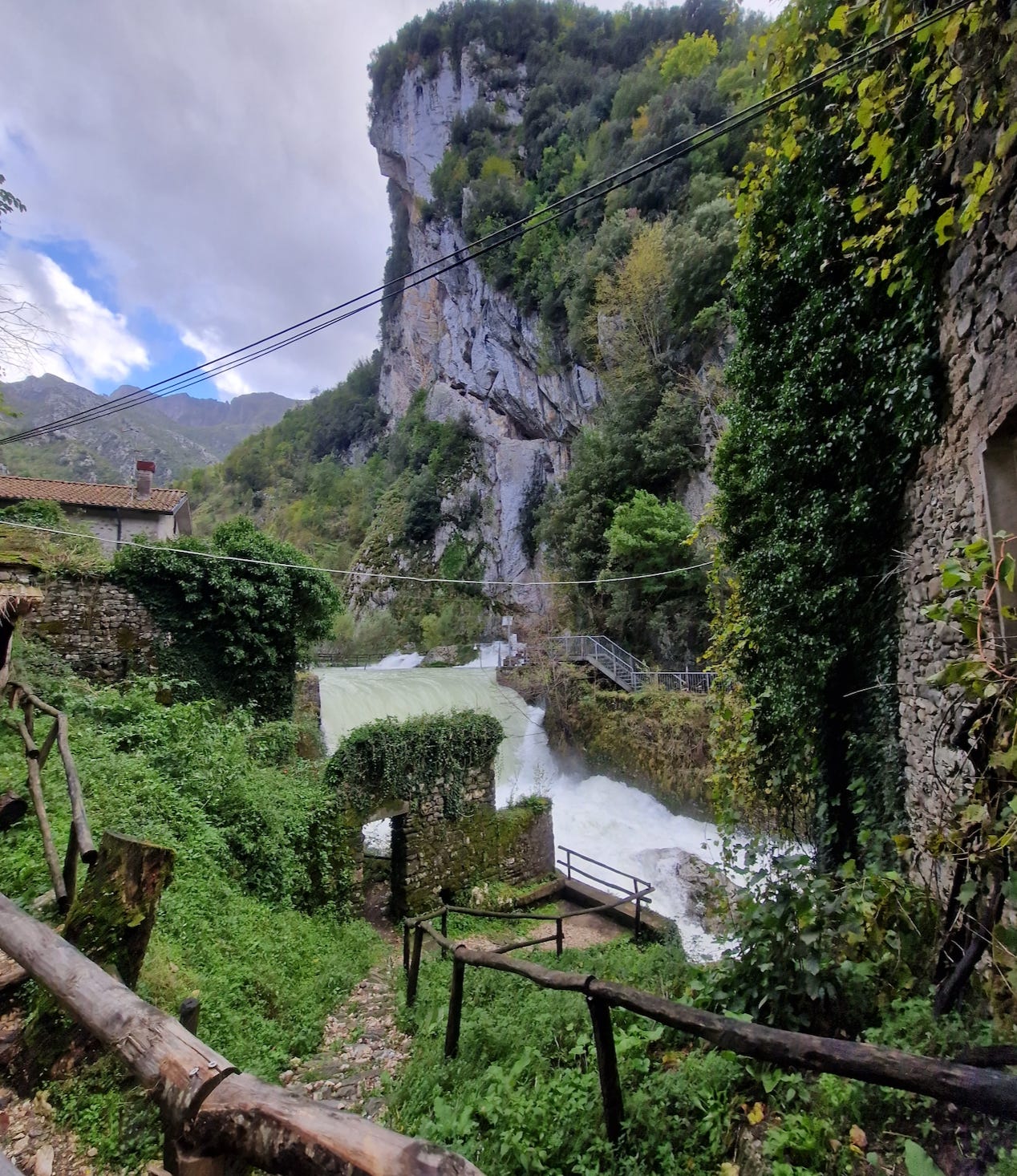
Then there were the terme. Half the place names along this flank of the Apuane have the word in them, and we worked out, slowly, that the whole mountain is laced with hot water coming up out of the rock. We drove down to Equi Terme one evening, late, and that was the night the trip turned. Equi sits at the bottom of a gorge cut by the Catenelle torrent, the Pizzo d’Uccello looming above it, a thermal spring, and a borgo so small and so dark and so full of stone it felt like walking into a fold of the mountain. We had dinner at La Posta. The room was full. The faces around us were not the faces of weekenders from Florence or Milan. They were local faces, the kind that grow up in a valley and stay there. They were eating panzerotti in stacks, with stracchino and prosciutto, and a chestnut cream for the sweet ones at the end. We ordered the same.
I sat at that table, looked around the room, and thought: this is what San Gimignano was, before. This is what Montepulciano was, before. This is what every Tuscan village ever photographed for a wall calendar was, before someone took the photograph. A room full of people who live there, eating food made by their neighbors, on a weeknight in late October, with the rain starting outside and a fire in the corner and no one performing anything for anyone. And the only reason this room still exists, in this particular form, is that the road into Equi Terme is bad, and the signage is poor, and there is no famous painting to draw a tour bus, and the chestnut woods around it have not yet been written about.
The roads back up at night are the part of mountain life no one writes about. The chestnut leaves are wet. The verges are loose. There are no streetlights once you leave the bigger borghi, and the high beams make tunnels through the dark, and a fox crosses, and the GPS gives up, and you drive by what you remember of the route from earlier, slower than you would think possible. We made that drive many times. We made it back from Fosdinovo, from Monzone, from Equi, from a dozen smaller places we tried once and did not return to, and each time the last hairpin into Marciaso was the moment of arriving home, which was not a thing I had expected to feel about a stone house with semi-functional heat in a village I had picked off a map.
Under an hour from the door of our house, if you point the car west and let it fall, you are in Carrara, then on the coast, then in Versilia, where the umbrellas line up in their colored rows and the cars from Milan park three deep along the Forte. Versilia is twenty minutes of vertical descent away from Marciaso and a different country.
Two months in, when we left, we drove out the way we had come in. There are villages all over this country exactly like Marciaso. Most of them you have never heard of. None of them is on anyone’s list. They have nice people, and food made out of what grows around them, and a church and a piazza and an alimentari and a cafe, and around them some of the most beautiful and various land in Europe. They do not have shops selling ceramic Pinocchios. They do not have menus in three languages. They do not have anyone explaining themselves.
That is the whole thing. That is the entire offer. An hour up from the coast, the country becomes itself again. You only have to commit to the road in.
