
The Mediterranean Diet Is an American Invention
The story of the most popular and most misunderstood diet in the world

Start with the fact that nobody selling you a cookbook wants to say out loud: the Mediterranean diet is American. The term, the framing, the entire concept came from Ancel Keys, a physiologist from Minnesota who landed near Salerno with the US Army in 1944 and noticed the locals were dying of heart disease far less than the executives back home, despite having far less food to choose from. He came back after the war, settled in the Cilento, and spent the rest of a very long life studying why. He coined the name, built the science, did the research. The Italians themselves never sat around calling dinner a “diet.” They ate what they could afford.
Also, keep in mind that when the entire thing was coined (1950s), America was already hooked on sugar, processed food, and mass-industrialized agriculture. When the Mediterranean diet became a brand (1990s) for longevity and healthy living, it was promoted as an alternative to the USDA’s food pyramid. On that, by the way, the USDA’s food recommendations were always mind-blowingly unhealthy, even today, completely ignoring any science, and it is more like a lobbyist paper of the US agricultural industry, rather than an actual dietary plan that should be taken seriously. Rant over.
Back on the diet. So, in the south, in the middle of the last century, what they could afford was poverty food. Vegetables, legumes, whole-grain bread and pasta, a lot of olive oil. Sugar came from fruit. Red meat showed up on a feast day and not much otherwise. Nothing was processed, not out of principle, but because there was nothing mass-produced in Italy to buy. The health wasn’t a decision. It was the absence of options. Also, it has nothing “heritage” or “ancient” in this diet. It was postwar scarcity. But more on this below.
Which brings us to the lies, because there are a few, and they all attach to the food itself.
The first is that it’s an ancient tradition. From across the Atlantic, anything older than a strip mall reads as ancient, so I understand the instinct, but this thing is barely a century old. It’s postwar austerity in a nice shirt. There is no unbroken line back to the Romans. There’s a hungry decade that a foreigner later turned into a brand.
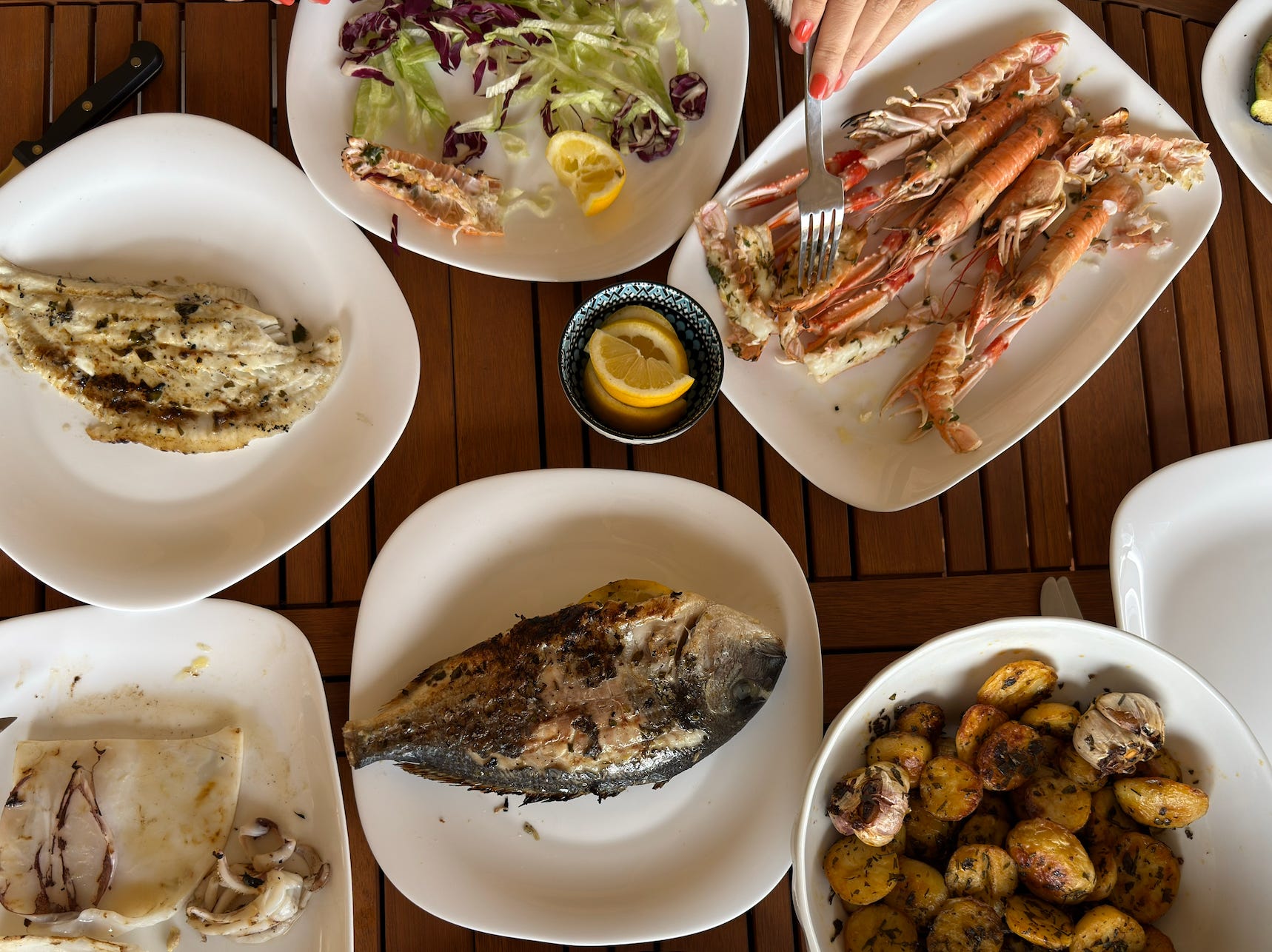
The second lie is the holy trinity: olive oil, wheat, wine. Beautiful, and not how the actual poor ate. The real southern peasant kitchen did not run on olive oil. It ran on lard. Pig fat. Strutto. Wine was occasional, not daily. Oil, good bread, wine, and meat were the table of the middle class and up, and more a thing of the center and north than the hungry south. The diet that got exported quietly swapped the pig fat for a gold bottle of oil, because pig fat doesn’t sell a lifestyle.
The third lie is that it was a conscious healthy choice. It is now. You stand in the shop, and you choose. If you are in Italy, you skip 80% of the crap that they sell you in any stores. If you are in the US, this goes up to 95% or more. It is a conscious decision: you skip most of what’s on the shelves, and you build a plate on purpose. Back then there was no choosing. They ate this way because there was nothing else to eat.
For the price of a glass of Chianti, unlock the full Anywhere Italy experience. All of our articles, private stories, and access to our chat travel community.
Start your free 7-day trial.
The branding came later, in the 1990s, and it was also mostly American, obviously. The Mediterranean Diet Pyramid was developed in 1993 by Oldways, a US nonprofit, together with Harvard and WHO, explicitly to counter the USDA’s own food pyramid, which I already ranted about. Oldways then flew chefs, food writers and importers around the Mediterranean on press trips, which is a large part of how olive oil arrived in American kitchens at all. None of that is tradition. It’s a campaign. Don’t forget, this time most people used canola and sunflower oil, and margarine, so introducing olive oil was like sending a Jehovah's Witness from Alabama to the Vatican.
So if the romance is invented, what’s actually left? The food. And the food is good, and worth eating. Stripped of the mysticism, here is the whole thing: whole grains, vegetables and legumes as the base. Olive oil as the main fat. Fish, poultry and eggs ahead of red meat. Meat, dairy and cold cuts used the way you’d use salt, to season the plate, not to be the plate. That’s it. No app, no macros to count, no subscription. And definitely zero Blue Zone Diet and other mega-bullshit scams on longevity.
Here’s the part nobody mentions: in Italy, eating this way is almost effortless, and the reason is structural. And when eating healthy is effortless, big numbers will swing. I know what I am talking about since I am coming from Hungary, one of the most obese, unhealthiest countries in Europe (or in the world?), with a completely destroyed and wrecked agriculture, where making healthy decisions about food requires the discipline of an elite sportsman or a special ops soldier. I am not joking here, it’s seriously that bad. So, in a way, I do understand why this topic is important to people on the other side of the Atlantic pond.
So back to Italy. First, the country runs on local agriculture. It’s not destroyed, it’s not mass-produced, it’s heavily governed and regulated to preserve its quality. This is, by the way, the answer to all your musings on “why Italian food in Italy is so amazing”, because the ingredients are amazing. The small shops we’ve written about before run entirely on it, but even the big chains do. Walk into an Esselunga and the onions are from Tropea, the flour is from around Bologna, the tinned tomatoes are from Naples. Again, I come from Hungary, where the farming industry is half-broken, and it’s easier to buy Chinese garlic (which is crap, obviously) than Hungarian. Here, you have to go looking to find anything grown elsewhere.
Second, the farmer’s market is not an event. A farmers’ market isn’t a special weekend outing you drive to. There’s one near you almost any day of the week, the produce is local, it’s cheap, and it’s a five-minute walk. Getting good ingredients is the path of least resistance, not the effortful one.
Third, the climate does a lot of the work. People argue with this, but almost anything grows here, which means the variety in front of you is enormous. I remember the UK, where you can buy perfect broccoli, potatoes, radishes and greens, and then try to buy something that actually needs sunlight to grow. That’s not Britain’s fault. It’s geography. Italy got lucky on that one. To defend my love affair with Britain, the best potatoes and broccoli are from England, laddies, and the aisle of potatoes in any Waitrose is heaven on the planet, much like the aisle of tomato sauces in Italy. I fondly remember that, only in Britain, there was a TV ad for hand-selected potatoes in paper packaging that looked like you were buying literal gold. Can’t remember the brand, sorry.
Fourth, we cook, and because we work from home, we cook more than many Italians do, which gives us a clearer view of it than most. We also have sensitive stomachs, so we pay attention to what goes in the pan. And the core thing we’ve learned is this: here, picking the right ingredients and cooking the healthiest version of a meal takes no effort at all. In the other countries we’ve lived in, eating well was a project. You needed a relationship with a butcher who’d sell you proper meat. You needed family in the countryside growing real vegetables. Because in the shops, buying honest food was nearly impossible. In Italy, the default setting is already the healthiest one.
And the last thing, the part the wellness industry will never sell you because there’s no money in it: this is not a strict rule, and treating it like one misses the point. It’s like the gym. What matters is the reps and showing up, not flawless technique or some vow of purity. Nobody gets healthier because they were perfect for a week and quit. You get there by eating this way most of the time, on the ordinary days, without thinking about it.
Which means cheat days are not a sin. We do barbecue ribs and battered, deep-fried wings like anyone. I keep a charcoal grill on the terrace for big slabs of meat at the weekend. But that’s the weekend, the rare bit, the occasion. On a regular Wednesday we eat the way Ancel Keys described, at maybe ninety-nine percent, and we don’t notice we’re doing it. That’s the whole trick. Not discipline. Just a place where the easy choice happens to be the right one.