
The Sweetness of Doing Nothing
What dolce far niente is about for real

I didn’t want to write about this topic first, but given how misunderstood it is globally, I wanted to share my take.
Every culture has its pause. The Swedes have fika, the coffee-and-pastry stop that’s basically mandatory. The British have the pub. Half of America has Friday night football and the tailgate. The French have the terrace, the Spanish have the long sober conversation after the plates are cleared. So dedicated stress relief is not an Italian thing. Nobody owns the art of doing nothing.
What Italy has is volume. The pauses are stacked one on top of another, woven so deep into the ordinary day that opting out takes more effort than joining in. And then there’s a marketing layer painted over the top, the postcards and the films, that convinced the world this particular sweetness grows only here.
It doesn’t. But it’s worth understanding how it actually works, because the mechanics are stealable, and almost none of them are what the brochure promised.
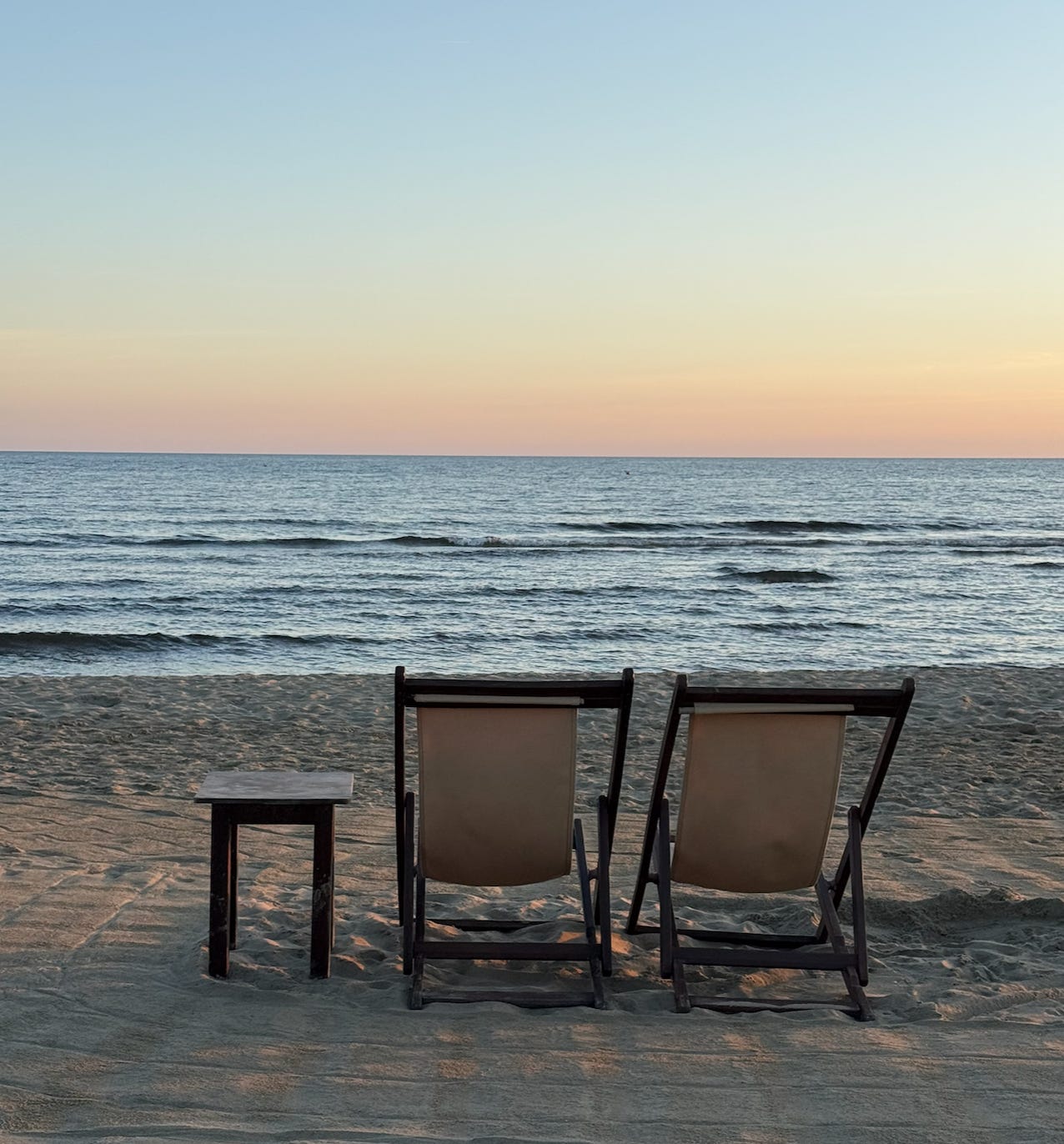
Start with the coffee, because it’s the clearest case. There’s a café in our town called Margherita, and there are two ways to use it. The first is the working way: you stand at the counter, drink your espresso in four swallows, exchange a word with the barista, and leave. Thirty seconds, maybe a minute. The whole transaction is built to be brief and human at the same time, which is a trick most of the world has forgotten. The second way is mine. You sit down, you order a cornetto with it, and you spend half an hour watching the street. That’s it. That’s the entire activity. You are, in the most literal sense, doing nothing, and nobody comes to clear your table or refill anything to nudge you along. The rule of thumb is simple: the busier you are, the more you stand. The older you get, or the more you’re on holiday, the more you sit. I work for myself, so I sit. The thirty minutes aren’t stolen from my day. They’re part of it.
Then there’s the festa or sagra, and this is where the religion question gets interesting, because the Italian version is almost nothing like the one exported to American television. To me, watching religion in the US is always weird. Only 3rd world countries treat religion this seriously, and to be honest, it freaks me out a lot. In Italy, this is totally different, and please allow me to remind you that the churches here are still full, and this country is the literal epicenter and birthplace of Catholicism. Yet, there’s no stadium, no preacher with a donation hotline, no spectacle built to be broadcast. Nothing is sold to you and nothing you need to pay for. It is not part of your identity, and your faith rarely affects your everyday life choices. It is, however, part of everyday life in a more casual, communal way. In other words: religion doesn’t cut you off from others. Rather, it connects you with others, especially to your local community. And, by the way, I am not attending any churches, but still participate in most local events because they are fun.
Last week there was a sagra in Ripa, the village across the river from Pietrasanta, in the piazza by the church. I couldn’t tell you which saint it honored and it genuinely didn’t matter. There was a long table, ten euros per plate, some local soup-ish thing and meat, music, and a few kids putting on a little show. We didn’t know a soul there, and it didn’t matter. You sit, you eat, you’re folded in. The thing wearing the saint’s name is really just the village having dinner together, and there’s another one this weekend, and a dozen more within fifty kilometers all summer. The calendar is so full of these that you’d struggle to find a free Saturday. Faith is the frame. Community is the content.
For the price of a glass of Chianti, unlock the full Anywhere Italy experience. All of our articles, private stories, and access to our chat travel community.
Start your free 7-day trial.
Family runs on the same logic: keeping rather than discarding. There are retirement homes here, but the default is to hold on to the old. It’s a daily street scene: a sixty-something pushing a wheelchair, and in the wheelchair an eighty- or ninety-year-old, the mamma or the papa, being wheeled to the same festa as everyone else. Still in the piazza. Still part of it. The romantic postcard version, the nonna in the mountain village, the white-haired papa on the bench, is one of the rare cases where the cliché is just accurate. Old people here aren’t filed away somewhere quiet. They stay in the picture.
And the picture is full of self-organizing. This is the part visitors miss because it looks like nothing, but it’s actually the whole engine. People here form groups on their own without being asked. There are hikes in the mountains, a dozen people going up together on a Sunday. There are card games, clubs for every conceivable hobby in towns of a few hundred people. I live in a village close to a small town, and I can name like 50 different clubs, organizations, communities, and hobbyist circles where I can go if I'm into, I don’t know, archery, chess, or whatever.
On our main piazza every Thursday in summer there’s a card tournament, some Italian cousin of poker, don’t know the name, fifty to eighty grandmothers and grandfathers playing in the open air, at night, live. And on nearly every piazza in the country, any day, there’s a knot of five or ten old men with cards, smoke, a glass of something, killing the afternoon. None of this is uniquely Italian. The difference is that here it’s everywhere, and it’s not walled off by age. The teenagers cluster the same way. Everyone is with everyone. Being part of the community is the path of least resistance. Being alone is the thing you’d have to work at.
Under all of it is the food, and the food is the clearest tell of the whole philosophy. Here a meal is not a problem to be solved. It’s not fuel, not a productivity input, not the break you skip when you’re busy or eat standing at the sink. It’s the event itself. The thing you organize the day around, the reason the table is long and the lunch is two hours, the occasion the whole group shows up for. Everywhere else food is the pit stop. Here it’s the destination.
But really, this is about stress relief. About having the option to pause. And there are only two ways anyone actually relieves stress. You turn inward, into the moment, a hobby, a walk, a thing you do alone with yourself. Or you turn outward, into other people: sex (Italians are not exactly amateurs there either), community, friendship, family. Sprinkle some wine over either one, add good food, and you have the time of your life. Italy’s trick is that it has both kinds, in abundance, baked into the ordinary social week rather than sold back to you as a technique.
Which is why I’m not sure you could make a living here selling courses on how to sleep better, the best meditation and relaxation methods, how to let yourself go in the present, how to breathe properly, and the rest of it. There’s a wellness market here too, of course. But as Sophia and I joke about it: try to teach an Italian how to enjoy life and charge them for the course. Good luck!
It’s the same with how restaurants and hospitality are run here, which Sophia, a designer, clocked fast. For about two days we toyed with a business idea: custom menus, websites, booking systems for restaurants, the whole package. Then we realized almost no Italian place would pay for any of it. Why would they? Booking is by phone or in person. The menu was made in Word, has spelling errors, or was printed once, thirty years ago, and is still in slightly off plastic. There might be a website. Usually there isn’t.
And who cares? The place is full anyway. It’s Italy, for f-ck’s sake. Even the crap spots fill up with tourists who think carbonara is cooked with butter. Same with the rentals. I’ve stayed in genuinely bad places and paid a fortune, because everything’s booked solid and it feels like no off-review could dent it. The country needs zero effort to market itself, and zero effort to wind down, because both are baked into how the place already works.
Sidenote in the sidenote: by the way, have you seen the Italian Tourism Board’s actual ads? 2023, “Open to Meraviglia,” open to wonder: a virtual Botticelli Venus reborn as a miniskirted influencer posing at landmarks with a slice of pizza and a phone. Some scenes use stock footage of a winery in Slovenia. I am not making this up, and I won’t link it here for aesthetic purposes. Possibly the worst tourism ad ever made. And again… who cares? The year after it ran, foreign visitors spent around €55 billion here, €5 billion more than the year before, putting Italy among the world’s top five tourism earners. Must be the ad…
And keep in mind Italy pulls that off while barely trying. Spain earns nearly double, but Spain works for it: package holidays, year-round islands like the Canaries, a beach-resort machine running twelve months a year. Italy has a limited number of beach resorts, gives zero f about package holidays, half-closes its coast in winter, and still lands in the top five. Complain all you like that it’s overcrowded, overrated, overpriced. You will come and pay anything anyway.
But here’s the part the marketing won’t tell you, because there’s no money in it: none of this requires Italy. The sweetness of doing nothing isn’t a national resource you have to fly here to access. It’s a set of choices, and they travel. Protect a slot in the day that isn’t for getting anything done. Treat a meal as the event and not the interruption. Build the standing thing, the weekly card game, the Sunday walk, the group that meets whether or not anyone feels like organizing it, so that showing up is automatic and absence is the effort. Keep the old people in the room. Keep family around.
The Italians didn’t invent any of this. They just kept it, layered it, and let the rest of us believe it was a secret. The genuinely Italian part isn’t the doing nothing. It’s the conviction that doing nothing, in the right company, at the right table, is not the thing you do when the important parts of life are finished. It is why life is important in the first place.


Planning a slow trip? My planner builds it for you. Answer five questions, and you get a personalized route from my handpicked list of the 1,000 towns most travelers skip, with festivals, drive times, and a line on what each place is. Don’t like it? Refine it, swap towns, or browse the whole database by region. Simple. Free. No paywall, not even an email gate. Pure discovery for you.