

Urbino and the man who tolls the bells
Reading Table III.

I write about Italy and the towns and experiences most people skip. Mine is one point of view. Others have theirs, and I love to read them all. So most weeks, I find a few pieces from other writers worth passing on.
This is Anywhere Italy’s Reading Table. Here are the latest articles from writers who made my days better.
Ilaria Ippoliti on why Macerata is her favorite town
Favorite underrated Italian town: Macerata, in the heart of Le Marche. Why Macerata? It sits inland, away from the motorways and the usual tourist trails, which is exactly why most people never find it.
The town has a remarkable depth for its size: one of Europe’s oldest universities still in operation, a food culture anchored by Vincisgrassi (the region’s layered pasta dish, richer and older than any lasagne you’ve tried), and the Sferisterio, a stunning 19th-century open-air arena that hosts a serious opera festival every summer. It’s the kind of place that rewards the curious traveler who’s willing to experiment.
Ilaria focuses on artisans, wines, and foods behind small Italian towns, especially in the Marche region. She wrote a really cool article on the Uncool beauty, which is Macerata.
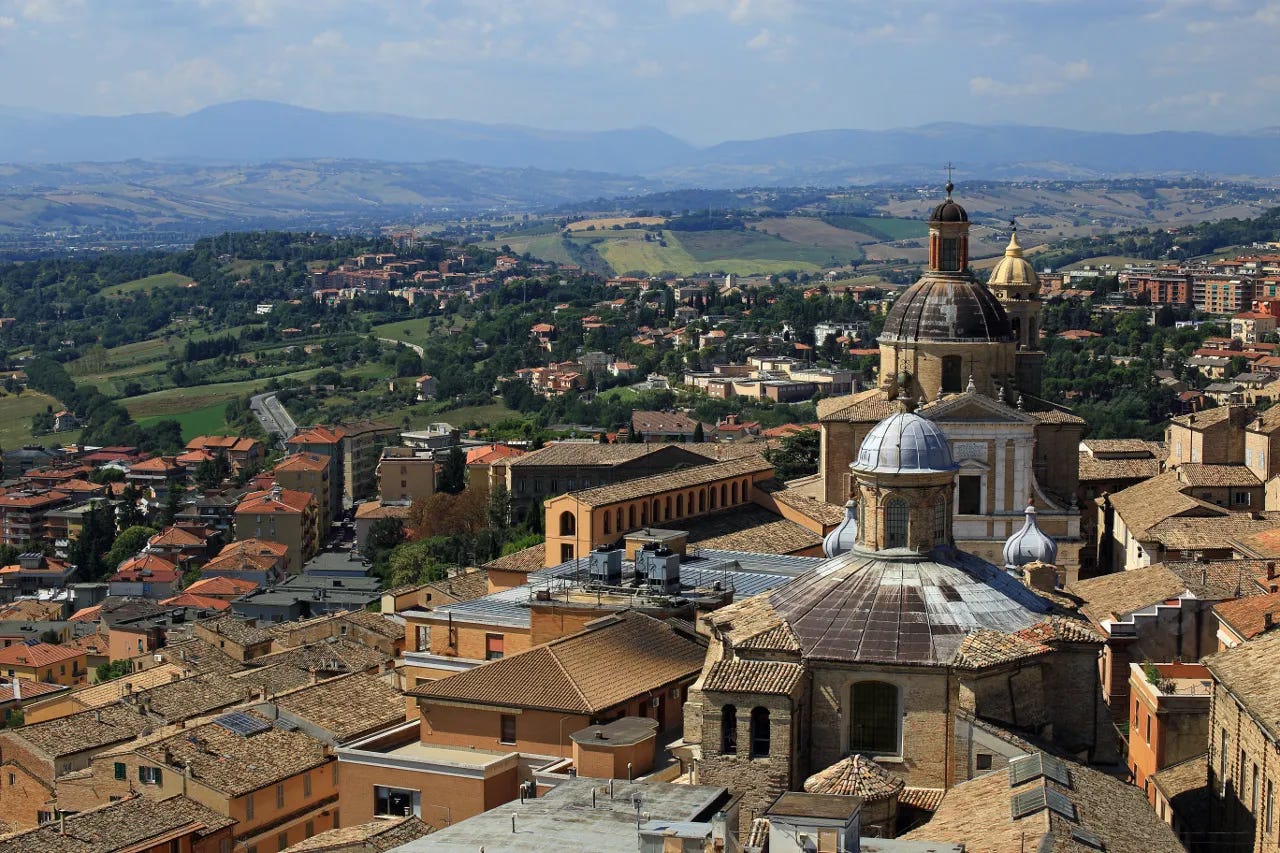
Antonio Cangiano on why Urbino is close to his chest
Urbino should be as famous as Siena. It isn’t for two reasons: we Marchigiani are terrible at marketing our own region, and Urbino isn't on the way to anything.
No train, no autostrada. You reach it on purpose, or you never see it. What you get in exchange is a small city whose entire historic center is a UNESCO World Heritage Site.
The Palazzo Ducale was built to prove that a small court could out-civilize Florence. Raphael was born just up the street, and you can visit the house where he grew up. The university, founded in 1506, keeps the city young. If you go, dine at Portanova for an unforgettable meal.
Antonio included Urbino in his 7 must-see cities in the Marche.
Life Lived Italian — An Attempt at Exhausting a Bar in Rome
An older article from Eric, but it got served to me via Substack, so… I believe the story is the unit. This piece sets out to prove me wrong. Eric borrows the method from Georges Perec’s 1975 experiment in Paris and applies it to a bar in Rome: sit still, session after session, and write down only what crosses your field of vision. No arc, no characters, no lesson.
Customers, orders, the same espresso ritual performed by a dozen different hands, the light moving across the room. I spent a year in Rome, and this is the Rome I recognize, the one with a job to do and no interest in you. The trick is that the accumulation becomes the story anyway. Refuse to tell one long enough, and the reader builds it for you.
For the price of a glass of Chianti, unlock the full Anywhere Italy experience. All of our articles, private stories, and access to our chat travel community.
Start your free 7-day trial.
Gillian Longworth McGuire — One Street in Venice, Corte Nova
Also, an older article from April came up after reading through Gillian’s blog. Since I’ve been to Venice many times (but not lived there), it caught my eye, also because everything I preach about staying in one place instead of ten, Gillian does on a single street.
Corte Nova is one narrow run of Venice, and she reads it the way most writers read the whole city: the architecture, the light at different hours, who lives there, what the name once meant. Her claim is that one street, looked at closely enough, holds as much as San Marco.
She is right, and the reason she is right is the only lesson that matters in this kind of writing. Attention is the multiplier. Pick something small and refuse to look away.
Barbara - Timetobeitalian — How Italians Keep Fresh in the Summer
The Marche will not leave me alone this week. Barbara Rocci writes the Marche summer as a set of habits rather than a list of sights, and it is the closest thing to my own religion I have read in a while.
The afternoon heat shuts the shutters and empties the streets until the town agrees to move again at sunset. When it gets to be too much, people drive to a lake or a river, put their feet in cold water, and eat a sandwich under a tree.
Up in the Sibillini, there is cold fountain water and a glass of Vernaccia di Serrapetrona waiting. Summer here is a rhythm, not an itinerary, which is the argument I have been making for two years, made better by someone who lives it.
Robert Camuto — By Whom the Bell Tolls
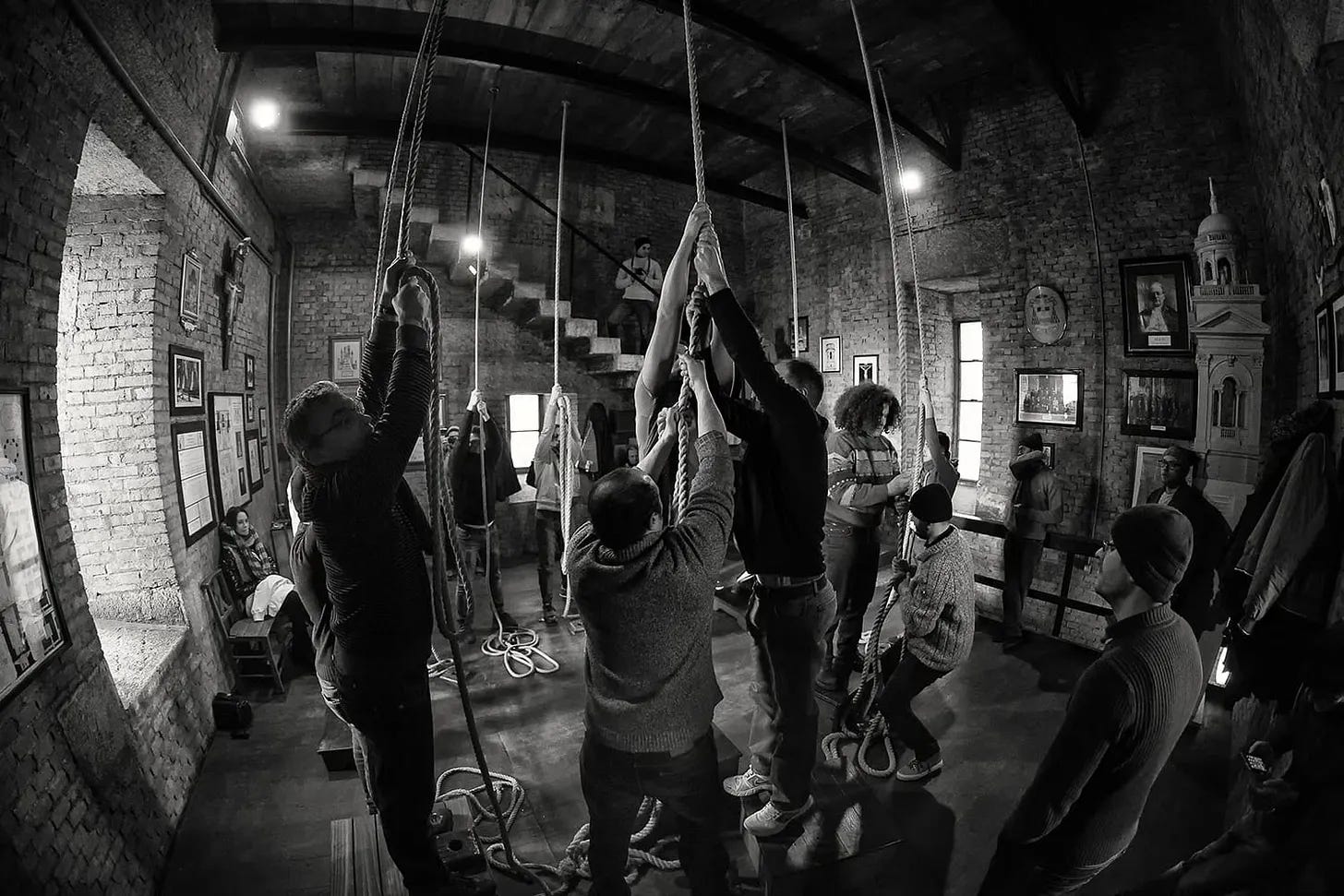
One of the best, if not the best article I’ve read this week. I have walked past a hundred bell towers in Italy and never once thought of the bells as something a person keeps. Robert Camuto climbs 312 steps up (congrats!) Verona’s cathedral tower to spend an afternoon with Matteo Padovani, who has looked after its ten bells for thirty years.
The piece turns on a technique called Alla Veronese, where teams move between the city’s bell towers and fill the air with hymns and scraps of opera, a 250-year-old school most people in Verona hear without ever hearing as craft.
The biggest bell weighs more than five tons. The man has given three decades to keeping it in tune with the others. Sound as architecture, and one surveyor holding the whole thing together by hand.
Annie Replogle — Bellano, Lake Como Like a Local
Everyone who goes to Lake Como goes to Bellagio, which is exactly why I paid attention to the town next door that nobody names. Annie spent several days in Bellano, on the eastern shore, in the stretch of the lake where the tour boats thin out and the place stops performing.
The framing runs warmer and more lifestyle than I usually pass on, frescoed ceilings and garden patios, but she earns it with the small true things: the pastry bar in the morning, the butcher who shows up in a red truck on Wednesday, an afternoon climb to a gorge hung with hydrangeas. A famous lake has a plain working town on it, and the town is the better story.
That was this week’s Reading Table. If you read something I missed, send it my way: ciao (at) anywhereitaly (dot) com.


Planning a slow trip? My planner builds it for you. Free, no paywall, no email gate. Answer five questions (hub town, interests, travel month, days you want for slow discovery, and fitness level, because some of these towns make you climb), and you get a personalized route from my handpicked list of the 1,000 towns most travelers skip, with festivals, drive times, and a line on what each place is. Don’t like it? Refine it, swap towns, or browse the whole database by region.