
Vercelli, a two-year ham, and the singer Italy believed was cursed
Reading Table II.

I write about Italy and the towns and experiences most people skip. Mine is one point of view. Others have theirs, and I love to read them all. So most weeks, I find a few pieces from other writers worth passing on.
This is Anywhere Italy’s Reading Table. Here are the latest articles from writers who made my days better.
Tino Masecchia — A Beautiful Detour I’ll Never Take Again
Nothing of historical importance ever happened in Orsigna, and that is the whole point. Tino drives up from the 40-degree Tuscan plain to this hamlet thirty kilometers above Pistoia because Tiziano Terzani called it the place of his soul and went there to die. No monument, no museum, no reason a guidebook would ever print the name.
I have built an entire publication on the idea that a town does not need a claim to fame to deserve your afternoon, and here is a writer proving it with a pilgrimage made for a sentence in a book.
The verdict he lands on, that some journeys satisfy once and completely and never need repeating, is the kind of honesty most travel writing avoids because the industry sells returns, not endings.
Michelle Damiani — The Hipster Barber Quotient
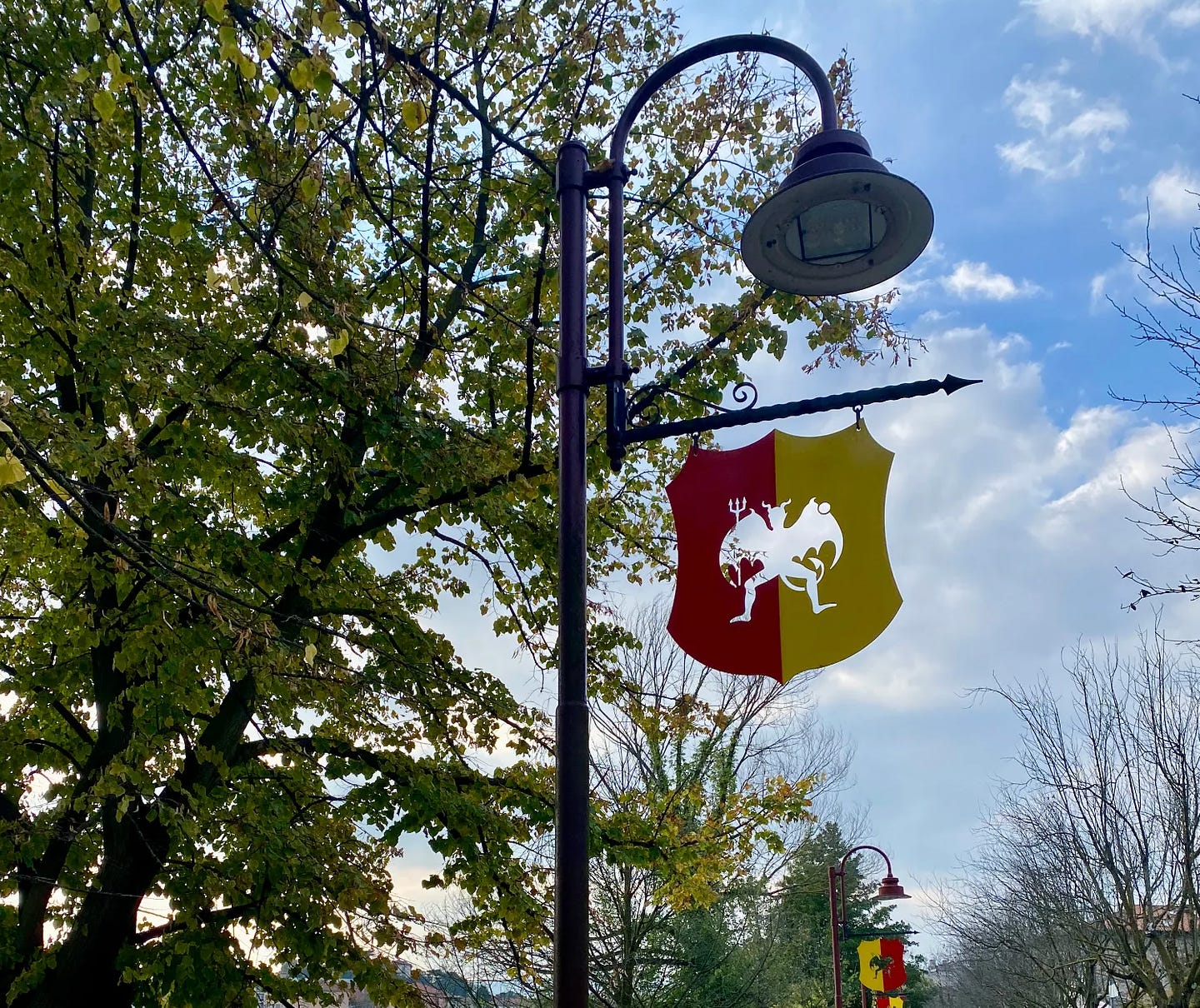
Michelle and her husband are hunting for a permanent Italian home, Saluzzo answers every item on their list, and then a reluctant lunch stop in Vercelli ruins the spreadsheet. The city keeps pulling them around corners while the rational candidate sits there, correct and inert.
Anyone who has ever chosen a place to live knows this tension, and almost nobody names it: the list gets you to the region, the gut picks the town. She names it honestly, without resolving it. Piedmont, between Milan and Turin, rarely gets this kind of attention, which makes the piece doubly worth your time.
Negroni Popcorn — The Crash, The Curse, The Universe
This one opens on the Reggio Calabria autostrada in February 1972, a baby-blue Ford Transit, full of Mia Martini’s backing band, driving into the back of a parked truck at full speed. From the wreck, the piece builds a portrait of one of Italy’s greatest and most ill-fated voices, a singer her own producer compared to Janis Joplin, shadowed her whole career by a superstition the industry took seriously enough to enforce.
I write about Italy under the postcard, and this is that Italy: real venues, real geography, real damage. Music writing that is rooted in place is rare. Read it with her records on.
For the price of a glass of Chianti, unlock the full Anywhere Italy experience. All of our articles, private stories, and access to our chat travel community.
Start your free 7-day trial.
David Gabrieli — How a Two-Year Ham Gets Made
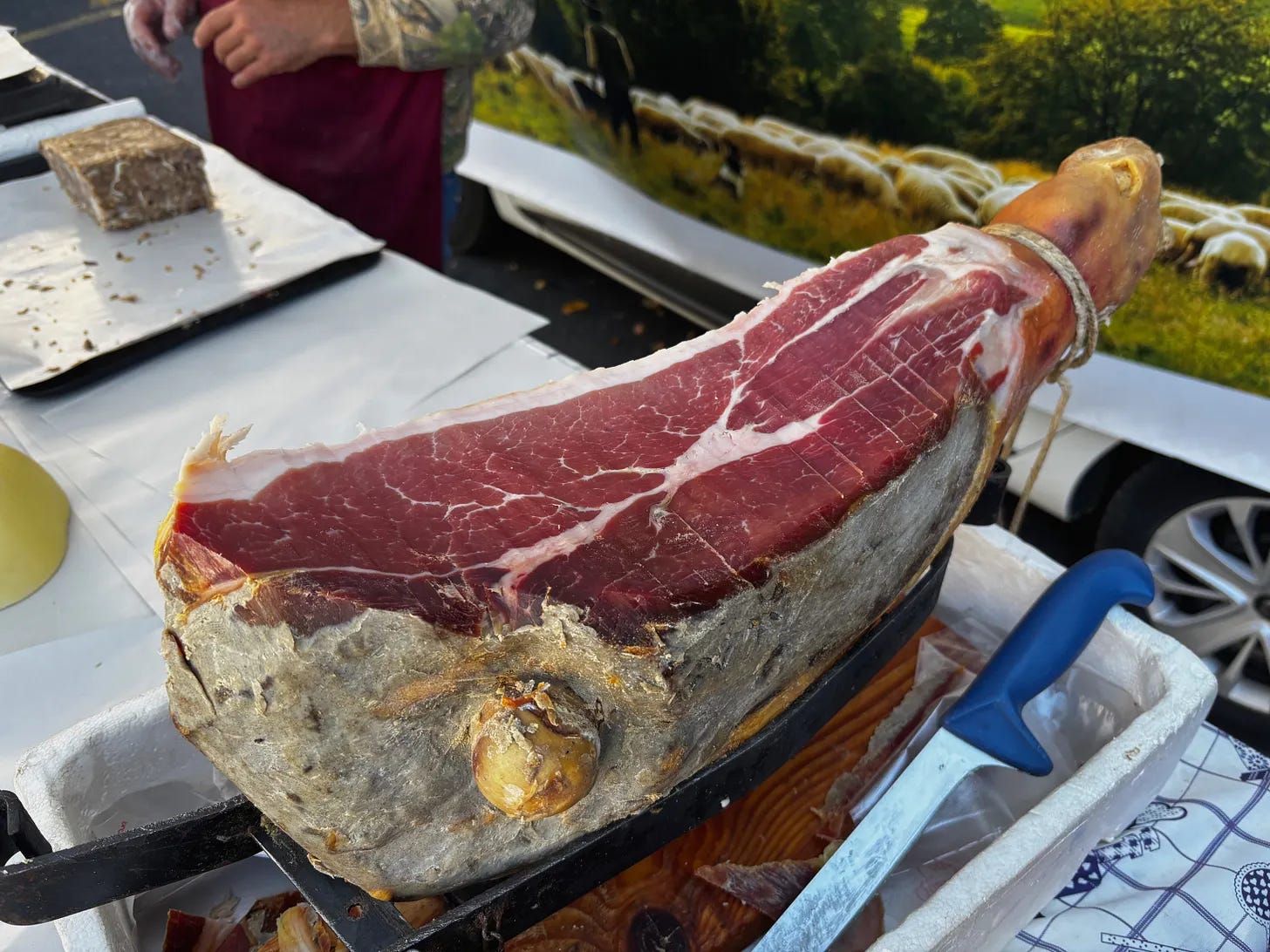
Two years is the number on the label, and I could not have told you what those years contain until this piece. It follows a Cinta Senese prosciutto at an estate outside Siena from slaughter to the 24-month cellar: the hoof-on provenance rule, the blood pressed from the leg before the salt, the acorn fat that biologically requires the long wait.
No recipe, no romance, just craft explained by someone standing next to it. I have lived in Tuscany for years, and this has still taught me something on every scroll. The next time someone shrugs at the price of the good stuff, send them this piece.
Laurel’s Kitchen — Go Here Instead: A Coastal Bike Ride
Laurel takes visiting family on bikes through century-old railway tunnels between Levanto and Framura, cool and dark and opening every so often onto the sea and a swimming spot no road reaches. The route is properly obscure, but the real subject is what hosting does to a local: guests arrive, and suddenly you see your own coastline again. Every resident of a beautiful place knows the slow blindness she is describing. It takes someone else’s wide eyes to cure it. A short ride, a big observation.
Monica Sharp — How One Pranzo Launched a Thousand Shares
Monica is at a Sunday lakeside pranzo when a fellow guest dismisses American work culture across the antipasti, and the accusation lodges like a splinter she then spends an essay removing.
Her argument is uncomfortable and mostly right: what looks like a love of work is often a hostage situation, held together by the absence of safety nets and a culture that never grants permission to rest. The Italian table is the pressure point where the two systems stop being abstract and start being personal.
Being held responsible for a civilization over lunch is a rite of passage for every foreigner here. She turns hers into something worth keeping.
Alex Falasca — La Strada della Capitale che Sfida i tuoi Occhi
There is a residential street in Rome where the dome of St. Peter’s seems to shrink as you walk toward it. Not a metaphor. An optical geometry trick on Via Nicolò Piccolomini that makes first-timers stop, double back, and pull out their phones in disbelief.
The piece stays with the mechanics of perception instead of the monument, which is exactly how I like my Rome: sideways, through a detail most people walk past. One note: the article is in Italian. Your browser translates it in one click, and the street works in any language.
L’ITALIA fa qualcosa — Il ritorno della villeggiatura
Massimo makes the case for the return of the villeggiatura, the old Italian habit of staying in one place long enough to stop behaving like a tourist. His evidence is a rhythm rather than an itinerary: the bar that knows your breakfast order, the Wednesday market, the restaurant you go back to because it was good the first time.
Then he sketches five towns, each worth a full week, starting with Bra in Piedmont, where Slow Food was born. This is the closest thing to Anywhere Italy’s worldview that I have read from another writer this year, a straight counterargument to the idea of travel as content. Also in Italian, also worth the translation click.
Diary of Rome for Curious Travelers — Il ritorno della villeggiatura
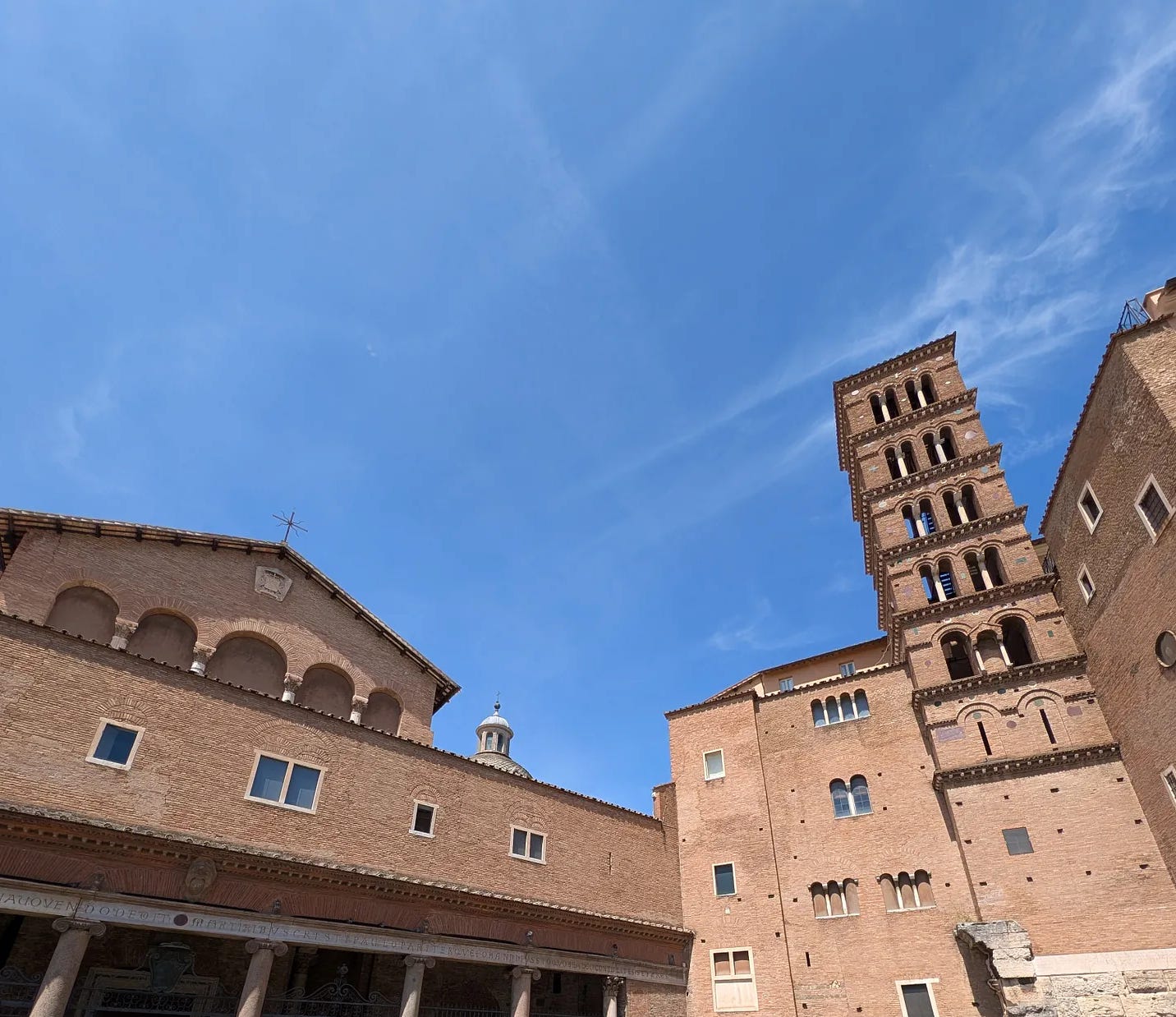
This post visits the Basilica of Santi Giovanni e Paolo on Rome’s Caelian Hill, approached along the Clivo di Scauro, one of the city’s few streets that still carries the physical scale of ancient Rome. The church traces its origins to the late fourth or early fifth century, when the Roman senator Pammachius built it over the buried remains of two Christian martyrs executed under Emperor Julian the Apostate.
Centuries of damage, sacking, and rebuilding have layered a Romanesque bell tower and medieval portico over a Baroque interior, with a large apse fresco of Christ in Glory and a gilded nave ceiling framing the martyrdom scene. The basilica has been held by the Passionists since the eighteenth century, and Saint Paul of the Cross, founder of the congregation, is interred in a side chapel, drawing pilgrims alongside the architectural tourists.
The Caelian Hill remains one of the quieter hills of central Rome, and this church, with its underground Roman houses visible below the nave, rewards readers interested in the city’s less-trafficked devotional geography.
That was this week’s Reading Table. If you read something I missed, send it my way: ciao (at) anywhereitaly (dot) com.


Planning a slow trip? My planner builds it for you. Free, no paywall, no email gate. Answer five questions (hub town, interests, travel month, days you want for slow discovery, and fitness level, because some of these towns make you climb), and you get a personalized route from my handpicked list of the 1,000 towns most travelers skip, with festivals, drive times, and a line on what each place is. Don’t like it? Refine it, swap towns, or browse the whole database by region.
Thanks for the shout out! Looks like some other great writers worth checking out as well.