
Brugnato | The Town With No Piazza
The Ligurian village that coils into itself

We went to Brugnato for two reasons, and I want to be honest about both, because they are the two most boring reasons anyone has ever visited a medieval episcopal city. The first: Sophia needed new sports clothes, we were driving home from a day in Genova anyway, and Brugnato has a big shopping village just off the autostrada. The second: we were house-hunting for a cheap second home at the time, a listing in Brugnato was very cheap indeed, and we had decided to skip the agency and simply find the house ourselves, since we knew the street and the facade, and in a town that small, how hard could it be?
A word on the shopping village first, because the concept deserves a paragraph of anthropology. The mall, as an idea, barely exists in Italy, and honestly, not much in Europe. People shop locally, in small shops. The grander version is the gallery, the covered arcade threaded through a city center. The grandest is simply a shopping street where you walk with everyone else. A sealed building full of stores is a rarity, usually exiled to the outskirts of big cities, and the American-style open shopping village is rarer still. Brugnato has one of the few in Liguria, seventy-odd shops trading under the name of a national park that is two valleys away, and we figured we wanted variety without knowing what we wanted, which is the exact state of mind these places are built to monetize. The shopping was horrible. Not the shops’ fault. It is simply not a thing we know how to do in a place like that, and we lasted less time than the drive-in had taken. Then we went up to the old town to find the house, and the house was also horrible, rundown in ways the photographs had been careful about, and we did not buy it, something that cheap being cheap for a reason. So the errand failed twice before lunch. And then we took a walk, and the walk is the reason I am writing this.
Here is the thing about old Italian town centers: they are one design. I say this with affection, after years of walking them. There is a main piazza, and on or near it stands the cathedral or the principal church. Around the piazza, the cafés and restaurants, the general apparatus of public life, because the piazza is where the town performs itself. Streets radiate off it, one or two carrying the traffic of importance. And somewhere out at the edge, a wall, the remnant of a wall, a ring road where the moat was, some mark in the ground that says: here the town ended, and the fields began. The scale changes, the region changes, the stone changes color. The principles never change. From Friuli to Sicily, you can be dropped blindfolded into a centro storico and navigate it on instinct, because you have walked it a hundred times under a hundred names.
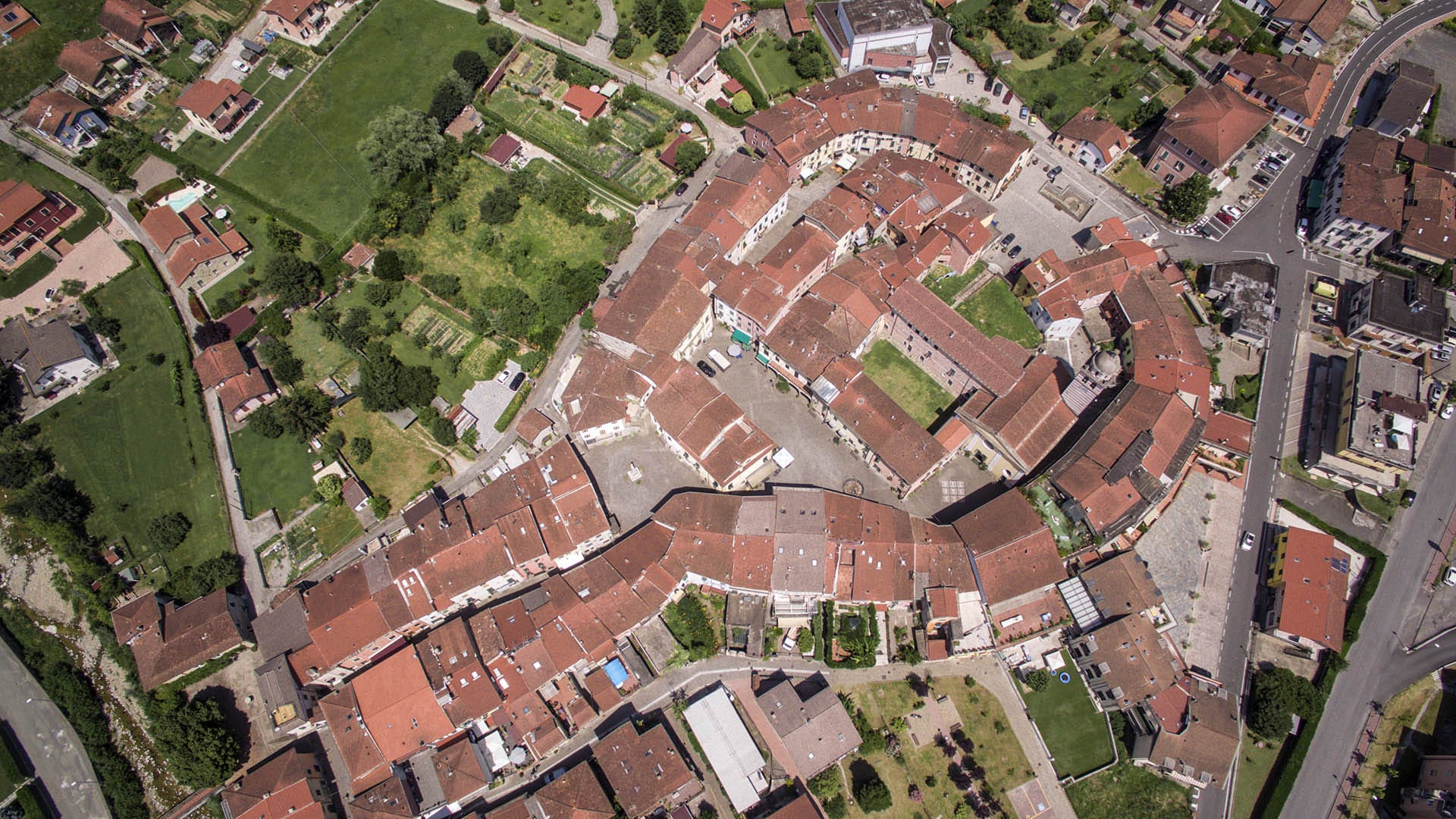
Brugnato ignores all of it. The old town is a spiral. Two streets, coiling inward, buildings cramped shoulder to shoulder and painted in the full Ligurian palette, and the coil tightens until you arrive at the center and find, where every instinct says a piazza should open up, a church. No square. No ring of cafés. No stage for the evening walk. Public life has no headquarters here because the plan never allocated one to it. The streets simply deliver you to the church door and stop, like a shell delivering you to its own middle. Half the buildings on the way stand empty or half-ruined, and the whole place carries a moldering, closed-in quiet that the logistics cannot explain, because the autostrada runs practically past the gate, the outlet glitters down the hill, and the town is neither remote nor, evidently, poor. It feels less like a town in decline than like a building that people happen to live inside.
For the price of a glass of Chianti, unlock the full Anywhere Italy experience. All of our articles, private stories, and access to our chat travel community.
Start your free 7-day trial.
Which, it turns out, is exactly what it is. Brugnato was never designed as a town. It was designed as a monastery, founded in the seventh century by monks of the San Colombano line, and favored by the Lombard kings for a purpose unrelated to the people living there: to check the power of the bishops of Luni. The abbey answered to the Holy See directly, never to Luni, and emperors kept renewing its immunity in writing. The bishops of Luni spent four centuries trying to swallow it and failed, and in 1133, the pope ended the feud in the pettiest way available: he promoted the abbey into a diocese of its own, a cathedral city of a few hundred souls, its bishops carrying the feudal title of count, a title they kept, incredibly, until after the Second Vatican Council. What grew around the abbey grew the way flesh grows around a splinter: an elliptical ring of houses wrapped tight against the churchmen’s citadel, a moat around that, everything oriented inward toward the cloister rather than outward toward a market. From the air, they say, you can still read the closed ellipse in the roofline. A typical Italian town is built around the place where its citizens meet. Brugnato is built around the place where monks met God, and citizens were an afterthought. Of course, there is no piazza. There was never supposed to be a public.
That is why the stroll feels so strange, and why I recommend it. You walk in expecting a town, and the town never arrives. You get the coil, the colors, the empty windows, the church waiting in the middle like a spider that stopped being hungry centuries ago. Somewhere under the cathedral floor, the diocese says, lie the remains of a Roman post and two older churches, layer under layer under layer, the whole history of the place stacked vertically because the plan never allowed it to spread. The bishops themselves eventually couldn’t stand it: for two full centuries, 1302 to 1502, they governed their miniature diocese from Pontremoli, over the mountains, as absentee landlords of a town the size of a parish.
We drove home without the sports clothes and without the house. The listing sold eventually, I assume, to someone braver about damp. But in a country where every old town is a variation on one beloved design, Brugnato is the only one I have walked that follows a different score entirely, and it is worth twenty minutes of anyone’s autostrada exit: park below, walk the coil inward, touch the church door, walk the coil back out. That is the whole visit. There is nowhere to sit and no square to sit in, and after enough years of piazzas, that absence is the most interesting thing on the street.


Planning a slow trip? My planner builds it for you. Free, no paywall, no email gate. Answer five questions (hub town, interests, travel month, days you want for slow discovery, and fitness level, because some of these towns make you climb), and you get a personalized route from my handpicked list of the 1,000 towns most travelers skip, with festivals, drive times, and a line on what each place is. Don’t like it? Refine it, swap towns, or browse the whole database by region.