

Buying an apartment in Italy
My experience

“Buying a property in Italy” is a deep rabbit hole of guides written by people who probably never went through the process, but they (or their AI) did some research and wrote an article about it. These articles are filled with the 1 EUR houses and other “amazing deals” which almost always turn out to be the worst financial decision of your life.
This piece is not like those articles. For two reasons. One, I am talking about apartment buying only. Houses don’t have condo fees, and you don’t need to obey that many rules in renovation work either. Two, this piece is entirely based on my experiences, since I went through the buying process myself recently (a 2-bedroom apartment with a full attic and garage in Turin).
So. First of all, no one needs to panic. There is no endless Italian paperwork, no idiot rules of red tape, and no special cases. There are, however, some interesting, probably only-here kind of rules, which I will share. And, of course, the real estate business is full of scams and crap sold as gold with a markup, but that is everywhere, so obviously, don’t be stupid, never believe a single word from a real estate agent, and keep your eyes open. But that’s, I guess, the normal behavior.
My background
It counts a bit here because it forms my point of view in this article. It can also serve you as a reference point when I say anything below.
So, I am Hungarian by birth, which means I am a foreign immigrant in Italy. I have an official residency. I’m an EU citizen, which means I don’t need a visa to stay here, but I do need a residency to deal with daily life here. Residency is not needed to buy an apartment, by the way, but it makes it much easier. I have also lived in, well, duh, Hungary (Budapest), and in London for many years. I was a tenant in London but got inches close to becoming an owner, so I know everything about buying real estate in Britain. And I was a homeowner in Budapest. So I have two countries and their laws and processes to compare with the Italian one.
And since buying a property is not just a financial transaction, but a cultural process (as anything), I also think that I now have three very different cultures to compare with each other.
The Anglo-Saxon process is extremely straightforward and transparent, which is probably the same in the USA, Canada, Australia, and New Zealand.
The Eastern European process seems complicated until you realize that you are in Eastern Europe, and if you have money, you can do anything, and I mean anything. You can convert your attic into another penthouse without any legislative work or any single fucks given to others in the condo. You just need to know the right people at the local council and bribe the condo representative, and that’s it. You can even sell the on-paper attic as a penthouse with a huge markup, legally. It’s a libertarian’s wet dream.
The Italian Job
The Italian process is similar to anything in Southern Europe. Red tape is in extreme detail, and it is treated very seriously (on the surface), and everyone acts as if the government rules are similar to the Bible, which is, of course, written by God, no questions about that.
Also, everyone is extremely serious about this business. Selling real estate is an opera with a minimum of 5 acts. Everyone looks and behaves as if this is the most important decision of their entire life, which it is sometimes, so I get it. And since it is also the place where the most money is moved around, everyone is like a vulture who takes a cut.
So before I go into some details, I have two underlying tips or more like rules for everyone. It should define how you approach this entire thing.
Rule one: it is totally fine and actually recommended to question the words of God. Almost anything can be fluid, and almost everything can be ignored. Most things are up to a personal relationship or interpretation. So when someone says the rules, nod, acknowledge. Of course, it is very serious, it’s a rule, but try to find an alternative solution. In almost all cases, one exists. Also, it’s Italy. Look around. Does the place seem like it has any rules? Sorry, don’t want to offend anyone, I love Italy with all my heart, but the rules are here at best fluffy, to be honest. Or more like, the state treats itself super seriously, and locals on the surface play along, but personally, they are like nah, duh, meh. This kinda applies to a process like buying property.
Rule two: the real estate agent is actually your friend. Now, this is a mindset shift, because we, or at least I, was trained in one very persistent manner on how to handle real estate agents, or like salespeople in general. So, I’m a marketer by trade, by the way, so I had the opportunity (or curse?) to work with people in sales. Trust me: don't believe anything a salesperson tells you. The higher the price tag, the less you should trust that person. And no, there's no “oh, but he is such a nice fella” in this. Now, with all that said, the real estate agent in Italy is your friend who accompanies you on the journey and helps you with the transition. I will explain why later. But just have that mindset first.
The cost of the buying process
So, this is the very fundamental difference of the Italian buying experience compared to everything else I have experienced. Here, everyone takes a cut from you, the buyer. Maybe someone will comment on this post that this is the same process in their country, but to me, this was completely new.
In Italy, you, as the buyer, pay the notary who handles the legal paperwork and state fees. It makes sense. We do the same in Hungary. It’s through a lawyer, and we pay the state fees on our own, but it’s the same. You also pay the seller for the asking price. That is, of course, makes sense. But in Italy, as a buyer, you also pay the real estate agent a fee.
Fucking why?! WHY?! He is selling me. The seller should pay the fee, of course, since the agency is doing them a favor. Listing the property, handling the appointments, keeping the contacts, etc. That’s a service worth paying for. But as a buyer? It’s the same if I walk into a store and tip the cashier for handing me the bag. The agency in Italy makes a fee on both the buyer and the seller. And as a buyer, you get nothing, by the way. Except your property. You walk into the agent’s office once, sign the papers of interest, make an official offer on the asking price, and bye. Everything else either happens at the notary later (if it’s a yes), or happens nothing at all (if it’s a no).
To me, this is mindblowing, and I have considered starting a real estate business for foreigners, because all I can see now is that selling properties in Italy is basically free money on the streets for agencies. I also understood why Italy has a real estate agency on literally every corner in every town. For real, it’s either a gelateria, a trattoria, or an immobiliare. Or insurance, that’s another scam that is everywhere. Funny, our new home’s condo has two offices on the streets, they pay rent to our condo, which is great for condo costs. Guess? Yes, a pizzeria and an insurance agency.
The process
I should have started with this, but the process matters only on paper. Remember rule one: question everything.
It looks straightforward, and I will write about all its steps:
You try to find a property. You either walk into an agency or look online.
You visit properties. 99% of the time with an agent.
You have the one. You make one offer to the agent.
The seller accepts your offer. You are legally bound to buy at that price.
Both of you and the agent go to the notary, sign papers, and it’s done.
Finding the property
Now, this part of the process is the one step that is totally up to you and your preferences. All I can give you are some tips.
The most important tip: remember that Italy is a country based on relationships and hyperlocality. And also, never forget the most important rule: everyone hates Rome, except Romans.
So, with that in mind, allow me to translate this to real estate.
Relationships. The best deals are done within families and friends. Since you are a foreigner, it’s an important thing to know and it is also a relief. You don’t need to chase the best deal, because you won’t be part of it. Doesn’t matter what those real estate agencies tell you about buying your dreamy house in Tuscany for pennies. It’s probably a scam anyway, but it is definitely not The Deal Of Your Lifetime. So don’t chase it. Accept it. It’s a relief if you ask me.
Hyperlocality. The local real estate agency office has more opportunities than the entire internet. The only place where internet search can serve you is the big-city option. The market is faster there, so the agencies make some (not full, some!) effort to put up some of their ads online.
When I say online, it means the two behemoths: immobiliare.it and idealista.it. Immobiliare has more big offices with big deals, idealista is filled with small houses and flats. Not saying that if you want to buy a palace, go to immobiliare, and for flats go to idealista, but that’s kinda the rhyme here. I preferred mostly idealista for searching.
The smaller the town you are buying in, the more likely you need to go into the local real estate agency office. If you are in a town with multiple areas, go to the area where you want to buy and find the agency there. Even if they belong to a big franchise like Tempocasa or Tecnocasa, the local office always knows better. Submit your search preferences there, and they will find you something. Even in cities, I personally walked into some of the local neighborhood agencies. Another personal experience: I was a tenant for years in Tuscany. I knew the area where I wanted to live, walked into like five agencies, submitted my details, and one of them presented me the solution. The apartment wasn’t on the internet, nor at any other agencies, except the one we ended up with. So yeah, keep that in mind when hunting, almost nothing is online and transparent.
Rome. Mention any city or town to an Italian, and they will find something to like about it. Mention Rome. Watch what happens. This translates into paying taxes, fees, and licenses to the government. This is the Bible. It’s a set of rules you have to follow. And it’s a set of rules you have to question. By the rules, you can’t negotiate much. IRL: you can. The part of this house is a storage space, not a living space. But don’t worry, no one does a checkup. If they do, what do they find? A couple of beds? No one can say you can’t store beds in your storage, right? Yes, on the floor map, there was a closed kitchen here. I know there is none here now, but do you bother? Of course not! It’s an open-plan dining room now. Look how spacious it is! I can go on, but I think you get the gist here. The rules say red. You say dark orange. If you look hard enough, it can still fly as red, no worries.
One important line here, before my own advice burns you. The flexibility is about how you use the space after the notary goes home. It is not about what's on the records the day you sign. At the rogito, the seller declares that the apartment matches the cadastral plans, and the notary takes that seriously, because this is the one place where the Bible is actually the Bible. Small mismatches, a moved kitchen, an opened wall, get fixed on paper by a geometra before signing for a few hundred euros. Make the seller pay for it. Big mismatches, rooms that don't exist on the plans, a storage space sold as a bedroom, are not quirks. They are the traps I mention later, the ones a good fixer smells from miles away. Buy the beds after. Not before.
So, don’t bother about chasing the best deal, it’s not for you. Go full local to find the best opportunities. And keep your eyes open because rules can be blurry, even if everyone pretends they are super serious. But some rules are still not meant to be broken.
The searching for the one
So this is generic advice and has nothing to do with Italy because property searching has the same rules everywhere. At this point, you know your options; all you need to do is see the properties and get a first-hand experience. So here is what I always do. Again, this is mostly for apartment buying, but kinda applies to houses as well.
Drive around the area. Twice: one by day, one after 8 PM. What kind of people do you see on the streets? What kind of shops? What kind of restaurants? What’s the feeling you have? Can you imagine yourself walking home there? Especially if it’s a big city, it’s important to know which areas are off limits for you. In my experience (Turin), I had to drive less than five minutes around the North side of the city, especially Barriere di Milano, to know that I want the South-West of the city.
Wait 10+ minutes for the agent in front of the house. If you are lucky, you are just on time, and the agent is late, which is pretty much all the time in Italy anyway. Look who’s coming in and out. Weird rules I have: Italians are big on dogs. What kind of dogs do you see coming in and out from the house? Pitbulls or Labradors? It’s Italy, people are usually dressed up better when they go out. Do you see this on people coming in and out? Do you imagine yourself talking to these people as your neighbors?
Ask in the local bar. I don't do it all the time, but most of the time. I go into the local bar. There is always one within 100 meters. I get something to drink and ask the bartender one question. No, not "how is it to live here, what kind of people live here?" That's offensive. Most bars and their owners are locals. The answer will always be positive. You are a foreigner who wants to open a restaurant there. Do they recommend it? The "who is living here" immediately becomes "how hard life is here," and the complain-tsunami starts. Filter it to your liking.
And here is the thing about asking questions in Italy. Ask directly. Is it safe here at night? Would you park your car on this street? Has this area gone up or down in the last ten years? Where does the trouble start, which corner, which piazza? In some countries these questions make people squirm. Here, nobody squirms. You get an answer, then three stories you didn’t ask for, then a spoken map of exactly which streets are fine after dark and which are not, with house numbers. Italians live hyperlocally, and they talk without a filter. Sometimes without any filter at all.
Personal example: one agent showed me a small storage room next to a garage, freshly painted, organized, nothing like the cramped dusty ones I’d seen elsewhere. I joked that it looked like a rentable Airbnb. He said, no joke, “Yeah, you can put an entire Chinese family here.” I remember looking at Sophie after this joke and telling her, “Did I hear that right?” I mean, I grew up on Eastern European jokes, which means imagine the most offensive standup comedian, multiply by 100X, and you get somewhat close to my taste in standup comedy. But like this level of no-filter is sometimes new even for me.
You don’t have to join in. But you also don’t have to dance around the only question that matters, which is whether you’d walk home on that street at 8 PM. Ask it straight. You’ll get the truth. With interest.
TLDR: no dance. Straight shooting. Ask the direct questions that would earn you side-eye in Canada or Germany. The answers are the cheapest due diligence you will ever get.
Making the offer
Remember when I told you that despite all the things you know about salespeople, go against that mindset and let the real estate agent be your friend? This is the time.
Once you find a property, you make an offer. The offer is official, and it is as official as it gets. You walk into the agency office and sign papers. You pay nothing here, but you sign that if the offer is accepted, you pay a deposit, sort of a booking fee. It’s usually around 10% of the asking price, so it’s multiple tens of thousands of euros. By paying this, you made sure that the apartment can’t be sold to anyone else but you. The deposit, the caparra, cuts both ways, and this is the part to memorize. If you back out, the seller keeps your deposit. All of it. If the seller backs out, they owe it back to you, doubled. Symmetric punishment, written into the civil code, and the reason both sides become very serious the moment an offer is accepted.
And here comes the problem.
What if you like more than one property? You can’t make multiple offers, because, if accepted, you are legally bound to pay the booking fee. Let’s say you want to make an offer to three apartments. All of them accept. You can’t cherry-pick one that you like the most and ignore the rest. If you have deep pockets, of course, you can. But that means that you pay 2x the 10% booking fee on two places you won’t buy. Because if you back out from an offer, you lose the fee. Sometimes they even double it, so you pay 2x more if you back out. Usually it’s for the seller, not the buyer, but I’ve seen this option for buyers at some places too.
I asked around about this silly rule. Why protect the sellers this much? Nowhere on Earth are sellers afraid this much. Most locals told me the same thing. Mafia. Especially the housing mafia. Most of these laws in this process are in place to protect the seller from exploitation by the mafia. So, even though you are not the mafia (I hope), you have to play along with these rules.
Since you can’t just make multiple offers, you have to put all your eggs into one basket and make a very good offer on one. Obviously, have a plan B and C, if the offer won’t get accepted, so you can make offers to others. Oh, yes, you can’t make two offers on one place. One offer, one place. No negotiation via offers. I don’t even want to describe how this works in my home country in Hungary, but let’s just say it mostly involves a nylon bag of cash, some shots of alcohol, loud screaming, and counting rolls of cash by hand, standing around a table. So compared to that, it’s a kinda rigid process, I have to say.
How do you know that you made a very good offer?
Your friend, your amico, your BFF, the agent will tell you. Since in this process everyone is making money (except you, the buyer, you pay everyone), everyone is happy with a certain cut. No need to get super hungry here. The agent will tell you what a good offer is. When they sign the seller, they know what the minimum asking price is. They add the fees, and anything above that sum is an award. Depending on your agent or agency, the offer price is set either via direct negotiation with the agent or by simply telling you the price.
In Eastern Europe, negotiation is about the total annihilation of the other. I might be oversimplifying it, but it is a battle. If there is an asking price, it is more like a guiding price. Negotiation starts at the minimum of 50% of the asking price. From there, every penny that is negotiated in is an inch won on the battlefield. At the end of the negotiations, people are usually pointing at dusty curtains and looking under sinks for mold so they can negotiate a bit more down on the price. It’s a long process. If there is an agency involved, they are more like the referee in the ring who sometimes gets an accidental punch.
In Italy, it’s more like two friends talking over coffee about something inconvenient. You know I can’t pay this price in full. Yeah, I know. But we have to make an offer. Yeah, I know. How about 20% less than the asking price? I don’t know… this is a very nice neighborhood, and the apartment is very big. Yeah, I know… Ok, how about 10%? Let’s make an offer at this price! Absolutely, this is a very good idea. Which means you are still probably 20-30% above the minimum asking price, but you kept everyone happy. Seller got their money, agent got their cut, you made some savings, it’s all kumbaya.
But you can do this only if you respect your friend and their needs. This is not a war. It’s a friendly conversation.
The buying process
If the seller doesn’t accept the offer, you go to your plan B or C. If you made the agent your friend, the asking price was good, and the acceptance is almost guaranteed. Well, people sometimes have no freakin’ idea where they are, how they live, and what they do, so they can back down from anything, even selling a house. But if the offer itself is accepted and you paid the booking fee, you can expect that you either got a property (95% of the time), or you will get back your booking fee with some damage money added to it, which is nice (5% of the time). I personally know someone who made offer, the deal went through, but weeks before signing, the seller backed off because of some internal family issue. My friends who made the offer got the offer money back twice, from it, they bought an even bigger house later. It was free cash added to their account, just because the seller wasn’t sure about their life.
But let’s say all goes well. The buying process is simple, and it is rigid. So whatever I have said about keeping the game flexible, you can’t do it at the notary. It’s merely a paperwork opera. There are papers to sign, and there are fees to pay. You will get a fully detailed paper on the fees. All that matters is this: count around 10% on top of the asking price of the property. That covers all the fees: state, notary, agency, everything. This is why 10% negotiation is accepted. You literally negotiate down the sum of the fees you have to pay to buy.
Important note, since most of you are foreigners reading this. One fork in the fees that decides your final number: prima casa or seconda casa. If this will be your main home and you register residency in that comune within 18 months, the registration tax is as low as 2%. If it’s a holiday flat and your life stays in Toronto, it’s 9%. Both are calculated on the cadastral value, a bureaucratic fiction usually well below the real price, so the bite is smaller than it sounds, but the gap between 2 and 9 is real money. Buying new from a developer swaps this for VAT, 4% versus 10%, charged on the actual price, which hurts more. And the 18 months is not a suggestion. Miss the deadline and the taxman recalculates you at 9% and adds a fine on top. I buy as a resident, and this is my first home (in Italy), where I live full-time. Buying a second home from abroad, budget a few points more and have the fixer run your exact number before you fall in love with anything. Of all the silly fees and markups, this is the one where I agree with Italy. Favor the ones who actually live here.
Tips from my personal experience
These are tips entirely based on my personal experience. I am a foreigner, and though I speak baby Italian, I am definitely not a pro. I also have neither the time nor the will to deal with fixing appointments, speaking with agents more than I should, or spending more time on the buying process than I need to.
First tip, which was the most useful one: hire an assistant. We had one. They are a real estate company, an accountant, a translator, and all of those together. Let’s just say: fixer. Look around in expat groups, peers, wherever, I’m sure you can find the fixer that has solutions specifically to your nationality and needs. Ours asked for a % cut. Every penny was worth it because they fixed all the appointments, dealt with the agencies, reviewed all the documents, and checked all the papers. You know Italians, they love to talk. Salespeople? Multiply that amount of talk by 10X. I don’t know about you, but one of the last things I want to do in my free time is talk to salespeople more than 10 minutes a day. And that 10 minutes is only because I am in the buying process, so it is 10 minutes more than the healthy amount.
Checking all the documents by the fixer should not be underestimated either. I didn’t even go into the details here… Some deals are rotten. The property is not even the seller’s. It’s just bare ownership, not full ownership. It’s in a building that is waiting to be demolished. It’s 2 rooms on the floor plan, but on the official records it’s one room only, so it’s either not legally renovated or something is off. All in all, there can be traps. Only a small percentage of the deals are like this and for the right nose, they smell miles away. The fixer can check these documents for you and highlight anything off.
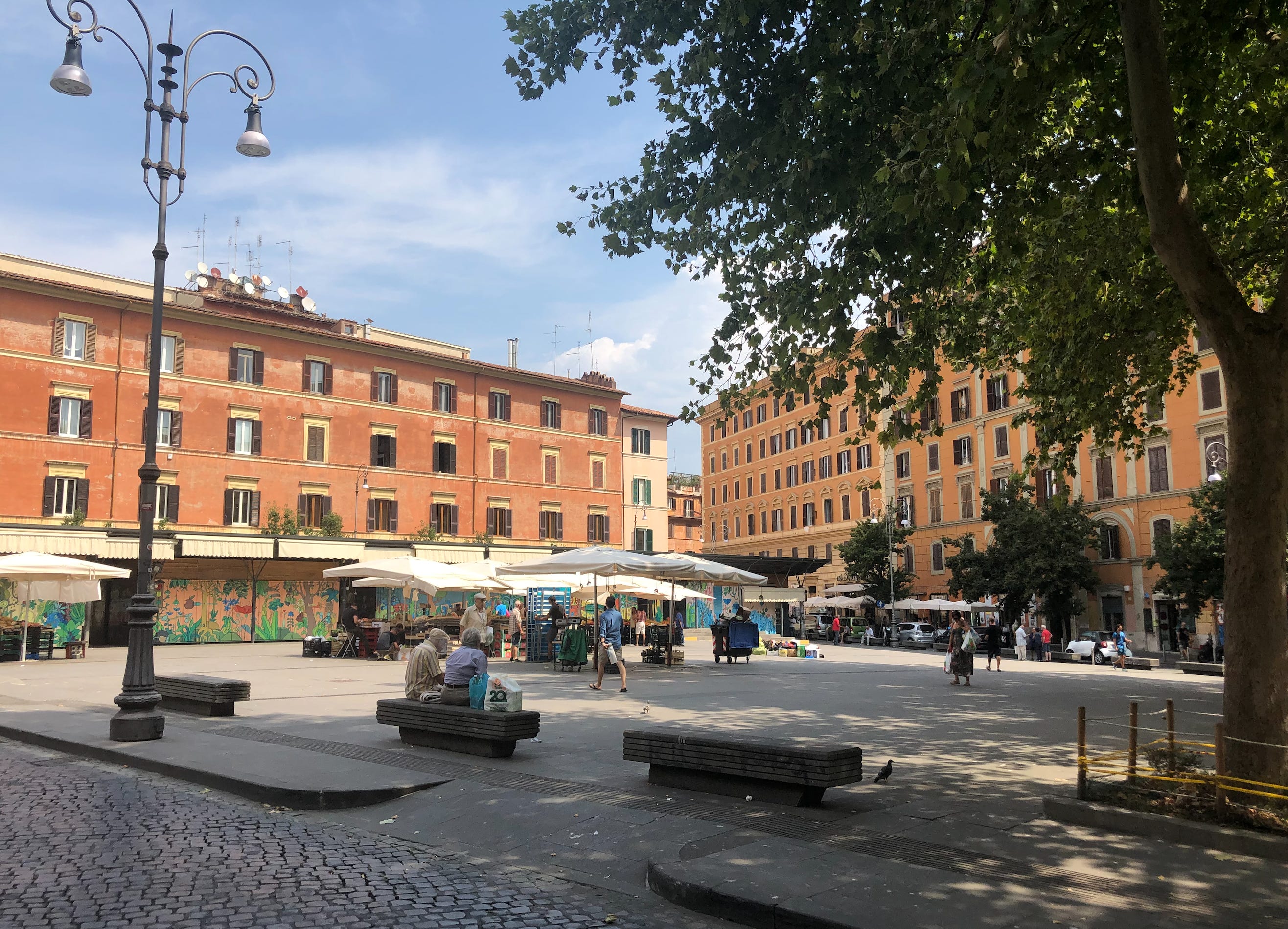
Second tip: be familiar with the Italian real estate situation. This needs a bit of an explanation. This can be a separate article, but let me just give you the TLDR version:
Italy had 4 big building phases that are affecting the current real estate market. Well, 5, but the medieval palaces are not in our focus for today, sorry.
Anything before or around the turn of the century (1890-1910). Either it is a stone house in Tuscany, or it is a converted palazzo in the city, these properties are almost all the same. Thick stone walls. Questionable electricity and plumbing work. Most of them are under protective heritage rules, which means, you can’t just convert or renovate them however you want. Even installing A/C (which alone is almost a sacrilege in Italy, but that’s another story) is equal to a successful D-Day. These properties are either renovation projects or, if they are already renovated, are almost equal to option 5, which are for palaces. They are on the heavy side of the pricing table. Even as renovation projects, by the way, you will spend either your time or your money to make them borderline habitable. I know some people who do well with this, and even I sometimes play with the thought that I will renovate my own stone house somewhere. But this is more like a commitment, rather than a buying decision.
Post-war building phase. It’s actually two phases: one pre-war, some of the Mussolini-era building projects, and some of the post-war era 50s and 60s projects. These are huge, monolithic, sometimes brutalist buildings. Almost like little villages under one roof. If you have lived in Eastern Europe, the closest resemblance is the Soviet-era housing projects around factories and the outskirts of cities. Today, these are cheap properties. Either because the quality is as you would expect or because the area has neighbors that you don’t want to be friends with. Some of them are still lived in by old pensioners. These are mostly your nonna flats, in various sizes and levels of quality. I would consider these options only for two reasons: you are very young and just need a place to start, or you are buying for investment. Both of those options have caveats: you don’t want to start your life in an area that has safety problems, and you don’t want to invest in a declining area. So, it’s a case-by-case option, but in almost all cases, this is not an option for a foreigner to buy.
The Italian Miracle Era. In the 80s, Italy had a bull run. This run is still visible on the housing market. Most of the apartment blocks in most of the cities were built during this era. I don’t have any tips here aside from the fact that if you are into buying an apartment in Italy, you will probably end up buying one built in this era. The best ones are built in the mid-to-late 90s, when the bull run peaked. But even the 80s ones can be nice if well-maintained. Condos in this era have solid electricity and plumbing, and double-glazed, proper windows. No one will crucify you for A/C because some of them even have it built-in. For real, most of these places are worth their money. My suggestion: buy something with 4 to 6 floors, a garage block, and some shops on the street level. It means only 10-20 apartments but endless cash flow for the condo for renovations. My apartment is exactly in a condo like that.
The newly built. No tips here. These are projects that are built now or planned today. Two things to know. One, since Italy is an open-air museum, building new projects is not possible in the central areas, literally anywhere, in any town. So most of these newly built projects are on the outskirts or in the sleeping towns. Two, it’s a newly built project. So if it looks amazing on paper or in plans, it will be 10X worse in real life. Also, most of these projects are for young professional families with small kids. There is always a school, a playground, or something nearby. If you have kids, that’s a good thing. I don’t have kids, well, maybe don’t move next to a loud playground. My only tip: if you are buying a newly built one, buy something that was built 5-10 years ago. The perfect young professional family has already divorced, moved to a country house, or decided that they want to live inside a real city. You can buy their pad, and all the problems that weren’t visible from the floor plan alone when it was built are all there in front of you now, priced in.
So TLDR: the best bet is something built between 1980-2000, with an energy rating around or better than D, kinda renovated, middle-class family moves to their old parents' closer to the countryside. Or an older couple moves out of the city to the countryside. Perfect situations.
Third tip: do the basics of Italian groundwork. I know this is read by complete foreigners who have never set foot in Italy yet. Hire an agency or a service provider and do the very basics nevertheless: getting a tax number (codice fiscale) and opening an Italian bank account.
The tax number is pretty straightforward to get, and almost any accountant or lawyer can get it for you. Or you can get it for yourself, it’s not even that complicated. It will be used everywhere on every document.
The bank account is needed to deal with payments. Big sums of money are not transferred but handled within banks on their own, and you, as the customer, just get a paper from the bank that it is handled. You show that official paper to the notary, and everyone is happy that the payment is done. It’s basically a cheque system.
Yes, you can do this without a tax number or without a local bank. But it's much easier to do it this way.
For the bank, I personally recommend opening a bank account in Italy, keeping it open to handle basic Italian things, like this one, but never use it for anything else. We have one account, which is the maximum number of accounts I want to keep open in Italy, and we use it basically to pay taxes, fees, and some super-Italian services that accept only Italian banks with a physical location. Everything else: either keep your local bank or use Revolut (not affiliated, just a happy user). It gives you an Italian IBAN, which tends to be important for some services, and you can pay cheques, bills, fines, everything that is special to Italy, solely through their mobile app, which works like a banking app should work in the 2020s.
Which, I cannot say for Italian banks, obviously. If I were to write a guide on How to bank in Italy, it would be a very short guide: “Just DON’T.” I could go into details on this, but that would divert this article into a full-blown mentally insane rant, so I’m just saying this:
Banking was invented in Italy. Great job! But it seems that the last time innovation happened to the Italian banking system was around the Medici. Even “new” “modern” “startup” banks, like Hype, are galaxies away from modern banks like Revolut, NB, Wise, Bunk, or others.
Keep an account for mandatory reasons. Use something for daily needs that is built for today. Revolut gives you an Italian IBAN. That’s all you need — clean, fresh, nice, and tidy.
Last note on banking: you are a foreigner, so it is borderline impossible to get a mortgage or a loan for buying a property. Maybe it can be done technically for a business. I haven’t tried, and I would be surprised if they would give you one. But for a person? Don’t even bother. It’s hard even for Italians to get one. But even if it can be done and could be available for you, you still have to deal with an Italian bank. And, to be honest, I am 100X more looking forward to going to a dentist for a filling without any anesthesia than to an Italian bank.
Fourth tip: know what you want precisely. The worst thing that can happen in a buying situation is a hesitant buyer. If you are in a new country as a foreigner, this multiplies since you already have things that make you unbalanced.
I knew I wanted at least 2 bedrooms and the highest floor possible, ideally a penthouse. I also knew I needed a garage and I wanted to be 15 minutes from the city center. From my price range, I knew that good flooring, probably good windows, a balcony, and an elevator would be included, so I didn’t even look for those. I was ready to be flexible on some smaller things, but the big ones were fixed.
However, I didn’t know the city. Normally, I would suggest renting where you want to buy for a year. In my case, I went straight into it. I knew the city enough to get around, but it’s different to know a city as a visitor than as a local. So 80% of my time was spent on research. I drove around areas. I asked locals, friends, AI, and the internet about where to live. I spent days walking in areas which I ended up preferring. Because in an apartment, at the end of the day, yes, you buy the place itself, but more importantly, you buy the location. And no matter how fancy your apartment is, if it’s in an area where you don’t fancy walking calmly after 8 pm. And in a city with more than a million people in it, there are plenty of areas like that. So, do your research.
Once you know what you want and have done the research, the visiting, the looking, the searching, the actual buying process is simple and fast.
Last tip: respect and know the local needs for housing. You’ve probably heard about the Italian divide of North vs South. As a foreigner, the cultural divide is more like an interesting story, so for property buying reasons, it’s almost totally irrelevant. But geography and economic power aren’t irrelevant. Without going into details, you just have to know that in the South, insulation and heating are not the top priorities. Even if an apartment has heating units, double-check if they work at all. I am not joking… I’ve seen miracles in Palermo. Also check how the windows are closing. Again, in Sicily and in Calabria, I’ve stayed in places where you could close the window and still get your fingers out. And these were all fully renovated, spot-on Airbnbs. Long story short: double-check build quality in the South. Not because those areas are “poor” but because they only have a few weeks of cold weather. Insulating and heating their places is simply not important there. Meanwhile, in the North, where winters are real, especially in Friuli, Veneto, Lombardy, and Piedmont, almost all condos come with proper double-glazing windows and working heating units. For me, it was no question that I would live in the North. But maybe some of you want a place in Sicily.
Last-last tip, because this is the thing that gets the most attention about Italian properties, so sadly I have to deal with it. Well, actually, it’s two things.
The One Euro houses.
Let me deal with these quickly. One, if you believe the stories on YouTube (about anything), you shouldn’t be in a buying position for anything. Second, you are extremely lucky if these 1 EUR houses fall into the renovation category. More likely, they are in the completely rebuild category, but with 100 rules because they are in a medieval city center. Third, they are almost always in ghost towns where the youngest living person (out of maybe a hundred) is the mayor, and even he is 70+.
TLDR: it’s a no.
The balcony on the piazza of your favorite dreamy Italian town.
Your dreamy Italian town most likely is a tourist destination. There are many writers on Substack who live in Venice, Rome, or Florence. I myself live near Pisa and by the sea in Versilia. Trust me when I say this: in everyday Italian life, one of the top priorities for you is to avoid tourists. I said this once, and I will say it many times: it is fundamentally different living in a country from visiting one. So either pick a town which is off the tourist maps (I wrote about this here), or pick a neighborhood that is not frequented by tourists. When you buy, prices hike up in tourist areas. If you don’t buy for investment, this markup isn’t worth it, not to mention the fact that you need to get in line for morning bread with Jennifer and James, who are happy to take their time and pay 5x more for bread than normal.
TLDR: it’s a no.
With all that said, I did my process within 2 weeks. But for that, you need the basic rules, and let me repeat them again as a closure to this piece:
Know what you want, where you want it, and for how much you want it. Knowing these three pieces will save you thousands of euros and weeks of looking. Buying is 80% planning, 20% action.
The smaller your destination town, the more local you should go. For small towns, forget the internet, go to the actual agency’s office.
Don’t chase the perfect deal. It doesn’t exist. At least not for you. Find just a good deal.
Some rules are guides, some are Bible. Know which one is which, and you can make the process smoother.
The real estate agent is your friend when you make an offer on the price. Still negotiate as much as you can.
Have a fixer, and even with a fixer, get familiar with the Italian reality in terms of the real estate market and banking.
Know that location is more important than apartment quality. In a small city, it’s immediately visible if you want to live there. In a city, you need to ask around. Be as direct as you want.
Know the costs of buying. Rounded up, it’s usually 10% of the asking price that covers all the fees. That is also the % you need to negotiate down from the property.
Housing built between 1910 and 1980 is usually a waste of money. Century-old housing is a renovation project. Only for those who are willing to commit. Newly built ones are honeytraps or overpriced. Keep all your eyes open.
The best bet for apartments: anything built between 1980 and 2000. I haven’t checked, but my gut tells me the same is true for houses as well.
There you have it. My fully honest monster-essay on buying an apartment in Italy, mostly based on my own experience. Before you ask, or if it wasn’t clear enough until now, I’m here to tell you that I am not a real estate agent. I don’t offer real estate or any type of consulting services. I am not a fixer, investment advisor, or a real estate expert of any kind, and I can’t recommend anyone for you. I’m not even a journalist (it’s a profession, OK?!!) who writes about these topics daily.
I like to think I can make good deals, and I am street smart. I am also fully honest and very direct, almost to an extreme, uncomfortable extent, which kinda helps with buying situations like these (not the best approach in office situations). I also grew up behind the Iron Curtain in Eastern Europe, lived in London for many years, and I picked Italy as my home because I love it, so I’m pretty sure you can’t name anything that would surprise me, and I don’t need to get lessons on bravery, irony, or flexible life choices either. But at the end of the day: I’m just a bloke on the internet who has some experience in buying an apartment in Italy.

Planning Italy? Our free planner builds your route from all 1,000 towns: