
Guide | The Arno Corridor
The working road from Florence to the sea

This guide is about the road between Florence and the Tyrrhenian, which most travelers in Tuscany do not consider at all because the famous route from Florence runs the other way, south into the Chianti and the Val d’Orcia and the postcard country. We drive the western road often because it is the one we take when we leave Versilia and turn inland, and after enough trips along it, I have come to think it is the more interesting half of Tuscany, even if no one has built a brand around it.
If you stand on the Ponte Vecchio and turn your back on Siena, what is in front of you is the Arno going west, and the Arno going west is a river with a job. It worked for Florence for eight hundred years. It carried wool downstream from the city’s mills to the port at Pisa. It carried salt and marble and grain back up. When the Pisans silted up in the fifteenth century, the Medici built a new port at Livorno and cut a canal between the two, and the goods kept moving without the route changing in any meaningful way. The towns the river passes are not the cypress-and-abbey towns. They are the working towns. Pontedera the factory town. San Miniato the road town on the Via Francigena. Pistoia the bakery town that fed the Roman troops on the consular road two thousand years before there was a Florence to feed. Pisa the old port. Livorno the new one. The Renaissance hill country is what Tuscany looked like on a postcard. The Arno corridor is what Tuscany did for a living.
This guide is for the second road.
A note on the geography. I am going to use the Arno corridor loosely, the way the Apuan Alps Guide used the Apuane loosely. The strict corridor is the river itself, from Florence to the mouth between Marina di Pisa and the pine forest at Lecciona. The towns I will include extend a little beyond. Pistoia and Montecatini sit on the Pistoiese plain, north of the river. Bagni di Pisa sits on the slope just north of Pisa. Livorno sits south of the mouth, on the open sea. None of these are strictly on the Arno, but for a traveler driving the road between Florence and the coast, they are one country. The river is the spine, and the rest is what the spine carried or what grew up close enough to be lifted by what the river did.
I will tell you frankly what you are signing up for. The towns are not pretty in the Renaissance hilltop way. Pisa is a working city with the third-most-photographed object in Europe sitting in one corner, and most of the rest is residential apartment blocks, university buildings, and traffic. Pontedera is a factory town and does not pretend otherwise. Livorno is a port city with no time for you in the working sense, because the people who live there are at work. San Miniato has the climb to the top of its hill, one product, and a long view, and outside the November festival weekends, the streets are quiet. Montecatini Terme is a nineteenth-century leisure capital that has lost its leisure class, and walking the place is closer to walking through a museum than through a town. Pistoia is the closest the corridor has to a classic Tuscan piazza, and it is the tier of town nobody puts on an itinerary because Florence is twenty-five minutes away by train.
The trade is this. You give up the photogenic. You get fewer crowds, more of a working life, and a thicker sense of how Italy actually feeds and houses itself. If you need the photogenic, the road south of Florence is still there and will still be beautiful next year. If you want to see the Tuscany that worked, drive west.
TLDR
The river is the spine. Florence to the sea, an hour and ten minutes by train, four hours by the time you stop in three towns along the way. Pisa at the mouth, Florence at the top, six worthwhile stops in between.
The working Tuscany. Factory towns, port cities, road towns, thermal stations. The economy that built Florence, with Florence sitting at the head of the table and everything else doing the actual work.
Less photographed, more lived in. The corridor does not appear on the postcard rack. The squares are smaller, the cafés are working cafés, the restaurants are full of locals at one and empty after three.
The trade-off. You give up the Chianti hills and the abbey light. You get a Vespa museum that turns out to be about a three-wheeled bee, a truffle capital you can visit without the bus, the empty ballroom of the grandest spa in Tuscany, and a fish soup fought over by two harbors. Worth it for the right traveler.

Planning a slow trip? My planner builds it for you. Free, no paywall, no email gate. Answer five questions (hub town, interests, travel month, days you want for slow discovery, and fitness level, because some of these towns make you climb), and you get a personalized route from my handpicked list of the 1,000 towns most travelers skip, with festivals, drive times, and a line on what each place is. Don’t like it? Refine it, swap towns, or browse the whole database by region.
→ Start planning your trip on Anywhere Italy.
Where to base yourself
Pisa
This will surprise visitors who know Pisa only for the tower, the only image most people carry of the city. The image is misleading. Pisa is a working city with a serious university and a fully functional old center, and it is also, by some distance, the most convenient base on the corridor. The airport is in town. The train station puts you in Florence in fifty minutes and at the coast in fifteen. San Miniato, Pontedera, Lucca, and the spa wing are within forty minutes by road. You can sleep in Pisa, see the tower in the first morning, and spend the rest of the trip going outward in every direction.

The alternative, if your trip is short and you want to be in Florence in the evenings, is to base yourself there and treat the corridor as a series of day trips heading west. This works for two or three days. For anything longer, Florence becomes the obstacle the rest of your day has to recover from, and you will be happier sleeping in Pisa.
The places not to miss
San Miniato. The hill town above the lower Valdarno, halfway between Pisa and Florence, that built its modern identity on the white truffle and runs three weekends of the Mostra Mercato every November. Visit in the off-season for the town itself, the rebuilt Federician tower at the top, the long view down the river, and lunch at Pepenero on the Piazza del Duomo. The Feature is also the publication’s argument about the difference between a festival economy and a Tuesday economy.

Pontedera. A factory town on the Valdera, fifteen minutes from Pisa, which would be on nobody’s itinerary except that the Piaggio museum is here, and the Piaggio museum is the best small industrial museum I have walked into in Italy. Free entry. Two hours if you take it seriously. The Vespa room is the famous one. The Ape room is the actual one. The Moto Guzzi and Aprilia hall is the room you did not expect. The Feature covers the museum as the showroom for a vehicle, the Ape, that the rest of the country is still using.

Montecatini Terme. An hour east of Pisa on the Pistoiese plain. The grandest thermal town in Tuscany and a place where you can stand inside the architecture of nineteenth-century European leisure with no one else in the room. The Tettuccio is the cathedral and it is empty. The Feature is about an era closing while the lights are still on.

Bagni di Pisa. The thermal village just north of Pisa, where the Medici and the Habsburgs took the cure, and where today the cure is a quiet weekday afternoon. Open in winter when the rest of the corridor is shut. The Dispatch is about the Tuesday when nobody else is in the water.

Worth a visit
Pistoia. A small Florence with no Arno and almost no tourists. The Piazza del Duomo is the Romanesque version of Florence’s, the cathedral holds one of the great pieces of medieval European silverwork, and the streets behind it are narrow and stone and quiet on a Saturday. What Pistoia has that no other Tuscan town has is a café tradition closer to Vienna than to Florence. Savory cases. Real sandwiches. The bread doing the work. The Feature also covers the small zoo outside town, which was the reason we went the first time.

Livorno. South of the Arno mouth, the port city the Medici built when Pisa silted up, with no time for the visitor in the working sense, which is exactly why it earns the visit. Fish in the morning at the market. Canals in the old Venetian quarter. The most concentrated seafood meal in Tuscany at lunch. A working harbor in the evening. The Feature is about a city that does not perform for you.

The food only here
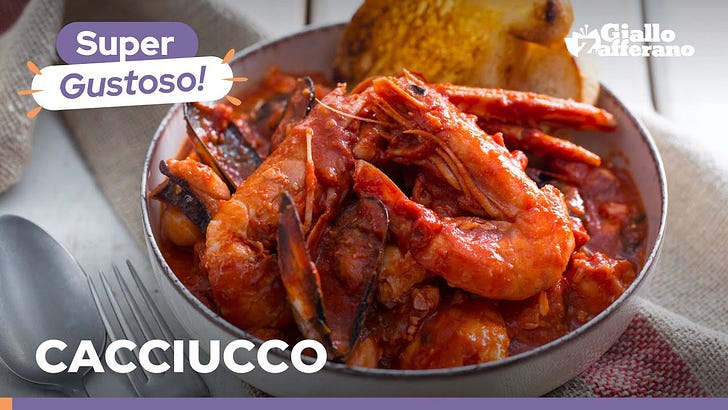
Caciucco. The fish soup of the Tyrrhenian coast, fought over between Livorno and Viareggio, written one way by the Livornesi (with five C’s, for five fish) and another way by the Viareggini (with four C’s, for whatever the harbor gave up that morning). A heavy single course, eaten with toasted Tuscan bread and red wine, never ordered inland. The Dispatch covers the dish and the harbor logic underneath it.
For the price of a glass of Chianti, unlock the full Anywhere Italy experience. All of our articles, private stories, and access to our chat travel community.
Start your free 7-day trial.
My final note
This is the part of Tuscany that does the working. The road runs from the working city at the top to the working city at the mouth, and the towns along it are working towns of one kind or another. Factory. Road. Bakery. Spa. Port. None of them are the postcard. All of them are part of the answer to the question of how Florence ever became Florence in the first place.
This guide is alive. I update it whenever a new piece on the Arno corridor goes up.
Everything in here is a place I have been to personally. I don’t write about restaurants I haven’t eaten at or towns I haven’t walked through. If a place is in this guide, it’s because I went, ate, learned something, and decided it was worth your time.
Guide last updated: 19 June 2026
