
Maremma | The Last Cowboys of Tuscany
A day in the saddle

Everyone driving from Florence down to Rome crosses the Maremma without noticing, because there is nothing on that stretch to make them slow down. The hills give out. The cypresses stop. What opens up instead is flat open country, wheat and grass running off to a few low rises, the least Tuscan-looking part of Tuscany, a landscape you would call dull if you were being honest and which most guidebooks solve by leaving out.
I came off the highway and into it on purpose, and I booked a day at a place called Corte degli Ulivi near Grosseto, and I did it for a reason that has been sitting in me since I was a boy, which is that if a few things in my life had gone differently, I would not be a writer in Italy at all. I would be a man on a horse in Texas, in the empty country, with cattle, and a long way from any city.
That life was never going to happen, and what is left when a life like that closes off is a kind of fandom. A deep respect for the people who do the work, I would have wanted. And I do not come to it as an outsider, which matters, because I come from a country that has its own.
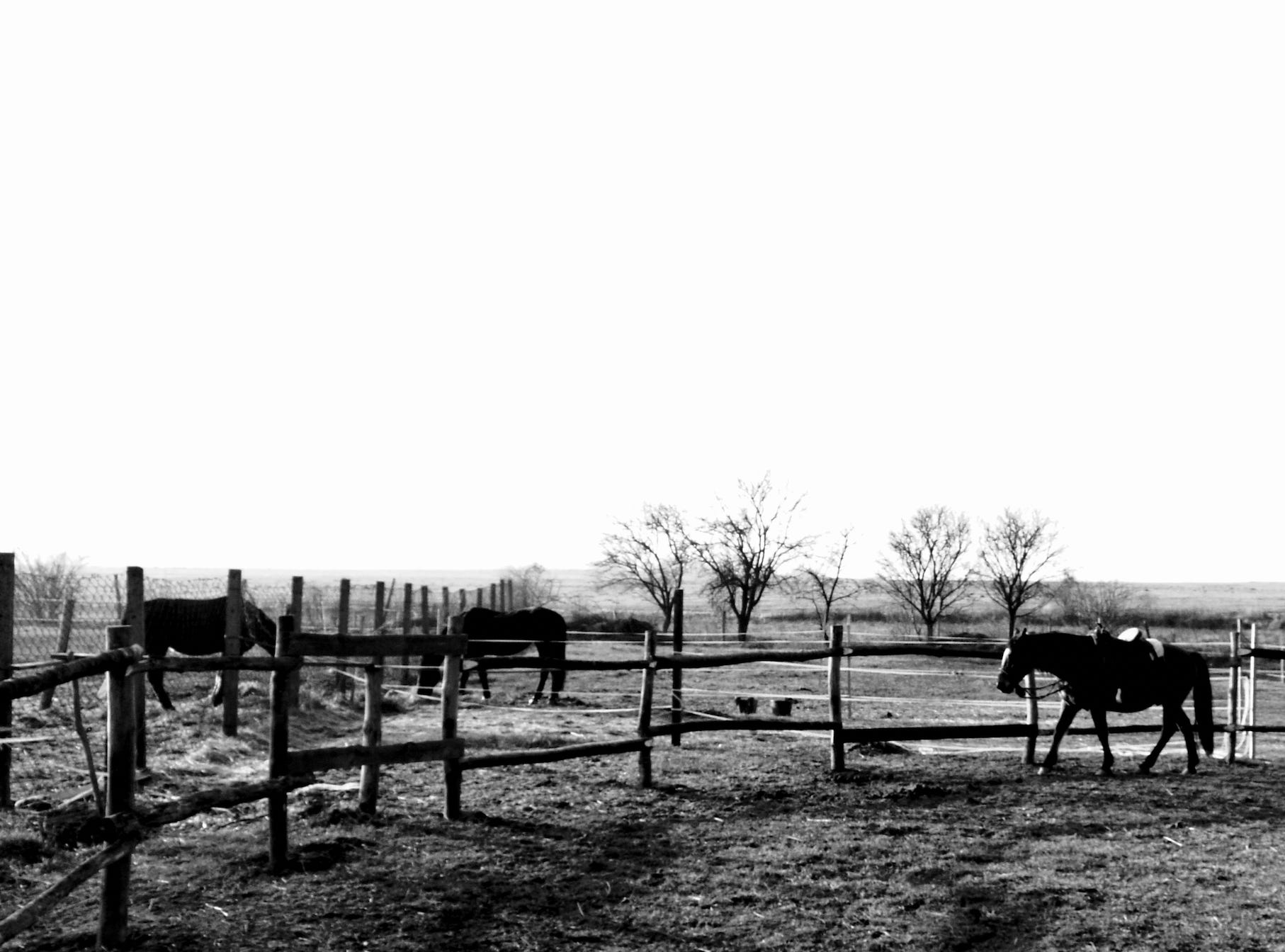
On the Great Plain of Hungary there are horsemen we call Csikós, herdsmen who run cattle and horses from the saddle the old way, and they are the surviving end of a longer thing, because the people I descend from, the Magyars who rode in off the steppe, were horsemen before they were anything else, archers who could loose arrows at a gallop and even turn and fire backward off a moving horse.
That skill is mostly a show now at home, kept alive on a few stubborn farms and performed for tourists everywhere else, which is the fate of every tradition like it. But it means that when I drove into the Maremma, I was not a traveler discovering something quaint. I was a horseman from one end of the continent come to look at the horseman from the other, the same trade in a different dialect.
Because I think that is all it is, finally, one trade in many dialects. I do not believe some clever culture invented herding cattle from horseback and graciously taught it to the rest. I think every person who ever had horses and cattle in the same place worked out the same answer, because it is the obvious answer, and that somewhere far behind all of them is a single rider on the steppe, sometime after the ice went back, who was the first to climb up and go after the herd instead of walking. The Spanish carried their version across the ocean, and it became the Mexican vaquero, and then the American cowboy, and that line at least is written down. The rest I cannot prove and would not try to. The Csikós, the Italian buttero, the vaquero, the Texan, I look at the four of them, and I see one man.
The clearest proof of the kinship is in how they sit a horse, and here I can speak from the saddle. There are two ways to ride, and they come from two different worlds.
The English way, the one nearly every equestrian sport is built on, comes down from the aristocracy, from men who rode for sport and the hunt and the afternoon, a few hours at a time toward a single purpose, one horse trained for the chase and another for the field. It is elegant and rigid. You sit in it, folded slightly forward, in a narrow, hard saddle. You carry a crop. You need boots, guards, and gear, and after a few hours, it is punishing on the body.
The other way is the worker’s way, which most of the world now calls Western, and it is the opposite of all of that. The saddle is built like an armchair, wide and deep and padded, because the man in it is going to be there from before dawn until after dark. The horse knows a handful of commands and obeys them, and you steer with your legs, no crop, which is the whole reason for the spur. You need a pair of trousers that breathe and a hat against the sun, and nothing else. It is not elegant. It was never meant to be. It is a tool, and the man is the driver, and the horse is the vehicle he works from all day long. I learned to ride the worker’s way, of course. Anyone who rides to do something rather than to be seen does.
For the price of a glass of Chianti, unlock the full Anywhere Italy experience. All of our articles, private stories, and access to our chat travel community.
Start your free 7-day trial.
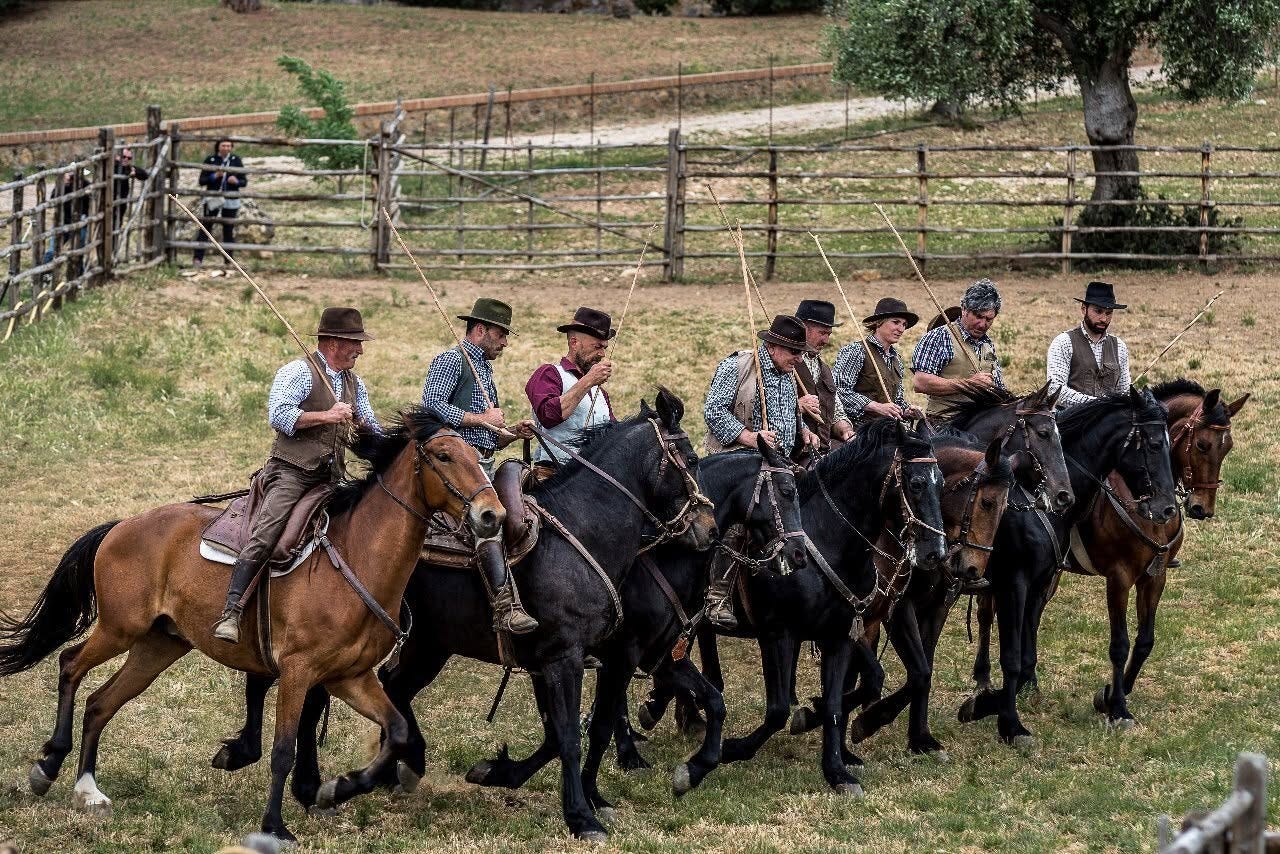
So I rode out. At a place like this, there is a foreman who takes you, and mine looked like the Italian edition of Chuck Norris, and you do not work, you ride alongside while the herdsmen do, for three or four hours, out into the flat country among the cattle. This is the part where you have to choose a place carefully, and by now, I know how to read one.
The tell is cleanliness, because there is nothing clean about cattle, and any operation that has scrubbed the dirt and the smell out of itself has done it for you, the guest, which means the real work is happening somewhere else or not at all. If the room still smells of lavender after you have left it, if the man who runs the herd shakes your hand with a soft, clean one that carries a note of cologne, you have booked a performance.
What you want is the place where nothing has been arranged, where the show is not a rodeo staged twice a day to display what these men can do, but simply the work itself, happening in front of you in real time, whether or not you are watching. If you are lucky, you see something extraordinary. If you are not, you spend the afternoon on a horse watching cattle move and men shout, which is itself the truth of the thing, and worth more than any rodeo.
These men carry a long staff to move the herd, where the American cowboy reaches for a rope, and you can tell a buttero across a field by it. They have been famous for a long time, and the story they tell to explain the fame is a good one.
In 1890, Buffalo Bill brought his Wild West Show to Rome, and a Maremma cattle duke watched the American cowboys perform and was unimpressed enough to put up a challenge, his butteri against Cody’s men at breaking horses. The way it is told, the butteri won, a herdsman named Augusto Imperiali riding an American horse none of the cowboys could stay on, and Buffalo Bill took it so badly that he struck his tents the next morning and left the city without paying the bet. The papers in Rome carried it.
What the story does not tell you is how few of them are left. The great estates broke up, the swamp was drained and handed to farmers, the cattle went industrial, and the trade thinned to almost nothing. A handful of families still run the grey long-horned Maremmana the old way, and their meat is priced so high that it goes only to expensive restaurants and people with the right phone number, while the rest of the country eats beef that was never near a horse. The butteri survive now as a few real working estates and a great deal of summer theater. It is a frontier in its last light, and the honest thing is to say so rather than pretend the plain is still thundering with riders. It is mostly quiet out there. That is the point of going.
And then, in the evening, the fire. They set a grill at the place I stayed, a guest’s fire, and I want to be precise that this was for us and not some scene of herdsmen eating together that I am dressing up, because I did not see that and will not invent it. But the method is the method, and it is the rawest good thing I have eaten in this country. The grill is filthy and enormous and has no equipment to it, a sheet of metal over wood and coal. The meat goes on without oil or salt or anything else, a slab of beef the thickness of a fist, and it cooks five or six minutes a side and comes off black on the outside and red within, and a man takes a heavy knife and cuts it into rough cubes, and only now, at the end, does the salt go on, and the oil, and sometimes not even that. You lay it on slices of the unsalted Tuscan bread, and you eat it standing, with your hands, no plate and no fork, and it is as close to the animal as cooking gets.
There is a lie folded into this that I should unfold, because the great Tuscan steak, the fiorentina, is not really a Maremma dish at all. It is Florentine, and the white cattle it is properly cut from, the Chianina, are raised over in Chianti, not here. And the deeper truth is harder than that. The men who spent their lives herding cattle in this bitter country could not afford to eat the cattle. What they ate by their own fires was acquacotta, cooked water, a soup of stale bread and whatever grew wild, with an egg in it on a good day. The slab of beef was the feast, the rare day there was a reason, set against a lifetime of the poverty soup. So when you stand at the grill with two kilos of charred meat in front of you, understand that you are eating the celebration and not the life. Life was the soup.
The capital of all this is Grosseto, and it is the right capital for it, a flat working city on the plain with a small old center wrapped inside a ring of perfectly preserved Medici walls, and you can walk the whole way around. No one puts Grosseto on a postcard, which is exactly its honesty, a real town doing real administrative work in the middle of cowboy country. If you want the food but cannot face the horse, this is where you come and eat it, the heavy carbohydrate-and-meat plates that every cattle culture on earth converges on, the kind that demand a loaf of bread to mop them up and a bottle of the local red, the Morellino, per person to wash them down. It is the same food a Texan would know in his bones.
I drove back toward Rome that night, having done no work at all, only ridden along, and I was destroyed. My legs would not answer, my hips had quit, I was burned through the cream, and I carried out of there a smell I could not wash off, horse and cattle and dirt and sweat, of which the dirt and the sweat came out in the shower and the rest needed three runs through the machine on the highest heat before my clothes stopped reeking of the afternoon. It is the only souvenir worth having from a place like this, and I was glad of it the whole way down the dark road, because for one day, sore and stinking and useless in the saddle, the Hungarian who would have been a Texan got to ride out among his own kind.


Planning a slow trip? My planner builds it for you. Free, no paywall, no email gate. Answer five questions (hub town, interests, travel month, days you want for slow discovery, and fitness level, because some of these towns make you climb), and you get a personalized route from my handpicked list of the 1,000 towns most travelers skip, with festivals, drive times, and a line on what each place is. Don’t like it? Refine it, swap towns, or browse the whole database by region.