Pastiglie Leone | The happiness factory
Only Italians would throw a party in a candy factory

Hi, I’m Peter, and you’re reading Anywhere Italy. Our mission is to cover the 1,000 Italian towns most travelers skip, in person, one at a time. Come along for free, or pay to keep us on the road.
After years in Pietrasanta, Tuscany, I moved to Turin a few weeks ago. After the usual packing weeks, we started venturing out into the city and around it: Moncalieri, Venaria Reale, Avigliana, and of course, the center of Turin. I’ll write about these later, but last weekend, we went to a party. A party hosted in a candy factory. This post is about the Leone candy and our night at the Happiness Factory.
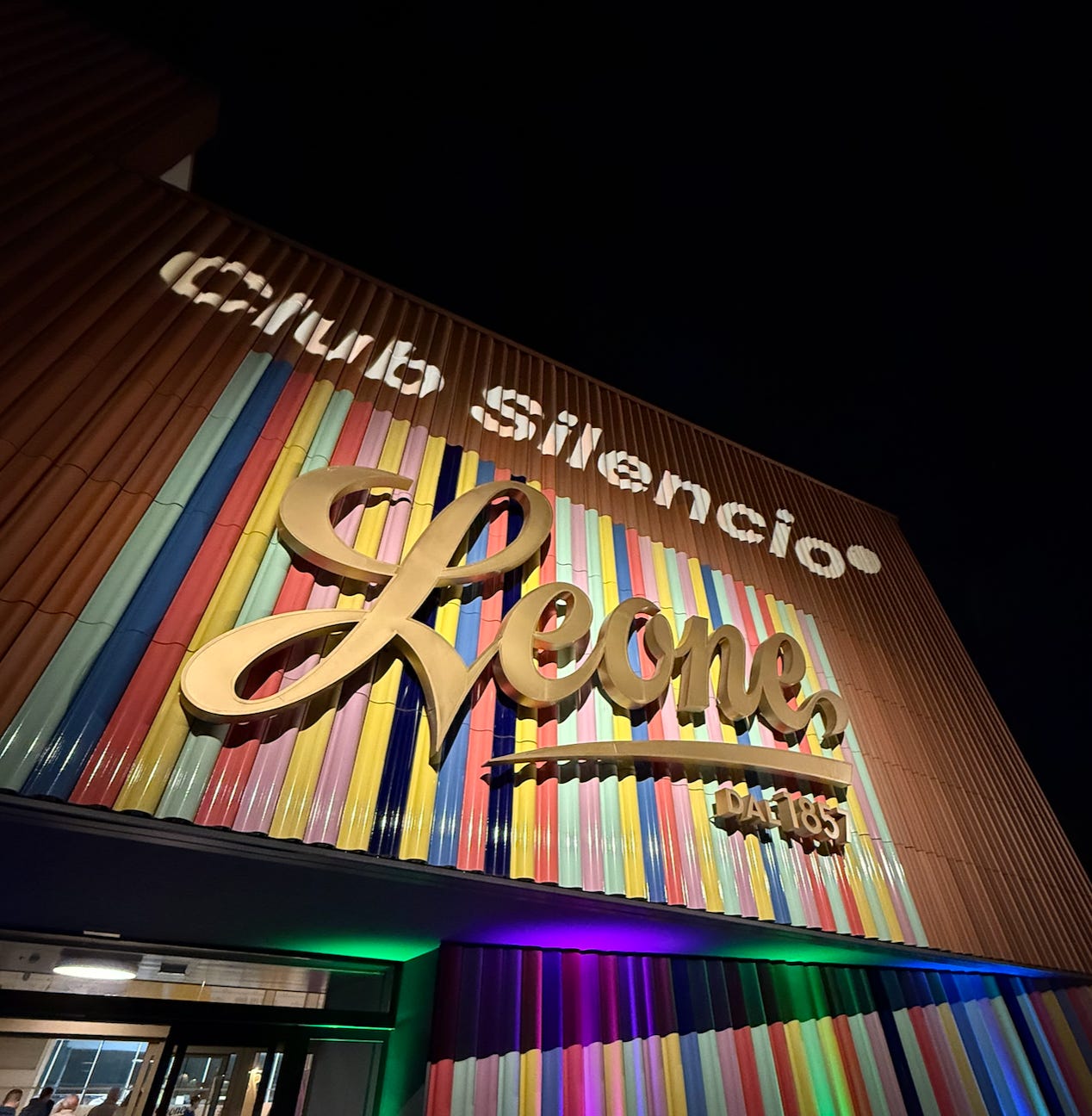
It was organized by Club Silencio, a group that throws parties in famous places. We learned about them because of a previous party they held in the Egyptian Museum. The parties have the same concept: a DJ deck, music, special drinks and food, and you can visit the place on a tour. All of these places are either museums or somehow interesting, so you could say that these parties are glorified museum visits. Which is fine; I’m not sure I would have visited the Leone candy factory if it weren’t for this party.
We are both big fans of Art Nouveau and Liberty-style architecture (my wife Sophia is a designer), and Turin has a lot to offer in this (Cit Turin, for example), but the style is very visible on packaging as well. Which brings us to Pastiglie Leone, a candy brand local here in Turin, and its factory, where the party was hosted.
I wrote about amaro and Italian soda brands as well and if you remember anything from those articles, it’s that most amaro and soda brands were started by pharmacists. If you are American, this shouldn’t be news to you: John Pemberton, the creator of Coca-Cola, was a pharmacist, and created his first drinks as a substitute for his morphine addiction (its predecessor was an alcoholic coca wine, and early Coca-Cola still contained cocaine, good old times).
This tradition holds for most candy brands too. But why candy? Chocolate and other sweets had one main purpose: indulgence. They are sweet, sugary, and served mostly after the meal or even separately from the meal itself. Turin is super big on chocolate as well; the Turinese like to say the Swiss came and learned from the Savoy chocolate makers long before Swiss chocolate became a thing. But candy is different, at least in Europe. Because candy has a purpose other than indulgence and being sweet. Candy is for digestion.
And you can see it clearly everywhere in Italy. A bowl of free mint candies is offered on the counter at almost every place: dentists, hairdressers, bars, restaurants, etc. It’s part of the culture. They are sweet, yes, but mostly paired with something closer to a digestive than to marshmallows. Mint, liquorice, bitter orange, ginger. I said this in the soda article (Italian soda is for adults), but it is true here as well: Italian candy is mainly aimed at adults.
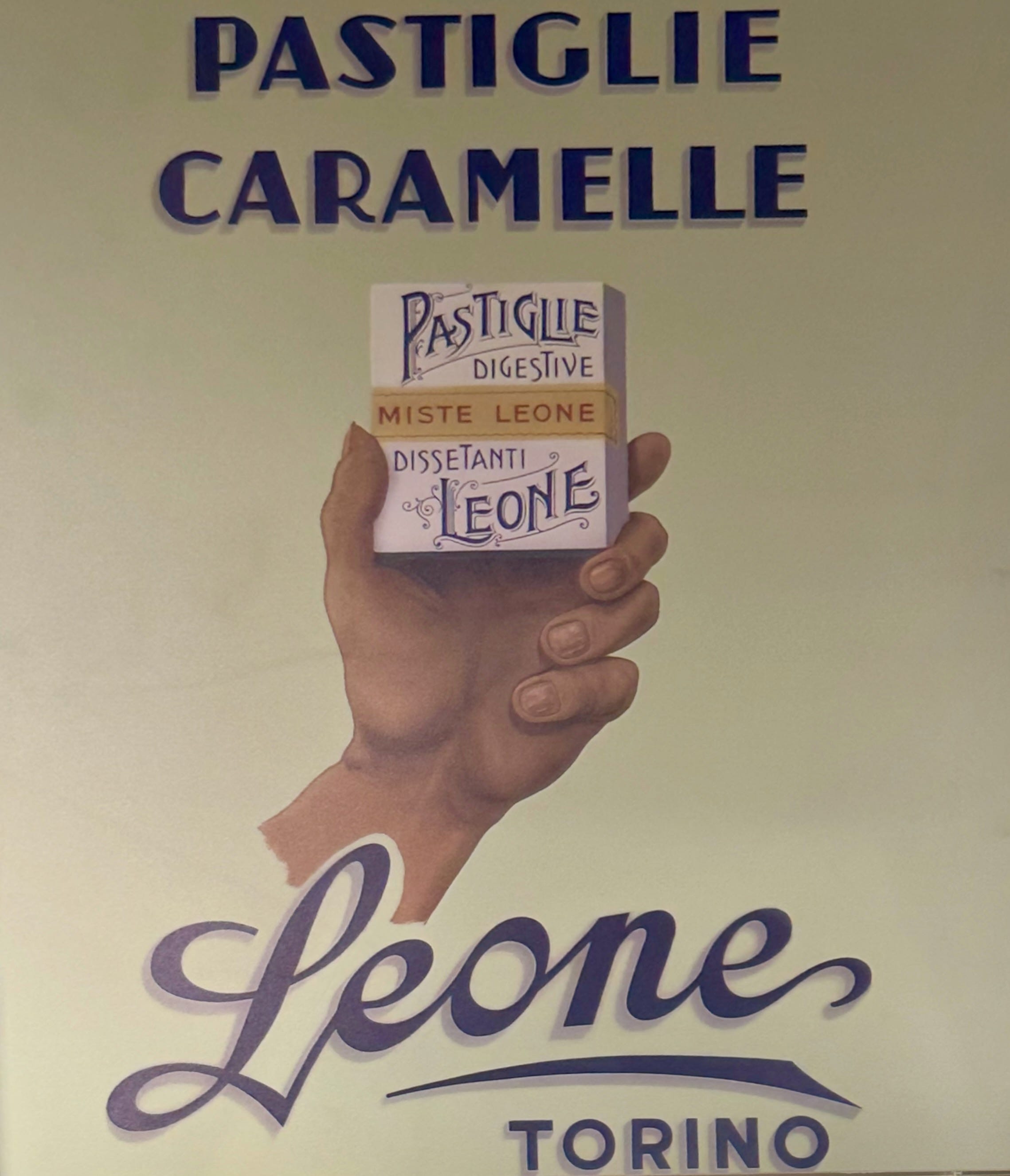
Leone has the usual history of almost any Italian brand. I’m not downplaying it, but it has been told many times: a guy named Luigi (Luigi Leone) had a confectionery shop in Neive, a small town near Alba, the truffle capital of Piedmont. He started making small candies for digestion. He wasn’t a pharmacist, though; he comes from the same tradition of digestive candies, I suppose. He moved his shop to Turin, where the grandpapa of the Italian state, Count Cavour (you see his name on almost every street in every town), reportedly got hooked on his violet candies. They taste as if toothpaste, perfume, and flowers melted together in sugar, by the way. I prefer the bitter, spicy, and liquorice flavors, to be honest, but I get why the entire concept is popular.
In 1934, a woman called Giselda Monero bought the company, and her family ran it until 2018, when it was sold to an even bigger name: Luca Barilla, together with Michela Petronio. You might have heard the Barilla name. Yes, the ones with the pasta on almost every shop’s shelves. Barilla is the world’s largest pasta producer, still owned by the Barilla family, though Leone was bought by Luca himself, not by the pasta company. The new owners opened the visitors’ center, named The Happiness Factory, which functions as an event venue and a museum.
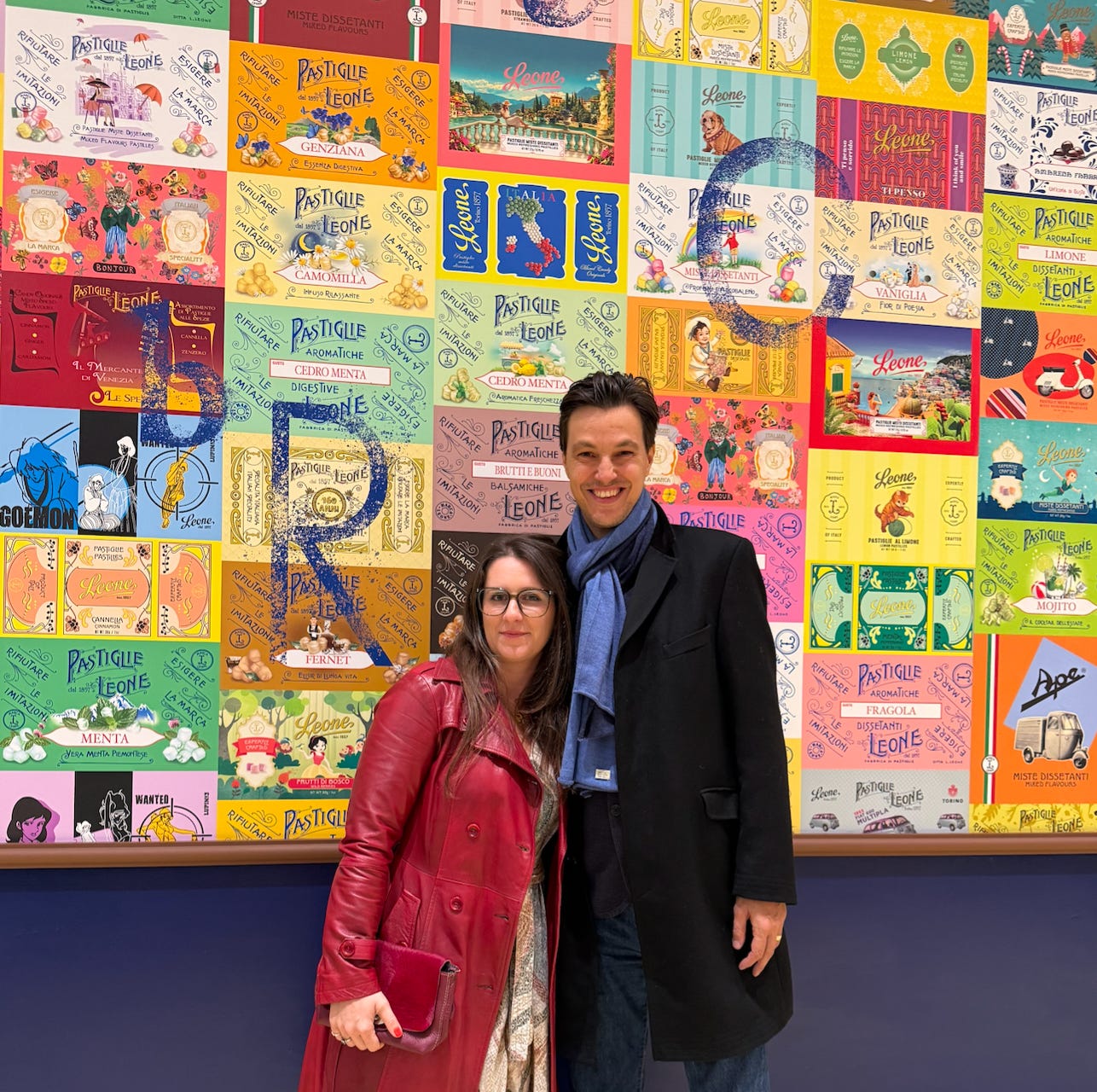
Regardless of who owns the brand, what was amazing to see is that they kept the traditions. Not just “why change something that works,” but an explicit refusal of any kind of change. They could have used modern molding techniques to modernize the factory. But no, Leone, they told us, still uses the original molds from the late 19th century. Most of the machines are a hundred years old. The recipes? There are some new ones, sure, but the old ones are the very same as they were in the 1800s. And the tin boxes, collectible since the 1930s, that serve you well even after the candies are gone? Same design, same concept, same colors.
Why change? Change is the enemy of tradition and heritage.
The party was great, and it’s a model of how you should encourage people to visit museums, by the way. This group has done this in many other museums in Turin. The place had a bar anyway, but they prepared a special event-only menu with local drinks and cocktails. I’ve been to many parties like this in different countries, but what was new here, probably an Italian thing, is that the party had an equal number of children, young people, parents, grandparents, etc. We were clearly the only non-Italians, but other than that, it was as if someone had told the organizers to throw the most representative party ever, with the entire demography of Italy there. Normally, these parties are popular only with parents with kids, or with young people who want to dance and drink, not both, and certainly not with grandparents. But we had everyone, which made the party even more amazing.
To me, this is how we should approach modernity. This is how we should approach change. Keep traditions intact and be proud of them. Build not by throwing out the old, but by integrating the old into the journey. This is what makes history. Heritage. And yeah, you can still sell the modern. Leone has this new modern museum, event center and art show, named Happiness Factory, which is now their commercial campaign slogan as well. And yes, they sell modern-flavored candies and gummies, and they even have sugar-free, gluten-free, and other <insert word>-free options. And they have big marketing budgets, global distribution, and everything a modern brand needs to have (sorry, professionally, I’m a marketer, so for me brands are even more interesting).
But they have history and heritage. A lineage traced back to old Savoy-ruled Turin. So much so that there is a saying in Turin, a l’é marca Leön, which roughly translates to “it’s Leone brand,” or Leone quality, used to describe top-level quality of production in anything. It refers to something that is reliable, high-quality, and exceptional.
PS: This wasn’t a sponsored post by Pastiglie Leone (I wish!). We just really loved that evening.
Discussion about this post