
Portovenere | The Slowest Coffee in Italy
Three weeks on the rock at the end of the Gulf of Poets, and the couple on the balcony across the street

We arrived in Portovenere at the end of our first long Italian trip, the pandemic one, three months that started in Florence, passed through Lerici and Rome and a string of towns between them, and was supposed to finish with a quiet few weeks somewhere before the drive home to Budapest. The somewhere turned out to be a house so narrow that the living room gave up and continued outside, onto the street, where a small table stood against the facade as if the architect had always intended dinner to happen in public.
So that is where we had dinner. Inside, the ground floor held a kitchen and the idea of a living room. Above it, two more floors, a bedroom each, a bathroom, the whole house barely a hundred square meters stretched vertically over three flights of stairs, which is not an eccentric house in Portovenere but the standard model. Within a few days, we stopped pretending. We ate at the table on the street, in front of everyone walking past, because it was easier than eating in a room the size of the table. We drank our morning coffee out there in bathrobes. We were not the only ones. The whole street lived like this, half indoors and half out, and after a few days, the people passing began saying buongiorno to us, not because we had earned anything but because we were furniture now, and you greet the furniture.
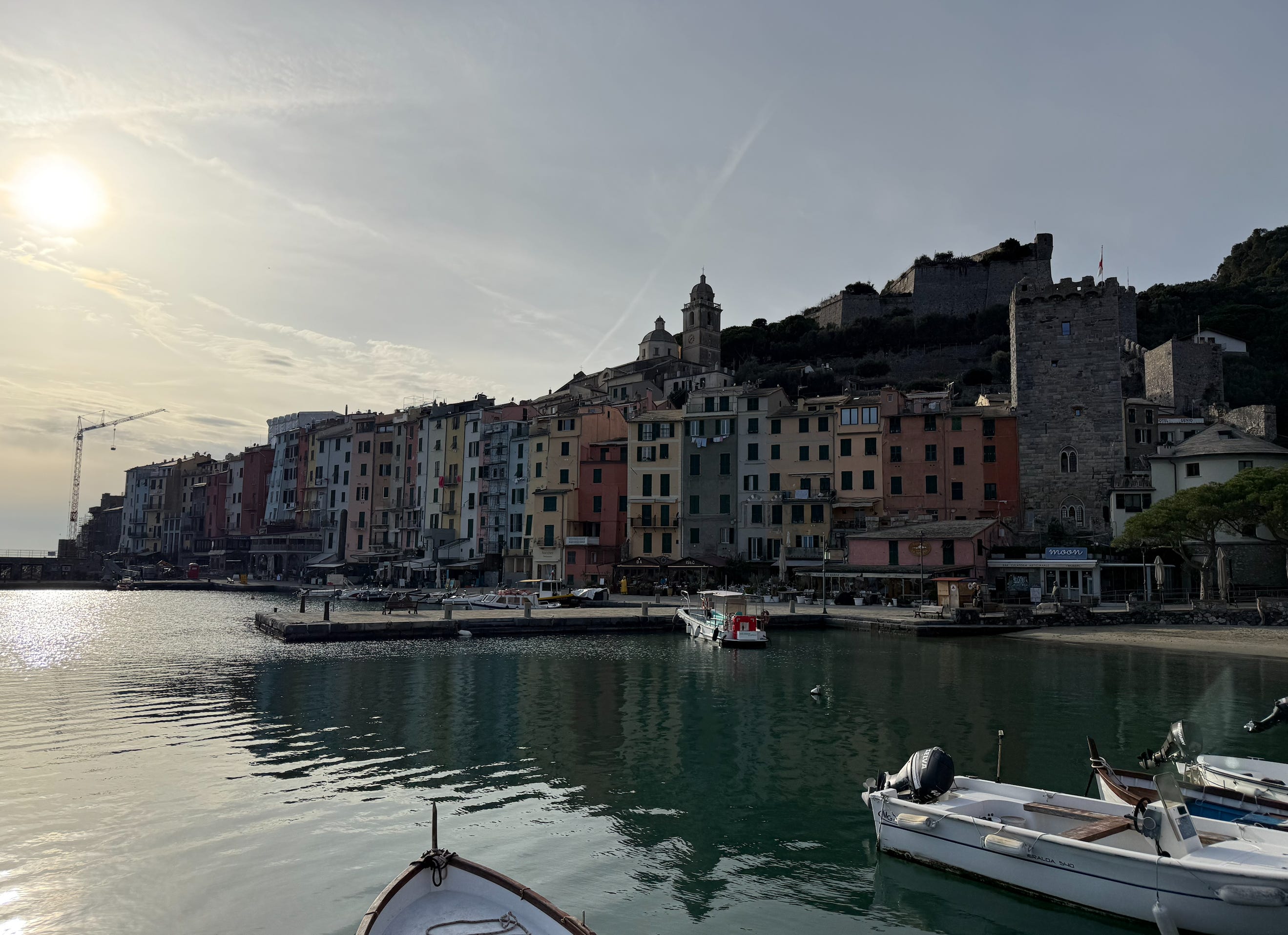
Portovenere allows this because Portovenere is small in a way that even other small Ligurian towns are not. Lerici, across the water, where we had lived a few weeks earlier, is a harbor town with room to breathe, a long flat promenade, frazioni scattered around the bay, actual places to live outside the old center. Living there is close to comfortable. There is nothing comfortable about Portovenere. It is a handful of parallel streets stacked on a rock formation at the far edge of the Gulf of Poets, the Gulf of La Spezia if you are reading a chart instead of a poem, with Palmaria island moored in front of it like a door left ajar. The streets function as levels, connected by stairs and small landings and more stairs, and the town has one modest piazza but conducts its real business at its two ends: up top, where the church is, and down at the port, where the restaurants are. From Versilia, where we live now, you can see the whole arrangement from the beach on a clear day: the rocky edge of the gulf, with the island closing it off, and a town shaped like a decision.
The decision was Genova’s, and the date is carved over the town gate: Colonia Januensis 1113. Walk in under that inscription, as we did every day carrying shopping, and you are walking into a weapon. Genova bought the rock from the local lords and planted a colony of its own citizens on it, and the point of the colony was Pisa, or rather the ruin of Pisa: a fortified forward base for the corsair war against Pisan shipping and for pushing Genovese interests down into the Lunigiana. The tower houses, the walls, the single deep street now lined with focaccia and cones of fried fish, all of it is military planning wearing pastel. The houses were not even these colors for most of their lives. Until the 1930s, the facades wore pink cocciopesto plaster against the salt, and the postcard palette came later, the way most things a visitor loves about the Italian coast came later, and for the visitor.
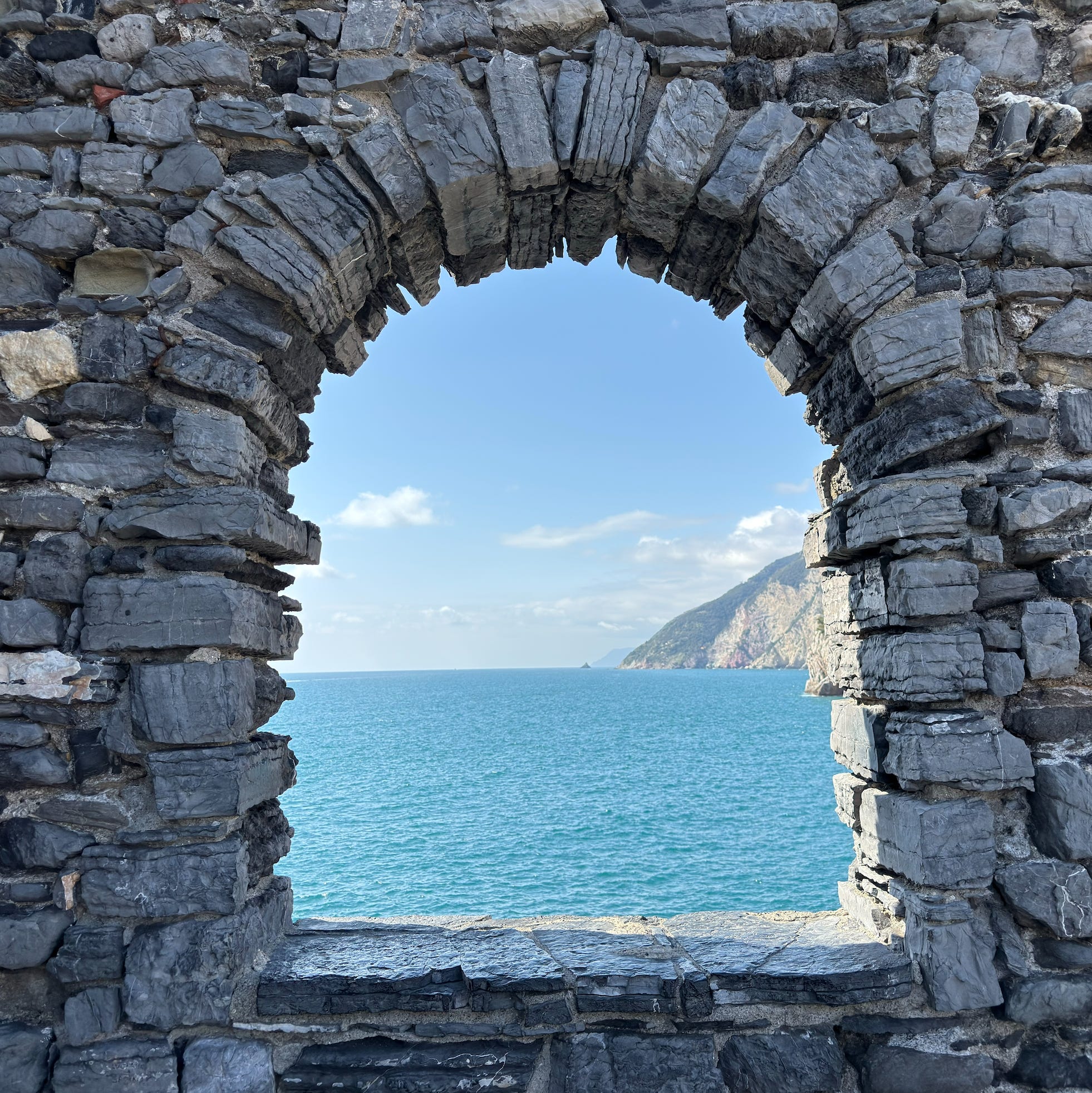
Climb to the other end of the town, up the stairs that keep going after you are sure they must stop, and you reach the church of San Pietro on the last spit of rock, striped black and white, standing where a temple of Venus stood for centuries before it. The Romans called the place Portus Veneris. The story says the goddess was born from sea foam, and the sea under that point produces foam with an enthusiasm you can watch for an hour, so the location logic holds. One god moved out, another moved in. The building burned and was shelled, spent a stretch of the nineteenth century as a gun battery and a while longer as a navy searchlight station, and it is now the most photographed wedding venue on this coast. The rock does not seem to mind who it works for. It has been a lighthouse for one thing or another for two thousand years.
But I did not spend three weeks looking at the church. I spent three weeks looking at the house across the street.
For the price of a glass of Chianti, unlock the full Anywhere Italy experience. All of our articles, private stories, and access to our chat travel community.
Start your free 7-day trial.
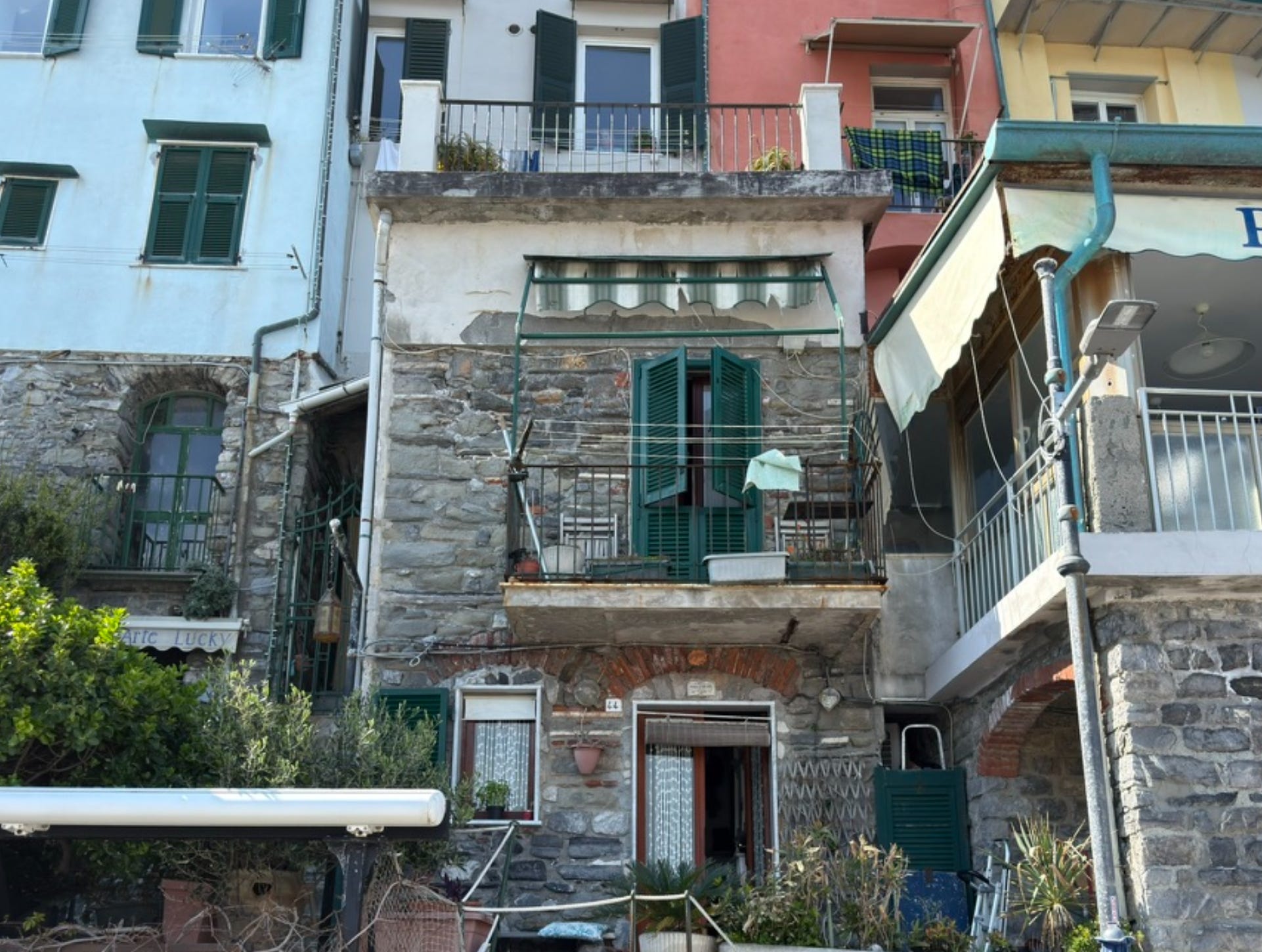
An elderly couple lived there, in a house as narrow as ours, and they had what almost no house in Portovenere has, which is a balcony, a tiny one, off the kitchen, with room for two small chairs and no table. Their kitchen window faced ours. We never learned their names, and it did not matter, because within a week we knew everything else.
The mama woke first, at seven or eight, and made coffee in the tiny kitchen. Around eight or nine, the papa appeared, moving at the speed of a man who has decided the day can wait, and they took their chairs on the balcony and set their glasses on the railing, because there was no table, and drank their espresso. I have never seen anyone drink a short shot of espresso for half an hour. It is a two-sip drink. They made it a sitting. The papa smoked one cigarette with it, obviously, why the hell not, above 80, tapping the ash over the railing into the street with the casualness of a man who has been tapping ash into that street since before the street was famous, and then carefully, every time, folding the leftover butt into a small container. True champion. There was a whole ethics in that distinction.
Around ten, the coffee now in him, the papa went down with a small dog as old and slow as he was, and the two of them disappeared into the town at a tortoise pace and came back half an hour later with a paper packet from the bakery, focaccia and a few brioche. Then the second coffee, the long one this time, an hour on the balcony with the brioche, the two of them side by side over the street. Around eleven, they parted, the papa to his own errands, the mama to the kitchen, where through the window I watched her start on lunch, or dinner, or both.
And this happened every day. Every single day, the same liturgy at the same hours, the glasses on the railing, the ash and the kept butt, the slow dog, the paper packet. They owned, as far as I could see, almost nothing. The papa’s skin was the color of a man who had spent his entire life outdoors on the water, and given where we were, he almost certainly had, because before the ferries started running day-trippers to the Cinque Terre, every man in this town was a fisherman, the way every house was pink.
Our own days arranged themselves around theirs. We learned about the neighbor’s cat, Franco, who conducted a personal war against our dog every day, lost every day, and returned every day, which, after a week, I began to respect. We stopped filling the water jug from the kitchen tap and started carrying it to the fountain down the street, not for the taste, or not only, but because that is what the street did, and the walk to the fountain was where the buongiornos happened.
It was the pandemic, and the crowds, such as they were, were Italian, and the town in season was full anyway: full of people coming for the ferry to the Cinque Terre, a few minutes across the water, and for the beaches, which are Ligurian beaches, meaning rocks that you negotiate with rather than lie on. The town they came to photograph is really there: the narrow streets, the tower houses, the colors. It photographs well. It always has. Byron got a whole grotto named after him here, though the naming was done in 1877 by an admiring English countess, decades after the poet, and the swim to Lerici on the plaque is more poetry than biography. This gulf was renamed by the poets after the poets had left. It knows what it is selling.
What it is selling and what it is are two different inventories. Most people spend a few hours in Portovenere between the ferry and the aperitivo. We gave it three weeks, and the town we got was the one the couple on the balcony lived in: vertical, repetitive, almost monastic, a town where the day is a staircase you climb the same way at the same hours, where the luxuries are a balcony the size of a doormat and an espresso stretched to thirty minutes because there is no reason on earth to drink it faster. It is not a comfortable life. It is not a comfortable town. It is grounded and puritan, and it sits on its rock the way the church sits on its point, working for whoever needs a lighthouse this century.
We went back a few years later, from Versilia, an easy drive now. The town was fuller, and the windows were emptier. The houses that held families hold key boxes now, and the people who would have been on the balconies have mostly gone wherever the owners of short-let apartments go, which is anywhere but here. You could still find the locals if you looked, a few young ones who moved in, a few old ones who never left. But the couple’s balcony, the last time I looked up at it, had no glasses on the railing.
I have not lived in Liguria properly yet, a few weeks at a time is visiting slowly, not living, and I will not pretend to know what a winter on that rock does to a person. But I know what I watched from my street table for three weeks, in bathrobes, with the whole town walking past. Two people with nothing, on a balcony with no table, drinking the slowest coffee in Italy, every morning, above a street that Genova built for a war nine hundred years ago and that strangers now cross the world to photograph. The glasses on the railing. The ash is falling onto the street. The butt, folded away and kept.


Planning a slow trip? My planner builds it for you. Free, no paywall, no email gate. Answer five questions (hub town, interests, travel month, days you want for slow discovery, and fitness level, because some of these towns make you climb), and you get a personalized route from my handpicked list of the 1,000 towns most travelers skip, with festivals, drive times, and a line on what each place is. Don’t like it? Refine it, swap towns, or browse the whole database by region.