

Where to stay in Italy
Skip the apartment, take the hotel

The shower in Palermo gave me an electric shock.
Not a metaphor. The switchboards for every apartment in the building sat in the common garden with nothing over them, and a water pipe had broken directly above the bank of switches, so the whole thing crackled quietly in the rain the entire time we were there, and nobody in the building appeared to consider this unusual. The washing machine was out on the balcony. The balcony had no roof either, so the machine was standing full of rainwater, plugged in. I was in the shower when the water came through with a bite in it, the kind you feel in your jaw. We packed that morning. It was a 4.8 review score Airbnb for around $200 a night.
In a different year, Rome was the scene of a more ordinary crime. The listing described a bedroom, a living room, a kitchen, a bathroom, and air conditioning, and used the word "charming," which only ever appears in advertising. What we found was one room photographed from four angles, a pull-out bed, a ground-floor room in a house with mold behind the furniture like a savings account, and a portable air-conditioning unit that did not work.
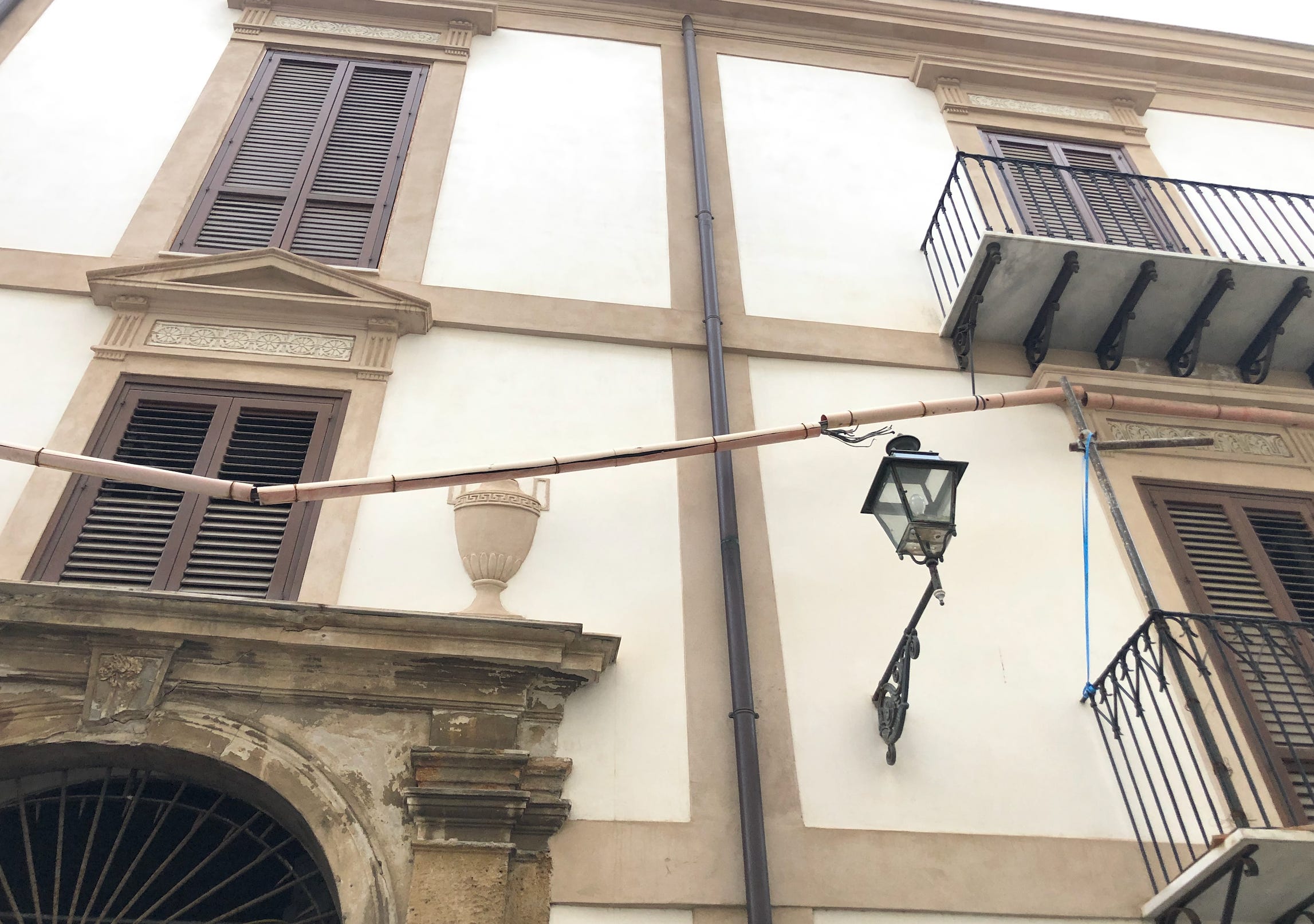
At the time of writing this article (July 2026), I am in the process of buying an apartment, so I have seen MANY. I also rented out short-term ones, so I saw many rentals. One thing I can safely say, and I hope Italians won’t get offended: Italian real estate might be amazing, but below the $250,000 or $1,500 per month limits, almost any other country outperforms it in quality. And when it comes to Airbnbs, it’s even worse, because if you live in an apartment, you at least renovate it a little, or if you are looking to rent it out for longer terms, you at least take care of it a little. But for Airbnbs?
Also, note that I am not a cheap traveler. My range is 100 to 200 euros a night, which is what most people spend, and for that I want a clean bed, a bathroom with hot water and water pressure that arrive at the same time, fast internet, air conditioning in summer, and heat in winter. A kitchen only if I am staying more than a week. I care nothing about the decor. I will be inspired by the town, not by the apartment. The single request underneath all of it is this: do not make my stay a problem I have to solve.
For about three years now, I have stayed in hotels. Here is the reasoning and the practical part, which is more useful than the reasoning.
Why did the apartments get worse?
Italy does not have to try. The country will be full whether anyone does anything or not, and the people renting apartments here understand this on an instinctual level. A host in Budapest has to compete. A host in Rome has to unlock a door.
The basic policy for Airbnbs in Italy is roughly as follows.
My grandma, who lived in <insert famous destination here>, died. I inherited her apartment. I didn’t renovate anything (last renovation was in 1988), but I switched out her photos for Dolce Vita and Eat, Pray, Love pictures from Etsy. I gave the keys to an agency. They said they’ve cleaned the place (they didn’t). Now it’s a $ 250-a-night Airbnb, and we are making money! There are some guests who always complain about the mold behind the bed, the smelly sheets, or the slow Internet. But hey, they are Americans, they always complain. Enjoy the city. Who stays in the apartment? Despite the bad reviews, the place is in <insert famous destination here>, so it’s always booked. Whatever you complain about, whatever the price is, you will come anyway!
Then there is the arithmetic, which almost nobody explains properly. I had an apartment in Budapest, and I was a host. So I know “the other side” of this. Bottom line: you don’t want to get fully booked. You want the highest per-night price you can get to make money. Let’s do the math quickly on an example.
Your place is $120/night. You are fully booked. This means 30 × 120 = 3,600. Minus agency fee (everyone works with one, they take care of cleaning, management, etc.), platform % fee, you end up with $2,500-3,000 pre-tax.
Or.
Same place, but you ask $300/night. You are 60-70% booked. This means 20 x 300 = 6,000. Pre-tax is around 5,000. Less work, less things to go wrong. Maybe more bad reviews because people don’t get their money’s worth, but who the f cares? The place will be booked anyway. This math only works if your place is in a tourist-popular location. It won’t fly with Brno, Lyon, Bratislava, not even Budapest. With Rome? You can rent out a garage without furniture for 300 a night if it’s close to the Trevi.
Just look at Croatia’s tourism board ad with John Malkovich in it.
It’s one of the best tourism ads I have seen. It’s funny, it has a story, it shows the best of the best of Croatia.
Now look at Italy.
They have run this version for years. A digitized Botticelli Venus goes around in Italy. In some versions, it shows stock video of a Slovenian winery (no joke). It’s super boring. It’s lame. It’s one of the worst tourism ads ever.
But hey, it’s Italy. Since this ad came out, Italy has grown its tourism revenue by 10% year-over-year, every year. Meanwhile, Croatia, I hope again I don’t offend anyone, is a rounding error in the Italian tourism budget. Although they share the same sea, I would argue that they have nicer infrastructure, including hotels. I know it’s a trigger point for Croatians, but even their cultural heritage is somewhat shared through the Venetian Republic. You can literally see the same medieval places, but in Croatia they’re called Pula, Dubrovnik, and Rovinj. Yet, they need to hustle with Malkovich.
Italy doesn’t need to hustle. Eat, Pray, Love hustles for Italy. The Dua Lipa or Jeff Bezos weddings. They are the tourism ads. John Malkovich gets paid to promote Croatia. Jeff Bezos pays a fortune to wed in Venice. Different game.
Bottom line: when you don’t need to compete, you get sloppy.
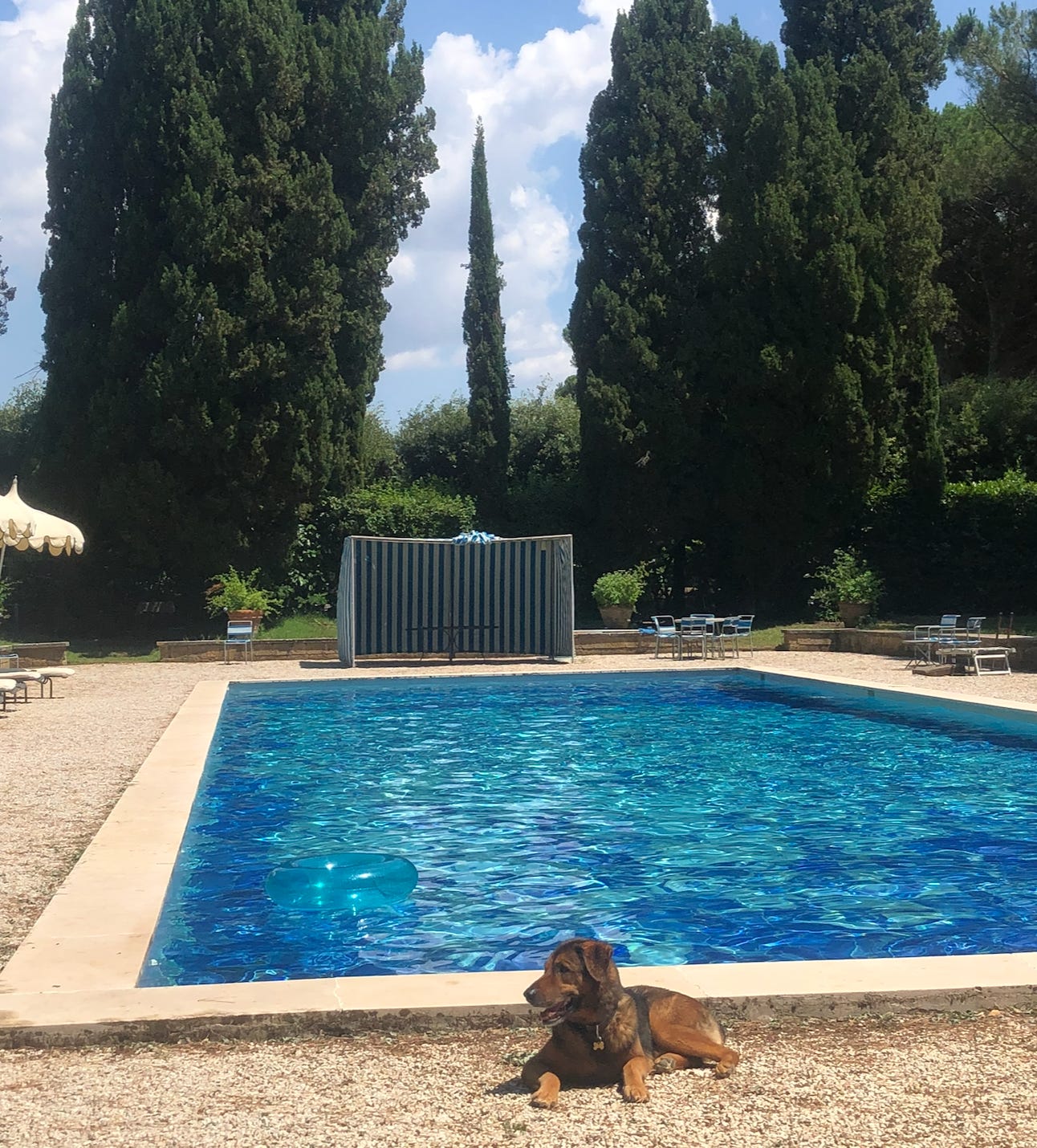
Book the 3-star hotels
Simplest solution, but first, let’s talk about stars. Personal note: many, many years ago, I worked as a PR consultant, and one of my main clients was AccorHotels. You know, Ibis, Mercure, Novotel, Sofitel, etc. French. As a byproduct of my work, I know almost everything about the hotel industry.
So back to the stars. Italian hotel stars are the most misread symbol in the country. Classification passed to the regions in 1983, then a 2008 decree called Italy Stars & Rating imposed national minimums, and the regions kept adding their own criteria on top, which is why Bolzano and Puglia do not mean quite the same thing by four stars. The rating lasts five years. An inspector from the province or the comune comes once. He counts.
That is the crucial thing. The star does not measure whether the hotel is good. It measures whether the hotel possesses a list of items. A four-star with a broken air conditioner keeps its fourth star until 2031.
Also, stars are not equal. If you are traveling internationally, you would notice this by now. A 4* hotel in Dubai or South East Asia looks like a luxury 5*+ resort in Europe. A 2* European or even American hotel barely qualifies as living space, but can be a good backpacker option in Asia. Now, imagine that, but within regions of Italy. The 4* hotel in Northern Italy looks like paradise. Same stars in, I don’t know, Calabria, it’s at best a 3* equivalent.
Which turns out to be exactly what you want, if you read it correctly. Look at what a three-star is obliged to have: a private bathroom in every single room, daily cleaning, a reception open for at least 16 hours, someone at the reception who speaks one foreign language, a bar, an internet service. Basics. Delivered. Not a promo, but this is why I love the Ibis brand. It gets you nothing, just the basics. But it delivers the basics for you everywhere like McDonald’s.
So the instruction is short. Book the three-star. You are not paying for taste. You are buying a legal floor that someone in a municipal office has physically verified, a floor that no apartment in this country has ever been required to clear.
Two footnotes. The five-star is a different market and mostly a poor one at the price. Almost all luxury resorts are scams. If you want real luxury, book a luxury villa with staff. And an agriturismo is not rated in stars at all: Tuscany grades them in spighe, ears of wheat, Trentino in daisies, Sicily in stars. The symbol changes at the regional border. Complicated. Case-by-case picking.
For the price of a glass of Chianti, unlock the full Anywhere Italy experience. All of our articles, private stories, and access to our chat travel community.
Start your free 7-day trial.
Why is the small hotel on your side?
As I said, I know a lot about hotels. Hotels run on margins of a few percent, and only when they are full. A family three-star in an Italian town needs your bed occupied every night of the season and needs you to come back next year.
An apartment owner, as we established, prefers you not to come at all, at a higher price. Almost no one comes back to the same Airbnb twice. Well, I do, because I saved those very rare ones that are worth the money. But let’s agree: I’m unique here.
That is the whole argument. Not romance about hospitality. Alignment of interest. I also said that I hosted once in Budapest before I sold the flat and moved here. We did not do short lets, because in that city three days meant a stag party from Essex, and we were not interested in cleaning up after them. We took two- and three-month guests instead and stayed in contact with them the whole time. That is what a host used to mean. Ask yourself when you last met one. Hell, when was the last time your true host handed you the keys? Not the agency rep. Not some friend. The actual host who owns the home. I have faint memories of this process a decade ago, when Airbnbs had to compete with hotels.
How to book
Book on Booking, or book directly with the hotel by email, which sometimes gets you 10% and always gets you a human. Booking lets the bad reviews stand (mostly). Airbnb’s scores have drifted so far from reality that the number carries no information, and you cannot cross-check the property anywhere else because it has no name. A hotel has a name. Put it on Google, on Reddit, on the Italian review sites. Somebody has already been disappointed there and written it down. Some even made a video about it and posted it online.
Take the hotel in town rather than the one on the ring road with parking. You did not come to Italy to sleep next to a roundabout. Read our piece on driving here and park outside the walls like everyone else.
Expect the internet to be bad. Expect the breakfast, advertised as continental or international, to be a small insult involving vacuum-packed croissants. For real, Italians have zero concept of a real continental breakfast. Expect elementary English at the reception, sometimes even worse than in Japan, where even the best hotels speak not even baby English.
But none of this matters. The bed is clean, and the shower is not electrified. You pay 100-200 per night, and your stay is not a problem you need to deal with.
Rent an apartment when you are staying longer than a week and want to cook. That is the only argument for one that survives contact with the arithmetic above.
Final tip, but this is not for everyone. Outside Italy, we use HomeExchange and sleep in other people’s houses, and we have never once had a bad stay because a person who has handed you the keys to their own home is not someone trying to extract three hundred euros from you. To use HomeExchange, you need to list your home and let others stay there. Our home is designed for guests, minimalistic, and our stuff can be locked away, so we love this option, but again, this is not for everyone. We live 50 meters from the sea, an hour's drive from Florence, Pisa, and Cinque Terre, so our place gets booked days after we open the calendar. Also, there aren't many HomeExchanges in Italy because they don’t involve the exchange of money. You get paid in GuestPoints. You spend GuestPoints on your own travel. Our home is popular, so the points we earn let us stay in small castles in England for free. Last year, we spent the summer in Cambridge and in the Fens. We paid nothing for it.
The room is not the holiday. Nobody has ever gone home and described the wallpaper. But if the room is bad, everything is bad. You wake up tired and dirty, and you get sick from the uncleaned A/C or from the mold on the wall. You want a place that disappears at 7 in the morning so that you can leave it, walk down through a town that has been getting on with its own business since before your grandmother was born, and find the bar where the coffee costs one euro, and the man behind the machine has been standing in that spot for thirty years.
Sleep somewhere boring. Spend your attention outside.
The inspiration for this post was Clay Space’s article on how Airbnbs serve as a window into the collapse of the West. He had dire experiences with Airbnbs and has an amazing quote:
“I will say that the Airbnb indicator is quite interesting to consider as a barometer for the health of Western culture. Perhaps an early sign that trust is returning to Western Society will be when I can book a trip for my family without needing to retain a lawyer beforehand.”
Couldn’t agree more. I invest my trust in my host. If the accommodation is bad, that trust is totally broken. Again, don’t make my stay a challenge or a problem that I have to deal with.


Planning a slow trip? My planner builds it for you. Answer five questions, and you get a personalized route from my handpicked list of the 1,000 towns most travelers skip, with festivals, drive times, and a line on what each place is. Don’t like it? Refine it, swap towns, or browse the whole database by region. Simple. Free. No paywall, not even an email gate. Pure discovery for you.