The Italian way of drinking coffee
The unwritten rules and how everyone is misunderstanding them

Hi, I’m Peter, and you’re reading Anywhere Italy. Our mission is to cover the 1,000 Italian towns most travelers skip, in person, one at a time. Come along for free, or pay to keep us on the road.
This is regularly popping up everywhere on social media with different angles. How do Italians drink coffee? Can I drink cappuccino after lunch? Why doesn't Italy have more specialty coffee? Starbucks and similar brands in Italy? Also, on the other hand, it is becoming popular to trash-talk Italian coffee. It is roasted too black, it is bitter as hell, and frankly not as good as <insert your options here>. Also the moka pot, the espresso, and all the coffee things Italy gave to the world (probably?), yet, Italy as a country has no coffee of its own, and the entire coffee thing is not even Italian, so we can't even trace it back to Roman times.
Anyway, so many misconceptions, misunderstandings, and stereotypes here. And one thing about stereotypes: I just f—ckin' love breaking them apart.
The trigger or inspiration for this post was Antonio Cangiano’s post: How to make coffee the Italian way. Before Antonio shouts at me, no-no, trigger in a good way. His post is great, I just got reminded that I have never written my own version of this.
So here we go.

Everything I write is free for its first four weeks. After that, only paid readers can access all the guides and dispatches, as well as the books I write, like these three, and the ones still come.
To gain access, get the annual plan and pay 10% less, forever.
First of all, how I do it.
Not that it matters much. I'm not your usual coffee drinker, and I am also just one person, so it's kinda hard to build an argument on me.
I don't go to an office to work and I almost never wake up to an alarm clock. Which means, I don't need coffee in the sense that most people drink it. Coffee's caffeine is not important to me. I regularly prefer black tea (Yorkshire or English breakfast), with a drop of milk. And in most cases, I go for decaf coffee. That said, sometimes, I do love the big punch of an espresso. On average, I drink a maximum of 1 coffee per day, sometimes 0, and I would say 70% of the time, it's a decaf.
How I drink my coffee is also different from most Italians. Like anyone else, I drink coffee either at home or at a bar. At home, we have two options: capsule or filter. We use a Lavazza closed-system capsule machine mostly. Yes, not the best, but it is extremely convenient. I'm not much of a ritualistic person, I always default to comfort and convenience. If I want some ritual, I use my Japanese Hario V60 filter system, glass, with JDM Japanese-made filter paper, pre-ground coffee that I buy in specialty coffee bars. It takes about 5 minutes to make one, the filter is easy to throw out so there's nothing to clean, and it gives a long filter coffee. I can sit down with it and drink it over an hour, lazy-mode.
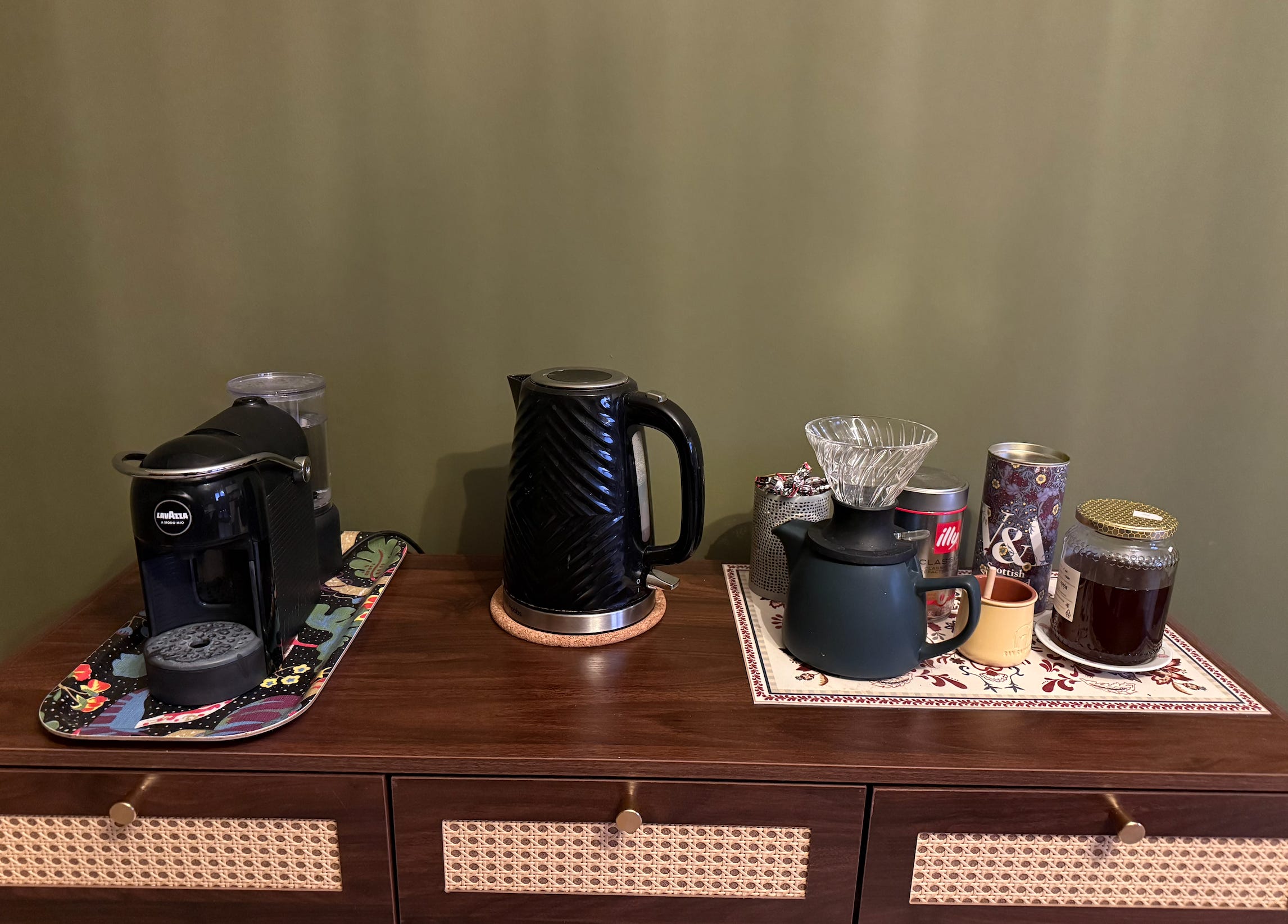
At a bar, it's 99% the regular caffè that most people call espresso. Sometimes I order a lungo, which is just a longer espresso. Depending on the time, decaf or normal (I value my sleep a lot so I never take caffeine after 3pm). Mostly decaf.
I never put sugar in it, doesn't matter where we are or what type of coffee I drink. At a bar, no milk either. At home, I have these small pods of concentrated milk-capsules, I sometimes put one in. If you are a German or Austrian reading this, please comment, where the heck I can buy Maresi?! Anyway… if we have fresh milk, a splash of it. I drink coffee because I want to drink coffee, not because I need a dessert, or because I want a gallon of sugary milk that has some coffee flavor (looking at you, Starbucks).
My wife is the same, with one exception: she prefers a cappuccino in the morning. I sometimes steal some foam from her and put it in my cup. Classic.
Lastly, I sit down and enjoy my drink. This probably comes from the fact that I don't need to hurry anywhere. I do understand the Italian way of drinking coffee at the counter, 60 seconds, but I'm simply an old man in this. I don't rush, why would I rush. Oh, and unrelated probably, but I'm a sucker for those small cookies, mignon, bignè, biscotto, cantucci, all. And yes, I dip most of them into my cup.
The unwritten rules of drinking coffee
I’m not collecting them all, but there are some.
Capsules are bad. It's probably true, but no one cares. About half of the households in Italy (and I'm sure it's similar elsewhere) have some sort of closed-system capsule machine. It's just convenient, and never forget: cheap. An espresso machine, a good one, is closing in on $1,000. My Lavazza A Modo Mio machine was, I have no idea how much it was, which means it was dirt cheap. For those who don't drink too much coffee at home anyway, this is a perfect deal. Also, there are new pod systems, which have proper coffee in them, so this one is improving, and the espresso machine industry is also lowering its prices, so maybe there's hope. TLDR: don't feel bad for having your capsules.
Cappuccino in the afternoon. This is a total misconception. First of all, most Italians don't care and never correct you. Second of all, this is not a time rule, more like a digestion rule. The belief is that milk after a meal messes up your digestion. It is fine to drink it before a meal or between meals. Because of this, cappuccino (or any coffee with a lot of milk for that matter) is usually enjoyed pre-lunch, mostly for breakfast. If you know the Italian breakfast, it makes sense: there's nothing better than dunking your sweet brioche into a giant cappuccino.
Italians = coffee. They drink the most, they had it first, they have their own coffee, and it is just an ancient habit. None of this is true. Northern, mostly Nordic nations drink 2X as much coffee (of course they do, everything is dark and gloomy…). Italians drink average European amounts. Coffee drinking boomed with the economy, because, as you may know, coffee is one of the things that fuel any kind of labour. The higher the economic boom, the more coffee is consumed (or the opposite, or they go hand-in-hand, who knows). Italy also has no coffee beans of its own, it just roasts, blends, and exports coffee. Also, the espresso is not that old: the first machine was patented in in the late 19th century (in Turin, of course), and the espresso you know, with the crema on top, only dates from the late 40s.
Espresso is not a thing. Kinda true, Italians just order "un caffè" which happens to be an espresso (fast) one. The espresso name stuck and the world thinks of small cups made with high pressure. The method though, it is Italian. The machine was a solution for a bar problem: serve more coffee to the workers, faster and at a higher volume than you ever could if they all sat down. This, plus the old price cap on coffee served without table service (more on that below), is why people drink coffee shots at the counter, without sitting down.
The Italian coffee machienes are superior. They are the best for making high-pressure strong coffee with speed, consistency, and volume. And yes, the best ones in this field are Italian, because it was Italy where this was a need, so machine makers solved one problem after another, decade after decade. First the speed, then the volume, then the consistency. Now after 100 years of innovation, the Italian espresso machine is superior to any other. But for filter coffee or other methods? No.
But the moka! Oh, the best marketing hack ever. The Bialetti. The moka pot. Personally, I hate them all, it's aluminium, no way I'm using it, and they are not even made in Italy anymore, so thanks but no. But yes, cute, it came from the idea of laundry boilers, and since the production of one is dirt cheap (aluminium), they had the money for TV ads and marketing. Great story and it is still used by Italians, and it has cousins: as Antonio Cangiano said, there is the Naples version, the cuccumella (older than the moka, and it works by gravity, not pressure), and I've heard about a Sicilian option too, slightly different design. Fundamentally, they are good at one thing: making coffee the cheapest way possible. The world-famous Bialetti is Chinese now, by the way.
If you ask me, the cheapest and probably the best way possible is the classic Arabic or Turkish coffee. The pot (cezve, in Turkish) is copper or brass, so not aluminium, but a soft metal. You put the coffee in the water and you bring the water to a boil. You pour it into a cup. Wait for the sludge to go to the bottom, then you drink it. If you are afraid of the sludge, the French press is a similar but cleaner method. By the way, the first coffee culture is Arabic, it is widely considered to have come from Yemen, and the coffee was shipped from a port called Mokha. Yes, that's where the moka pot got its name.
I love Arabic coffee, I have a cezve at home. But it is a bit messy for me, I don't like the ritual, and the end product is a very, and I mean VERY strong coffee. I like to order it in Arabic countries and Arabic places though.
But, the method is purist, perfect, simple, and you need almost nothing as equipment. The cezve can be just a small steel pot on your stove.
Speaking of simple and cheap, one thing is really true: Italian coffee is dirt cheap. For years it was about 1 euro, now it is closer to 1.30 on average. As far as I know, there was an actual law in place as well that put a cap on the price of a caffè, but that law is obviously gone now, and the price still sits just above a euro per cup. It is cheaper at the counter. If you sit down, a service charge comes with it, but almost no one sits down with just one shot of coffee. There is a social construct around this that caffè should be dirt cheap, but also, there is a supply that helps with this.
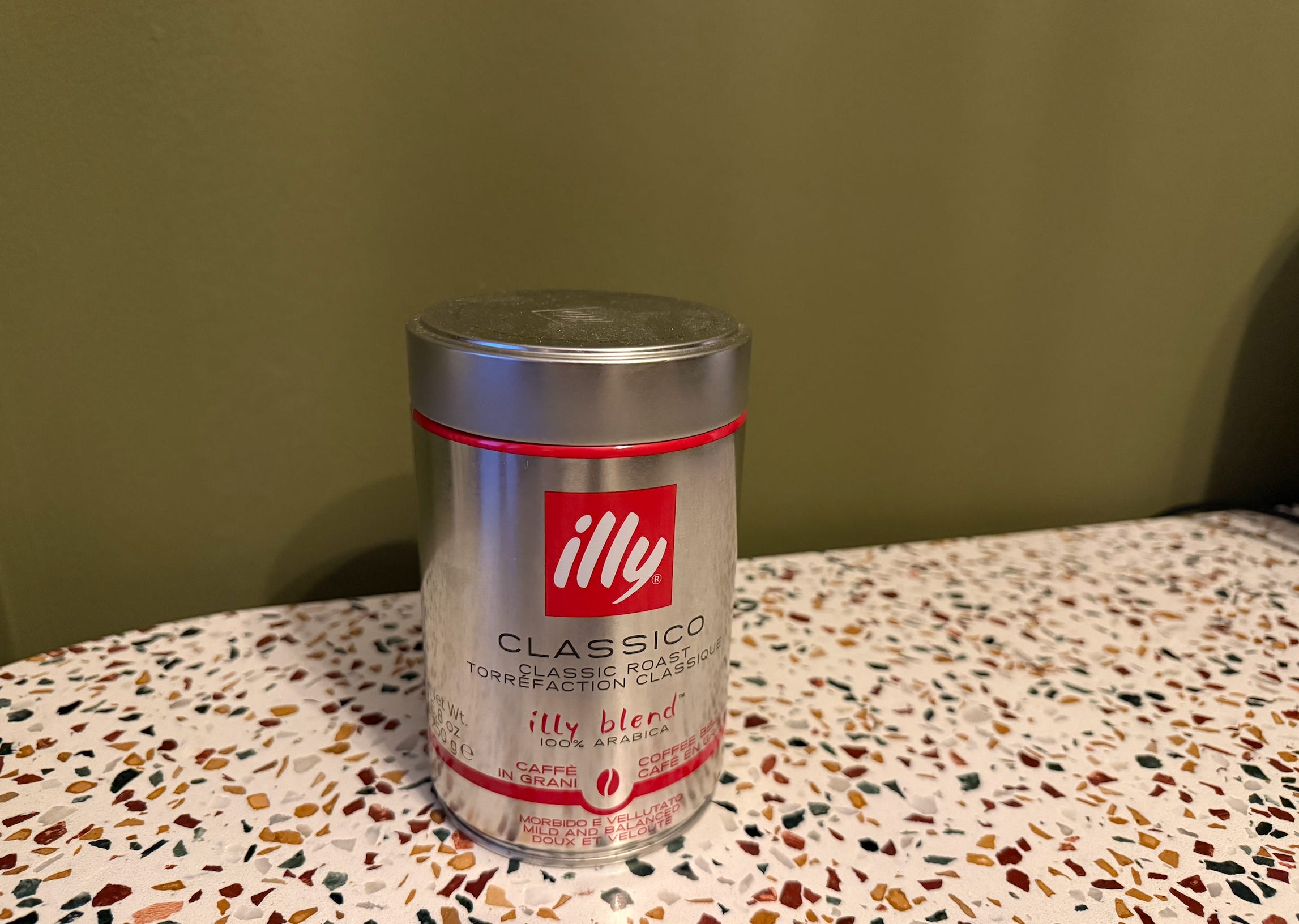
Italian packaged coffee is the best. Lavazza, Illy, just to name the big ones that are available anywhere, and in Italy, we have a billion more. This might be a controversial argument, but no, Italian coffee brands are not the best. They are the best in one segment of the market: cheap but consistently good blends. In other words, and this probably offends every Italian: it's like McDonald's. You know what you can expect from it. It is the same anywhere you go. And it is highly affordable. And it is never bad. I'm not saying it is good. But compared to a random hamburgeria (especially if that burger place is in Italy… sorry…), you won't get a shitty burger, and you will get it 3X cheaper than at any standalone burger shop.
Italian coffee brands are the same: consistently good quality, cheap on price, high on volume, and available anywhere. Yes, there are some artisanal blends, small ones, specialty options, but they make up a few % of the market.
The reason for this is simple. I wrote about this in my article on Italian economics. Italian salaries are low. People simply won't pay 5-10 EUR for their cup of coffee and 20-50 EUR for a bag of specialty beans. It's just not gonna happen. When the average salary is about 1,500 EUR, you can't expect them to throw 50 EUR at a bag of coffee. No way. And because there is high competition at the bottom of the market for affordable coffee, quality came with it.
Lack of specialty coffee or Starbucks-styled coffee houses. Price is what also explains this, because this is mostly true: in Italy, the specialty coffee fever that stormed through the world in the last decade or two arrived late and stayed small. Again, you can't build a market if 99% of the people won't pay 5-10 EUR for a cup of coffee. Yes, there are some specialty coffee places, and their number is growing, but they are mostly in towns that are generally richer than the rest, or in big cities where just by the sheer numbers, demand can be there. But in most towns don't expect a fruity Colombian roast cold-brew with a hipster barista pouring matcha-vegan-foam over your cup for 15 EUR and casually offering you a vegan cookie with it.
Starbucks is different and is just slightly connected to this. (It does exist here, by the way, with a few dozen stores.) One is price, of course, no one pays 10 EUR for a giant cup. But the other thing is the way these drinks are served and consumed. People sit down and talk over their cup or they order it to go and drink it on the go. Neither of these is done by Italians. Caffè is mostly at the counter, standing up, fast. And most bars are simply not prepared to give you a paper cup with a proper lid, because, yeah, no one orders coffee to go.
There are two cases where you see paper cups: vending machines are a thing and offices love them here in Italy as well. The other, not sure if it is an Italian thing, probably not, but people sometimes walk away with large paper trays with small paper-cup espressos on them. These are pretty much coffees delivered to nearby offices. But yeah, one person rarely walks around with a giant paper cup that smells more like cookie than coffee.
The other thing is the style of the coffee, which, well, we all know, it's a giant cup where 95% of the product is either overly sugary water or milk, and they even put flavoring in it. It's a dessert, not a drink, and certainly not coffee. And I'm with the Italians here, if I type "pumpkin spice latte" I literally have my gag reflex turned on…
The coffee types you can order is different. Yeah, this is true. It comes down to everything I wrote above: price, format, style, and demand. Most variations are just different plays on the espresso. The classic options are written everywhere, but let's have them here as well, why not:
Caffé. The thing you call espresso.
Caffè latte (or caffè con latte). Espresso with milk. Milk is often served on the side, hot or cold, never steamed. You pour it. Almost no one orders this at a bar, it's a home thing.
Cappuccino. Caffé with steamed milk and foam. It’s a breakfast.
Macchiato. Literally means "stained" coffee. The barista puts a splash of milk in the caffè. It's also a loophole on "Italians never drink coffee with milk in the afternoon", because macchiato is an all-day drink.
Ristretto. "Restricted" coffee. Basically an espresso with even less water. Not stronger, just more concentrated in taste.
Lungo. “Long” coffee. Same espresso left running longer. More bitter. My fav.
Doppio. “Double” coffee. Two shots of espresso in one cop.
Americano. Only exists because of foreigners. Because there is no filter coffee machine in most Italian bars, they still make a normal espresso caffè, and serve hot water next to it. Sometimes it is literally next to it, in a separate cup, you mix it.
Decaffeinato. Or deca. Not a type, but an option, you can order almost any coffee with no-caffeine option.
Caffé al vetro. "In glass." Some people swear by it. Same espresso but in a small glass cup.
Corretto. "Corrected" coffee. Normal espresso served with a splash of booze, mostly grappa or sambuca. Totally normal at 7 in the morning in most bars.
Con panna. "With cream." My personal indulgence. Simple espresso with whipped cream. I always ask for more cream.
Pretty much these are the staples, and there are some regional ones and niche options. Like:
Bicerin. Turin’s thing. Espresso, hot chocolate, cream, layered in a tall glass, in this order. Never stirred.
Caffé freddo. Cold coffee, often pre-made, with sugar, kept in a bottle in the fridge. If you want simple iced coffee, ask for caffè con ghiaccio. In some bars, there's a machine that churns a cold coffee cream (crema di caffè), sort of like a caffè syrup.
Shakerato. Mostly a seaside thing. Espresso shaken hard with ice and sugar. Summer-only.
Pedrocchi. Comes from the local bar, Pedrocchi, Padua’s thing. Caffé under a layer of mint cream and cocoa. I’m not a fan.
Ponce. The sailor’s coffee, I think it comes from Livorno or Genova. Espresso, rum, sugar, lemon peel, served scorching hot.
Caffé d’orzo. Not coffee but roasted barley. Almost all bars have it as a coffee alternative. I tried to love it, but failed.
And yeah, there are some other ones, probably every region has one specialty. Also, these special heritage bars with their super special caffè? Mostly you pay for the room, the history, and the story. The best caffè is mostly at your highway Autogrill, not at your historic bar.
Lastly, some niche misconceptions.
The foam or the crema that all coffee snobs admire. Hope I don't ruin your dreams, but a thick, spectacular crema proves nothing about quality. The cheaper bean (robusta) makes more of it, so it often means the opposite of quality…
Most Italians drink it black. No, they don't. Sugar is added by most of them. The further south you go, the more. This "drink it neat, black, no milk, no sugar" is a foreign specialty-coffee thing. In Naples, in some bars, they serve it already sweet, because that is how everyone drinks it, so you have to ask for it senza zucchero.
The espresso is a strong shot. No, it's not, it has less caffeine than a regular filter coffee. It is just a concentrated coffee with a stronger taste.
Coffee comes with the dessert. Pay attention to how caffè is offered to you by your waitress. At the end of the meal, they ask if you want dessert. Once you have ordered or said no, they ask if you want coffee. Italians order it separately, after everything. And there is also one last thing that some of them order, even after coffee: the digestivo. Bitters mostly, I wrote about them here.
The barista is an artisan. Oh this one is my favourite, because don't hate me please, but I think most barista work is just overpriced bullshit to justify the high markup on the coffee. No, in Italy, the barista is just another bar worker. He makes coffee, then he makes sandwiches, then he serves pasta for lunch. No drama, no play, no fireworks. And definitely no latte art, OMG.
The water comes with the coffee and you drink it after it. Italy has an obsession with water anyway, I wrote about here. But not all bars give you a shot of water with your caffè (most of them don't), and you don't drink the water after the coffee, you drink it before, to clear your palate. Drinking it after is frowned upon by the purists, the joke is that it tells the barista that you want to wash away the taste of the coffee.
Dark and bitter coffee is just sronger! No, it is just concentrated in taste, but not in caffeine. Mostly, there are two types of beans: robusta and arabica. Robusta has about 2X more caffeine. The further south you go, the more likely they serve robusta, so the coffee is stronger, yes. But it has nothing to do with roasting or grinding, or barista work. Definitely has nothing to do with latte art.
Coffee houses or cafés in Italy. Almost non-existent in the sense of a traditional European coffee house culture. The café is the bar. You order your coffee at the bar, which is always open, and I wrote about how an Italian bar works here. Also, restaurant coffee. It is often the worst cup of the day, because it comes from a low-quality machine, so many Italians pay the bill and have their caffè at a bar, instead of the restaurant.
There is no single Italian coffee culture. This shouldn't be surprising for you, since in Italy, everything is about locality and regions. How people drink or make coffee is totally different everywhere, especially between the North and the South, as always. Speaking of cafés and coffee houses, the closest examples to them are in the North, especially in Turin. But good luck finding one in, I don't know, a small town in Calabria.
Things are changing…
No matter how traditional Italian society is, things are changing in this game as well. Coffee consumption is on the decline when it comes to the usual caffè served at a bar. Young people prefer the trends that you see everywhere: big paper cup with sugary flavors, or, specialty fireworks with a bearded barista. And more and more people drink their coffee at home anyway.
On one hand, I do get it. On the other hand, yeah, it's sad. Bars are generally on the decline anyway and coffee anecdotally has the highest margin possible on their menu, so losing that either to a giant liquid dessert or to some overpriced filter coffee option that is served by a guy who looks like a carpenter, is a sad way to go offline for these bars.
One thing is for sure though. It won't be tea that kills coffee in Italy. Sorry, Britain, I'm with you, but yeah, I don't know the figures, but hot tea probably has the lowest consumption rate here. Especially with milk, that's viewed as a genuine WTF did I just see, did this guy pour milk in his tea?
Sadly, lads, a good Yorkshire is especially hard to get. I order mine from Amazon, that's pretty much the only option. I'm probably one of the 100 orders they get in a year in this country.
Discussion about this post